Oliver Goldsmith, An Enquiry Into the Present State of Polite Learning in Europe (1759)
“ Whatever the skill of any country may be in the sciences, it is from its excellence in polite learning alone, it must expect a character from posterity. ”
Oliver Goldsmith, An Enquiry Into the Present State of Polite Learning in Europe (1759)
“ Whatever the skill of any country may be in the sciences, it is from its excellence in polite learning alone, it must expect a character from posterity. ”
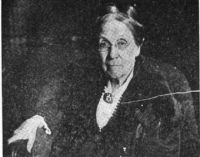 Helen Ekin Starrett,
Letters to a Daughter and A Little Sermon to School Girls
“ There are, also, constant opportunities for observation of the conduct and manners of polite people, by which young people may and should profit and learn to observe the outward forms of society. These are easily learned and practiced; but the finest, best, most genuine good manners can never be acquired except as they become the natural expression of gentleness, kindness intelligence, respect for parents and elders, and an earnest desire to do good to our fellow beings. Strive, my dear child, to cherish these graces in your heart, and good behavior and good manners will naturally follow. ”
 Jean-Jacques Rousseau,
Emile, or On Education
(1762)
“ If our education teaches us kindness and humanity, we shall be polite, or we shall have no need of politeness."If we have not those qualities which display themselves gracefully we shall have those which proclaim the honest man and the citizen; we shall have no need for falsehood."Instead of seeking to please by artificiality, it will suffice that we are kindly; instead of flattering the weaknesses of others by falsehood, it will suffice to tolerate them. ”
Cecil B. Hartley, The Gentlemen's Book of Etiquette and Manual of Politeness
“ True a book will not fully supply the place either of experience or friendly advice, still it may be made useful, and, carefully written from the experience of heads grown gray in society, with only well authenticated rules, it will be a guide not to be despised by the young aspirant for favor in polite and refined circles. ”
 John Hamilton Moore,
The Young Gentleman and Lady's Monitor…
“ In order to remedy these defects, and to ease the teacher, I would advise, that several young gentlemen read in a class, each a sentence in this book, (it being divided into small portions for that purpose,) as often as convenient: and let him who reads best, be advanced to the head, or have some pecuniary reward; and every inferior one according to his merit; this will create emulation among them, and facilitate their improvement much more than threats or corrections, which stupifies and intimidates them, and often ends in contempt of their teachers, and learning in general. ”
 G. Stanley Hall,
Youth: Its Education, Regimen, and Hygiene
“ This brings us, finally, to the highest and also immediately practical method of moral education, viz., training the will by and for intellectual work. Youth and childhood must not be subordinated as means to maturity. Learning is more useful than knowing. It is the way and not the goal, the work and not the product, the acquiring and not the acquisition, that educates will and character. ”
Edith E. Wiggin, Lessons on Manners for School and Home Use
“ It is well also to speak of acts which have come under the teacher's eye in the school-room, on the play-ground, or on the way to school, and let the children decide whether these were polite or impolite, and why. This will make the whole matter more real to them, and, if they are encouraged to furnish illustrations, they will open their eyes and find them in their own little worlds. We want our children in school, from the youngest to the oldest, to notice a breach of politeness as quickly as an error in recitation. ”
Mrs. Katherine Dunlap Cather, Educating by Story-Telling
“ This situation must be met as any other problem in discipline is met, by skill on the part of the teacher and by inculcating a sense of fairness and courtesy that holds selfishness in check. Lead the child to see that what gives him pleasure gives some one else pleasure also, and that it is the right of each member of the class to experience that pleasure. ”
Charlotte M. Mason, An Essay Towards a Philosophy of Education…
“ But teaching may be so watered down and sweetened, teachers may be so suave and condescending, as to bring about a condition of intellectual feebleness and moral softness which it is not easy for a child to overcome. The bracing atmosphere of truth and sincerity should be perceived in every school; and here again the common pursuit of knowledge by teacher and class comes to our aid and creates a current of fresh air perceptible even to the chance visitor, who sees the glow of intellectual life and moral health on the faces of teachers and children alike. ”
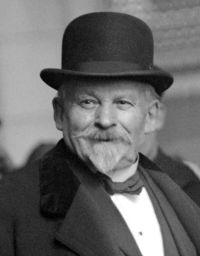 Emile Coué,
Self Mastery Through Conscious Autosuggestion
“ Children, I expect you always to be polite and kind to everyone, obedient to your parents and teachers, when they give you an order, or tell you anything; you will always listen to the order given or the fact told without thinking it tiresome ”
Anonymous, The Instructor (May 2020)
“ XI. When they are capable of learning to read, either instruct them yourselves, or send them to a good school, where proper attention is paid to the morals of youth. Encourage them to diligence, and let them want no advantage of increasing in knowledge and wisdom which you can procure, or they can improve ”
Chapman Cohen, A Grammar of Freethought
“ The imparting of knowledge is, of course, essential. But, in the main, education consists in a wholesome training of mind and body, in forming habits of cleanliness, truthfulness, honesty, kindness, the development of a sense of duty and of justice. ”
 Samuel Johnson,
The Works of Samuel Johnson, LL.D. in Nine Volumes…
“ To the same praise every man devoted to learning ought to aspire. If he attempts the softer arts of pleasing, and endeavours to learn the graceful bow and the familiar embrace, the insinuating accent and the general smile, he will lose the respect due to the character of learning, without arriving at the envied honour of doing any thing with elegance and facility. ”
Samuel Johnson,
The Works of Samuel Johnson, LL.D. in Nine Volumes…
“ By this procedure, I know not whether the students will find their cause promoted, or the compassion which they expect much increased. Let their conduct be impartially surveyed; let them be allowed no longer to direct attention at their pleasure, by expatiating on their own deserts; let neither the dignity of knowledge overawe the judgment, nor the graces of elegance seduce it. ”
B. G. Jefferis and J. L. Nichols, Searchlights on Health — Politeness (1919)
“ THE BEST SCHOOL OF POLITENESS.—The first and best school of politeness, as of character, is always the home, where woman is the teacher. The manners of society at large are but the reflex of the manners of our collective homes, neither better nor worse. Yet, with all the disadvantages of ungenial homes, men may practice self-culture of manner as of intellect, and learn by good examples to cultivate a graceful and agreeable behavior towards others. ”
 George Willis Cooke,
George Eliot; a Critical Study of Her Life…
“ For the lessons most imperatively needed by the mass of men, the lessons of deliberate kindness, of careful truth, of unwavering endeavor,—for these plain themes one could not ask a more convincing teacher than she. ”
Earl of Philip Dormer Stanhope Chesterfield, Principles of politeness, and of knowing the world
“ Another thing I must recommend to you, as characteristic of a polite education, and of having kept good company, is a graceful manner of conferring favours. The most obliging things may be done so awkwardly as to offend, while the most disagreeable things may be done so agreeably as to please. ”
Jean-Jacques Rousseau,
Emile, or On Education
(1762)
“ Of all man's faculties, reason, which is, so to speak, compounded of all the rest, is the last and choicest growth, and it is this you would use for the child's early training. To make a man reasonable is the coping stone of a good education, and yet you profess to train a child through his reason! ”
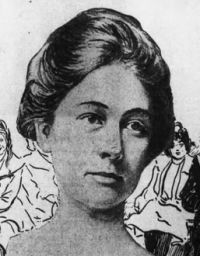 Sara Cone Bryant,
Stories to Tell Children
“ And the same quality of respect, tempered by the demands of a wise control, is exactly what is needed among children. Again and again, in dealing with young minds, the teacher who respects personality as sacred, no matter how embryonic it be, wins the victories which count for true education. ”
Jean-Jacques Rousseau,
Emile, or On Education
(1762)
“ I fear our young people will get more harm from intercourse with such people than profit from their instruction, and that their jargon, their tone, their airs and graces, will instil a precocious taste for the frivolities which the teacher thinks so important, and to which the scholars are only too likely to devote themselves.Where pleasure is the only end in view, any one may serve as teacher—father, mother, brother, sister, friend, governess, the girl's mirror, and above all her own taste. ”
 Ella Wheeler Wilcox,
A Woman of the World: Her Counsel to Other People's Sons and Daughters
“ An infinite number of things not included in the school routine should be taught by teachers. Courtesy, kindness to dependents and weaker creatures, a horror of cruelty in all forms, a love of nature, politeness to associates, low speaking and light walking, cleanliness and refinement of manner,—all these may be imparted by a teacher who loves to teach, without extra time or fatigue. ”
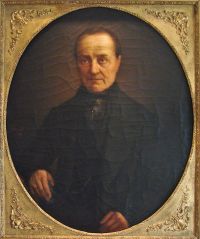 Auguste Comte,
A General View of Positivism
“ Without formal teaching, she will take every opportunity of showing her children, as no other instructor could show them, the joy that springs from generous feelings, and the misery of yielding to selfishness. ”
Jean-Jacques Rousseau,
Emile, or On Education
(1762)
“ Let us direct his efforts and his knowledge, and use his zeal to increase them.I am never weary of repeating: let all the lessons of young people take the form of doing rather than talking; let them learn nothing from books which they can learn from experience. How absurd to attempt to give them practice in speaking when they have nothing to say, to expect to make them feel, at their school desks, the vigour of the language of passion and all the force of the arts of persuasion when they have nothing and nobody to persuade! ”
“ They are apt pupils, whether their tutor be a philosopher or a fool. And if a faulty example be a child's most constant and influential teacher, what wonder that the lessons, well-learned, are put in practice? ”
 Charles Wagner,
The Simple Life
“ To watch, to guide, to keep a firm hand—such is the function of the educator. He should appear to the child not like a barrier of whims, which, if need be, one may clear, provided the leap be proportioned to the height of the obstacle; but like a transparent wall through which may be seen unchanging realities, laws, limits, and truths against which no action is possible. Thus arises respect, which is the faculty of conceiving something greater than ourselves—respect, which broadens us and frees us by making us more modest. This is the law of education for simplicity. ”
Thomas E. Sanders, Twenty Talks to Teachers (1908)
“ Pure thoughts, pure words, sincerity, honesty, earnest and deep convictions must be habitual with you. The purity of your own thought, the sincerity of your own motives, flashing through your eyes, the windows of your soul, must call out and strengthen the purity and nobility of other minds. Your character and your reputation, too, must stand the search light of the X-ray without showing flaw or blemish. This, and this alone, is the character and reputation worthy the teacher, the builder and architect of immortal minds. ”
 Boyd Winchester,
The Swiss Republic
(1891)
“ And they have, in turn, the right to conclude that the instruction given is that, of all others, which the wisdom and wit of the age have pronounced to be the most beneficial and important for them to receive. ”
 Charles Reade,
It Is Never Too Late to Mend
“ One is that here strangers are welcome from their rarity; another, that politeness is a part of the education of the place, which, besides its other uses, is an adult school of manners, morals, religion, grammar, writing and cobbling. ”
Thomas E. Sanders, Twenty Talks to Teachers (1908)
“ The greatest men of all time come and converse with you. A pity it is if you see nothing but drudgery and dull pupils and hard lessons and unruly boys and petty mischiefs and little annoyances in teaching. If this is all you see, quit—never teach again.Teaching, if your heart is in the work, will keep you young. It will bring you into contact with the best in life. It will be a constant inspiration to pure thought and right conduct. It will give you the love and respect of young people whose future joys and sorrows will be your joys and sorrows, and whose successes will bring you pleasure. ”
 Frank Pierrepont Graves,
A student's history of education
“ In the Education of Children he holds that virtue comes from experience and breadth of vision rather than from reading, and declares: “I would have travel the book my young gentleman should study with most attention; for so many humors, so many sects, so many judgments, 154 opinions, laws, and customs, teach us to judge aright of our own, and inform our understanding to discover its imperfection and natural infirmity.” This training, too, he feels, should be under the care of a tutor, who is to be a man of the world, one “whose head is well tempered, rather than well filled.” ”
 James Hutchins Baker,
Education and life
(1900)
“ A teacher of tact and skill can gain the interest of children to know the meaning and understand the application of many rich generalizations from human experiences that have passed into proverbs. The natural result of conduct which we condemn may be pointed out, with often a noticeable increase of regard for duty and prudence. We may not expect consistency of character, firmness of purpose, rigid observance of honesty, truthfulness, honor, and sympathy until the course of life is directed by principles that have taken firm hold of the mind. ”
 Mary Tyler Peabody Mann,
Guide to the Kindergarten and Intermediate Class…
“ We should do right because it was right, whether it were to bring us pleasure or pain. It was the duty of all to improve their faculties, because God had given them to us for that purpose, and had put us into a beautiful world, and given us parents and teachers to help us prepare for a long existence [148] of which this life is but a small part,—a kind of school in which we are educated for another world.I wished to have but one rule in my school, and that was the Golden Rule: "do unto others as you wish others to do unto you." ”
 Janet Erskine Stuart,
The Education of Catholic Girls
“ That training in manners is not a short course but a long course of study, a work of patience on both sides, of gentle and most insistent handling on one side and of long endurance on the other. There are a very few exquisite natures with whom the grace of manners seems to be inborn. They are not very vigorous, not physically robust; their own sensitiveness serves as a private tutor or monitor to tell them at the right moment what others feel, and what they should say or do. ”
Harris J. Dark, God Hath Spoken
“ I wonder if our boys and girls in school are taking advantage of their opportunity. Have you realized what a wonderful opportunity it is, and are you behaving yourself in such a way as to demand respect from your fellow students that you may be able to teach them the truth? ”
 Jacob Abbott,
Jonas on a Farm in Winter
“ They are all designed, not merely to interest and amuse the juvenile reader, but to give him instruction, by exemplifying the principles of honest integrity, and plain practical good sense, in their application to the ordinary circumstances of childhood. ”
Charles A. McMurry, Special Method in the Reading of Complete English Classics
“ We need not make premature moralists of children, or teach them to pass easy or flippant moral judgments upon others. But we wish their interest in these characters to be deep and genuine, their eyes wide open to the truths of life, and their intuitive moral judg [Pg 130] ments to ripen in a healthy and hearty social environment. To this end the teacher will need to use all his skill in questioning, in suggestion, in frank and candid discussion. In short, he needs just those qualities which a first-class teacher needs in any field of study. ”
 H. G. Wells,
Mankind in the Making
“ For a teacher to lay hands on all the virtues, to associate them with his or her personality, to smear characteristic phrases and expressions over them, is as likely as not to give the virtues unpleasant associations. ”
Charles A. McMurry, The Elements of General Method…
“ Feelings of malice and ill-will, of revenge and envy, of dislike and jealously, get the control in many lives, because they have been permitted to grow and nothing better has been put in their place. The teacher by selecting the proper materials of study is able to cultivate and strengthen such feelings as sympathy and kindliness toward others; appreciation of brave, unselfish acts in others; the feeling of generosity, charity, and a forgiving spirit; a love for honesty and uprightness; a desire and ambition for knowledge in many directions. ”
Charlotte M. Mason, An Essay Towards a Philosophy of Education…
“ Now it has been demonstrated very fully indeed that the delightfulness of knowledge is sufficient to carry a pupil joyfully and eagerly through his school life and that prizes and places, praise, blame and punishment, are unnecessary in so far as they are used to secure ardent interest and eager work. The love of knowledge is sufficient. ”
Samuel JohnsonEarl of Philip Dormer Stanhope ChesterfieldJohn Hamilton MooreOliver Goldsmith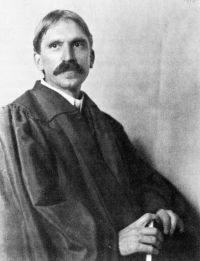 John DeweyJean-Jacques RousseauHelen Ekin StarrettCecil B. HartleyG. Stanley HallEdith E. WigginAnonymousEmile Coué
 Oscar WildeSinclair Lewis
 Thomas à Kempis
 Henry David ThoreauMaria MitchellThomas CarlyleWilliam Hazlitt
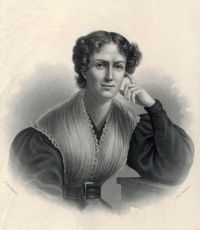 Frances Wright
