“ A scene is primarily a decorative background for the actors, and should always be kept subordinate, first to the players, their dress, gesture, and action; and secondly, to the fundamental principle of decorative art, which is not to imitate but to suggest nature. If the landscape is given its full realistic value, the value of the figures to which it serves as a background is impaired and often lost, and so the painted hangings of the Elizabethan age were a far more artistic, and so a far more rational form of scenery than most modern scene-painting is. ”
Scene painting
Definition and stakes
The theme of “scene painting” has been addressed by authors such as John Charles Van Dyke, John Ruskin, De Witt H. Parker, Daniel Burleigh Parkhurst and Fernand Khnopff, Gerard Brown, Léonce Bénédite, Marion H. Spielmann, Richard Muther and John Van Dyke. It is often associated with terms like color, painter, art, nature and light.
Quotes about “scene painting”
 David Ross Locke,
Nasby in Exile
“ Not a mist, and yet a delicate haze, soft and subdued, that tones down the broad effects and gives the whole a perfection that is enchanting. One can stand, as before a magnificent painting, gazing for hours upon the scene and find new features every instant. ”
Albert A. Hopkins, Magic, Stage Illusions and Scientific Diversions…
“ Scene painting is an art by itself. There is no other branch of painting like it, either in the variety of subjects embraced or in the methods employed. The scenic artist must be at home in landscape, marine, or architectural painting. He must be able to produce at any time the mountainous passes of Switzerland, the flat meadows of Holland, the palace of Versailles, or the Windsor Hotel. The method by which he works and many of the materials he employs are altogether different from those used by the ordinary oil or water-color painter. ”
 Johann Wolfgang von Goethe,
The Sorrows of Young Werther
(1774)
“ What I have lately said of painting is equally true with respect to poetry. It is only necessary for us to know what is really excellent, and venture to give it expression; and that is saying much in few words. To-day I have had a scene, which, if literally related, would, make the most beautiful idyl in the world. But why should I talk of poetry and scenes and idyls? Can we never take pleasure in nature without having recourse to art? ”
Sir Joshua Reynolds, Fifteen Discourses
“ Though it be allowed that elaborate harmony of colouring, a brilliancy of tints, a soft and gradual transition from one to another, present to the eye, what an harmonious concert of music does to the ear, it must be remembered, that painting is not merely a gratification of the sight. ”
 Henry Rankin Poore,
Pictorial Composition and the Critical Judgment of Pictures
“ In such a landscape perspective of value and color is easily observed, making positive the separation of objects. The painter, under these conditions, is independent of linear perspective to give depth to his work, which being one of the cheap devices of painting he avoids as much as possible. ”
 John Addington Symonds,
Sketches and Studies in Italy and Greece…
“ The human form, the world around us, the works of man's hands, are represented in painting, not for their own sake merely, but with a view to bringing thought, feeling, action, home to the consciousness of the spectator from the artist's consciousness on which they have been impressed. Painting can tell a story better than sculpture, can represent more complicated feelings, can suggest thoughts of a subtler intricacy. Through colour, it can play, like music, directly on powerful but vague emotion. It is deficient in fulness and roundness of concrete reality. ”
Members of the Arts and Crafts Exhibition Society, Arts and Crafts Essays (1893)
“ In the painting of a MS., of the panels of a coffer, of a ceiling, a wall or an altar-piece the painter was alike—however different his theme and conception—possessed with a paramount impulse to decorate, to make the space or surface he dealt with as lovely to the eye in design and colour as he had skill to do. The art of painting has, however, become considerably differentiated since those days. We are here in the nineteenth century encumbered with many distinctions in the art. ”
Masters in Art, Part 79, Volume 7…
“ To animate painting by qualities purely sensual, to make a lavish display of the gorgeous splendor of brilliant stuffs, rich brocades and velvets, and gold and silver plate, to paint in glowing rosy hues and amid voluptuous surroundings the plumpness of naked flesh, aroused his indignation and his repugnance as if such art were a desecration. ”
 Birge Harrison,
Landscape Painting
(1909)
“ PIGMENTS The question of the medium in which the painter shall execute his pictures is an affair of temperament. Each artist must consult his own feelings in this matter and select the medium which is to him the most sympathetic. To-day, there are practically but three systems of painting in common use, tempera having gone out of vogue, and fresco having very wisely been discarded in favor of better and sounder methods. The three remaining methods are, of course, pastel, water-color, and oil. ”
 John Charles Van Dyke,
A Text-Book of the History of Painting
“ They were seeking effects of line, light, color—mere sensuous and pictorial effects, in which religion and classicism played secondary parts. They believed in art for art's sake; that painting was a creation, not an illustration ”
Anonymous, Ladies' manual of art; or, profit and pastime
“ We then proceed to complete the details of form and color, which were brought forward in the former painting, employing for this purpose delicate touches of glazing and scrambling alternately, not to conceal, but improve and render as perfect as possible what has already been done. Sharp, vigorous touches where the markings of the details require them. These touches must be made with freedom and decision, or they fail in producing the desired effect. They should be of a warm tone, not cold—not grey. In this stage of the work do not attempt too much at one sitting. ”
 John Thomas Smith,
Nollekens and his times
(1829)
“ This intelligent group is rendered still more interesting by the charm of colouring, which though simple is strong, and most harmoniously distributed throughout the picture. The landscape has a deep-toned brightness that accords most admirably with the figures; and the painter has ingeniously contrived to give a value to a common scene and very ordinary forms, that would hardly be found, by unlearned eyes, in the natural objects. ”
Will N. Harben, In the Year Ten Thousand (1892)
“ In producing a painting of an object, the early artists mixed colored paints and spread them according to taste on stretched canvas or on the walls or windows of buildings. You know that our artists simply throw light and darkness into space in the necessary variations, and the effect is all that could be desired in the way of imitating nature. ”
John Addington Symonds,
Renaissance in Italy, Volume 3…
“ Colour and shadow, aërial perspective and complicated grouping, denied to sculpture, but within the proper realm of painting, have their own significance, their real relation to feelings vaguer, but not less potent, than those which find expression in the simple human form. To painting, again, belongs the play of feature, indicative of internal movement, through a whole gamut of modulations inapprehensible by sculpture. ”
De Witt H. Parker, The Principles of Aesthetics
“ The subject matter or content of painting is determined by its language, color, and line. These, as we have seen, by an imitation more or less exact, represent nature, the world of concrete things as directly presented to us in vision, colored and shapely. ”
 Walter Crane,
Ideals in Art: Papers Theoretical…
“ Its frame, which separates a picture from its surroundings, also helps to unite it again to its original home, where it becomes a movable instead of a fixed panel enclosed by a moulding. No word is perhaps oftener on the pen of the prattler about pictures (or art critic) than the word “decorative,” which seems very variously understood and applied to all sorts and conditions of painting. What is really comprehended by the phrase is appropriate treatment, or mural feeling. ”
John Charles Van Dyke,
The meaning of pictures
(1903)
“ A flat canvas will not discourse music like the board of a piano. Forms and colors may talk very eloquently to the eye, but they say nothing to the ear. The old division of the arts made over a century ago by Lessing is still acceptable to-day. The fine arts of architecture, sculpture, and painting address the sense of sight; the fine arts of music and literature address the sense of hearing. Therefore, let us assume that such thoughts, ideas, or emotions, poetic or otherwise, as a painter may wish to express in painting should be primarily pictorial by addressing the sense of sight. ”
Robert Folkestone Williams, Lady Eureka; or, The Mystery: A Prophecy of the Future…
“ You are looking upon a master-piece. Do you remark the harmony with which the colours are blended in that wonderful production, the poetical treatment of the subject, and the sweet repose that pervades the picture?”“To tell you the truth,” said the patron, looking a little puzzled, “I have been examining it very closely, and I can see nothing at all.”“The effect of the great age of the picture, [61] sir,” responded the dealer. “The influence of time has destroyed every vestige of colour on the canvass; and it is impossible to make out a single feature in the painting. ”
 Paul Heyse,
In Paradise: A Novel. Vol. I
“ Simply this: it no longer respects the silhouette! In landscape and genre, historical and portrait painting, yes, even in sculpture, you find everywhere a lot of pretty little tricks of execution; delicate shades, tones, and touches; a devilish careful, nervous, and, on the whole, attractive piece of work, but in it all not a single great feature; no strong decoration, no solid construction, the very shadow of which suggests something. Give me a pair of shears and a quire of black paper, and I will cut you out the whole history of art up to the nineteenth century ”
John Addington Symonds,
Renaissance in Italy, Volume 3…
“ Motives more varied, gradations of sentiment more delicate, the fugitive and transient phases of emotion, the inner depths of consciousness, had somehow to be seized. It was here that painting asserted its supremacy. Painting is many degrees further removed than sculpture from dependence on the body in the fulness of its physical proportions. It touches our sensibilities by suggestions more indirect, more mobile, and more multiform. ”
 John Ruskin,
Modern Painters, Volume 2 (of 5…
“ And I think if there be any one grand division, by which it is at all possible to set the productions of painting, so far as their mere plan or system is concerned, on our right and left hands, it is this of light and dark background, of heaven light or of object light. ”
 Georg Wilhelm Friedrich Hegel,
The Philosophy of Fine Art, volume 3…
“ This magical result of appearance can, however, be carried to such a pitch, that in contrast to it the exhibition of content becomes a matter of indifference, and painting tends to pass over, in the mere charm and perfume of its colour tones, and the contrast, fusion, and play of their harmonies, into the art of music, precisely as sculpture, in the elaboration of its reliefs, tends to associate itself with painting. ”
Birge Harrison,
Landscape Painting
(1909)
“ When I was a student in Paris away back in the seventies, a group of young artists who were at that time making some stir in the art world asserted with a great deal of unnecessary noise and bluster that good painting could glorify the most revolting subject. ”
 Richard Jefferies,
The Toilers of the Field
“ But if any one desire the meretricious painting of warm light and cool yet not hard shade, the effect of colour, with the twitching of triangles, the spangles glittering, and all the arrangement contrived to take the eye, then he can have it here as well as noble sculpture. ”
 Sidney Colvin,
1911 Encyclopædia Britannica, Volume 10…
(1911)
“ Since we gave the generic name of painting to all imitation of natural objects by the assemblage of lines, colours and lights and darks on a single plane, we must logically include as varieties of Technical varieties of the painter’s craft. painting not only the ordinary crafts of spreading or laying pictures on an opaque surface in fresco, oil, distemper or water-colour, but also the craft of arranging a picture to be seen by the transmission of light through a transparent substance, in glass painting ”
 Vernon Lee,
The Beautiful: An Introduction to Psychological Aesthetics
“ DURING the Middle Ages and up to recent times the chief task of painting has been, ostensibly, the telling and re-telling of the same Scripture stories; and, incidentally, the telling them with the addition of constantly new items of information about things: their volume, position, structure, locomotion, light and shade and interactions of texture and atmosphere ”
De Witt H. Parker, The Principles of Aesthetics
“ Everywhere in art the tendency exists for ideas to be filled out, rendered concrete and vivid, through images. In looking at a painting of a summer landscape, for example, we not only recognize the colors as meaning sunlight, but actually experience them as warm; in looking at a statue we not only recognize its surface as that of the body of a woman, but we feel its softness and smoothness ”
 J.-K. Huysmans,
Against the Grain
“ Only one painting served as a link to connect the past and present—a crafty, mysterious head with haggard and gaunt features, cheekbones punctuated with a comma of paint, the hair overspread with pearls, a painted neck rising stiffly from the fluted ruff. ”
 Thomas Moore,
Life of Lord Byron, Vol. 6
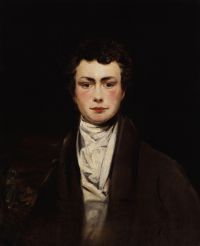
“ Ask a portrait painter to describe his agonies in accommodating the faces with which nature and his sitters have crowded his painting-room to the principles of his art: with the exception of perhaps ten faces in as many millions, there is not one which he can venture to give without shading much and adding more. ”
 Sir Daniel Wilson,
The lost Atlantis, and other ethnographic studies
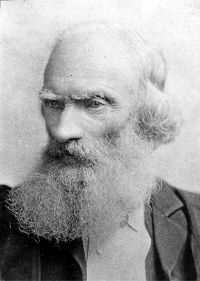
“ But the æsthetic faculty was thus stimulated into activity with results which tended to develop art in all its forms of carving, modelling, sculpture, and painting. An appreciation of colour, not merely for personal adornment, but in its artistic application—alike as a decorative art, and as the means whereby natural objects can be presented with vivid truthfulness to the eye,—is widely diffused; though the mastery of form by the modeller or sculptor long precedes that of chiaroscuro, or aerial perspective. ”
Jennie J. Young, The Ceramic Art
“ Let us suppose that a piece of pottery or porcelain has been painted, and that the action of the fire has made the coloring perennial, so that we find on it a portrait or a landscape everlasting as the ware itself. Let us suppose, further, that the tints are natural, that, in short, the portrait is all that we now understand by the word, and that in the landscape nature is displayed as on canvas—then we should have a specimen of the perfect union of the potter’s and painter’s art. ”
 Ralph Waldo Emerson,
Essays — First Series
“ The office of painting and sculpture seems to be merely initial. The best pictures can easily tell us their last secret. The best pictures are rude draughts of a few of the miraculous dots and lines and dyes which make up the ever-changing “landscape with figures” amidst which we dwell. Painting seems to be to the eye what dancing is to the limbs. ”
Harold Speed, The Practice and Science of Drawing
“ We have seen in an earlier chapter how certain painters in the nineteenth century, feeling how very second-hand and far removed from nature painting had become, started a movement to discard studio traditions and study nature with a single eye, taking their pictures out of doors, and endeavouring to wrest nature's secrets from her on the spot. ”
Daniel Burleigh Parkhurst, The Painter in Oil
“ An artist's eye is sensitive to beauty of color and line and form wherever he sees it. The student's should be also. No artist but has found delight in painting still life. No student should think it beneath his serious study. [Pg 274] Procedure.—Study painting first in still-life compositions. When you set up your canvas first, and set your palette, let it be in front of a few simple objects grouped interestingly; or, better, set up a single jar or a book, with a simply arranged background for color contrast. All the problems of manipulation are there for you to study. ”
George Field, Field's Chromatography
“ The graphic branches of painting, owe everything to colour, which, if it does not constitute a picture, is its flesh and blood. Without it, the finest performances remain lifeless skeletons, and yield no pleasure. ”
 Max Simon Nordau,
Degeneration
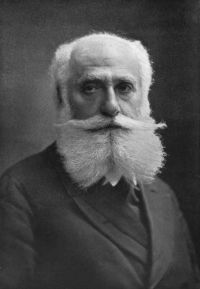
“ The art of painting awakens through its media of colour and drawing (i.e., the exact grasp and reproduction of differences in the intensity of light) , firstly, a purely sensuously agreeable impression of beautiful single colours and happily combined harmonies of colour; secondly, it produces an illusion of reality and, together with this, the higher, more intellectual pleasures arising from a recognition of the phenomena depicted, and from a comprehension of the artist’s intention ”
Related terms
Authors who wrote about “scene painting”
John Charles Van DykeJohn RuskinDe Witt H. ParkerDaniel Burleigh ParkhurstFernand Khnopff, Gerard Brown… Bernard Berenson
 Willard Huntington WrightSir Joshua ReynoldsWalter Crane
 Kenyon CoxSheldon CheneyJohn Addington Symonds
 James McNeill WhistlerJames WardHarold Speed
 Leonardo da VinciSidney ColvinHume Nisbet
 Oscar WildeMembers of the Arts and Crafts Exhibition Society
