Try square

Definition and stakes

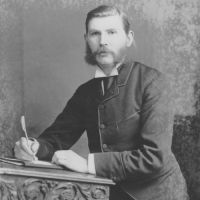
Portrait of Henry Ernest Dudeney Henry Ernest Dudeney,  Amusements in Mathematics

“ In other words, he has managed to dispose the sixty-four first numbers on the squares of a chessboard in such a way that the sum of the numbers in every line, every column, and in each of the two diagonals, shall be the same; and more, that if one substitutes for all the numbers their squares, the square still remains magic." I at once set to work to solve this problem, and, although it proved a very hard nut, one was rewarded by the discovery of some curious and beautiful laws that govern it. The reader may like to try his hand at the puzzle. ”
Source: Gutenberg

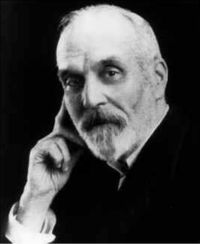
Portrait of Henry Ernest Dudeney Henry Ernest Dudeney,  Amusements in Mathematics

“ Three numbers whose squares are in A.P., with a common difference of 7, are 113/120, 337/120, 463/120; and with Pg 164a common difference of 13 are 80929/19380, 106921/19380, and 127729/19380. In the case of whole square numbers the common difference will always be divisible by 24, so it is obvious that our squares must be fractional. Readers should now try to solve the case where the common difference is 23. It is rather a hard nut.
129.—THE BATTLE OF HASTINGS.—solution
Any number (not itself a square number) may be multiplied by a square that will give a product 1 less than another square.
”
Source: Gutenberg

Three Hundred Things a Bright Boy Can Do

“ The numbers here given to the squares are the same as in draughts. The point to be borne in mind in playing the game is to try to unite a perpendicular with a horizontal line of squares, or with a diagonal line. By careful play three men can be got on one of these lines, and three on a communicating line, each having a vacant square. The player of the opposite colour can fill only one of these squares, and consequently cannot prevent the formation of the quaternion on the other line. ”
Source: Gutenberg

Get perspective with Kwize: daily news enlightened by great literature