German drama

Definition and stakes

The German Classics of the Nineteenth and Twentieth Centuries…

“ Modern German drama, which in its peculiar style is still largely unappreciated because it has always been measured by its real or supposed models, is, together with the free-rhythm lyric, the greatest gift bestowed upon the treasure of forms of the world-literature by the literature of Germany which has so often played the part of recipient.
On the other hand, when speaking of the development of narrative prose, we should remember what we have already accomplished in that line. The "Novelle" alone has attained a fixed form, as a not too voluminous account of a remarkable occurrence.
”
Source: Gutenberg

1911 Encyclopædia Britannica, Volume 8 (1911)

“ Potent as has been the influence of foreign dramatic literatures—whether French or Scandinavian—and that of a movement which has been common to them all, and from which the German was perhaps the least likely to exclude itself, the most notable feature in the recent history of the German drama has been its quick response to wholly new demands, which, though the attempt was made with some persistence, could no longer be met without an effort to span the widths and sound the depths of a more spacious and more self-conscious era. ”
Source: Wikisource

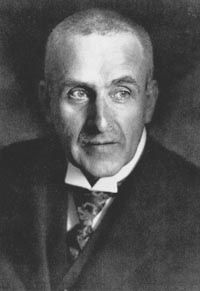
Portrait of Gerhart Hauptmann Gerhart Hauptmann,  The Dramatic Works of Gerhart Hauptmann…

“ The greater number of the first series of performances had already been prepared for by a selection of foreign plays—Tolstoi, Goncourt, Ibsen, Björnsen, Strindberg—when, at the last moment, a young German dramatist presented himself and succeeded in having his play accepted. Thus the society, long since dead, had the good fortune of fulfilling the function for which it was created: it launched the naturalistic movement; it cradled the modern drama of Germany. ”
Source: Gutenberg

Get perspective with Kwize: daily news enlightened by great literature