Beat (music)

Definition and stakes

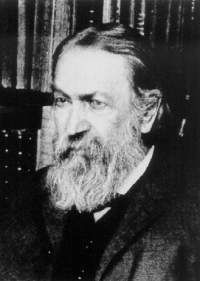
John Weeks Moore,  Complete Encyclopaedia of Music… (1880)

“ When, therefore, a whole tone lies below any note marked for a beat, an accidental sharp is to be supposed on that lower note, except that A is seldom thus sharpened in a beat. The beat is, therefore, the reverse of the shake, (but without the turn,) and is made generally at the distance of a semitone below ; and all the notes, excepting C and F, re-quire the note below to be sharped for the beat. ”
Source: Wikisource

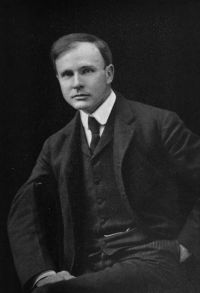
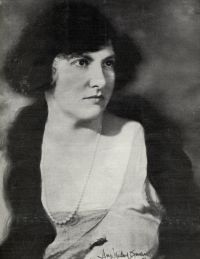
Portrait of Marion Bauer Marion Bauer,  How music grew (1925)

“ Hereafter when we speak of rhythm it will mean movement either in tones or in gestures. Rhythm expressed in tones makes music; rhythm expressed in gestures makes the dance. The reason we like dance music and marches is that we feel the rhythm, the thing that makes us want to mark the beat of the music with our feet, or hands, or with head bobbings. This love of the beat is strong in the savage, and upon this he builds his music.
Our American Jazz is the result of our desire for strong rhythms and shows that we, for all our culture, have something in us of the savage’s feeling for movement.
”
Source: Gutenberg

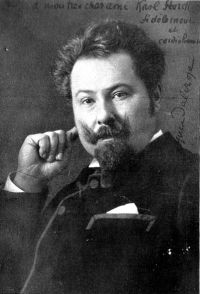
Portrait of Percy Goetschius Percy Goetschius,  Lessons in Music Form

“ The beat is the unit of measurement in music. The measure is a group of beats,—two, three, four, or more, at the option of the composer. The bounds of the measures are visibly represented (on the written or printed page) by vertical lines, called bars; and are rendered orally recognizable (to the hearer who does not see the page) by a more or less delicate emphasis, imparted—by some means or other—to the first pulse or beat of each measure, as accent, simply to mark where each new group begins. ”
Source: Gutenberg

Get perspective with Kwize: daily news enlightened by great literature