Elastic fluid

Definition and stakes

William Stirling,  New Theories in Astronomy

“ If, then, until such a body is found we take the ether as a substitute, we have to acknowledge that it must be not only an elastic fluid but a material substance, capable of being compressed and expanded, and heated and cooled; for nobody could conceive clearly the existence of an elastic fluid that is not subject to these conditions. He could not understand how the molecules of a gas could be contracted, expanded, heated and cooled in a vessel, while the elastic fluid which gave them liberty to move or to be moved, remained constantly at one density and temperature. ”

Source: Gutenberg

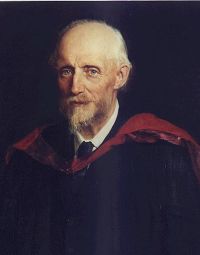
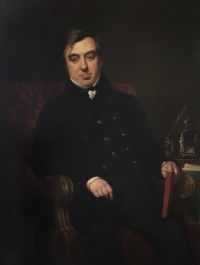
Portrait of John Call Dalton John Call Dalton,  A new system of chemical philosophy…

“ From the foregoing detail of experiments on elastic fluids, it appears evident that such fluids exhibit matter under a form in which it has the greatest possible capacity for heat, when capacity is understood to denote the total quantity of heat connected with the fluid; but if the capacity or specific heat is meant to denote the quantity of heat necessary to raise the body a given number of degrees of temperature, then the elastic fluid form of matter is that which has the least capacity for heat of any known form of the same matter. ”
Source: Gutenberg

Worthington Hooker,  Science for the School and Family…

“ The air and the various gases and vapors are the elastic fluids; while those which are called liquids are the non-elastic fluids. A foot-ball bounds because the air in it is an elastic fluid. If it were filled with a non-elastic fluid; as water, it would not bound. When water takes the form of steam it is an elastic fluid. Though it is very common to use the expression elastic fluids, the division of matter into three forms is the one usually recognized.
8. Solids.—In solid matter the particles can not be moved about among each other
”
Source: Gutenberg

Get perspective with Kwize: daily news enlightened by great literature