Flux (chemistry)

Definition and stakes

G. Hartwig,  The Subterranean World

“ Besides the iron-stone and the fuel, there is needed a third substance, which is called ‘a flux,’ because it forms a fusible compound 352with the earthy matter of the mineral. When we are acquainted with the foreign matter in combination with the ore, chemistry tells us what substance we ought to add for the purpose of eliminating the metal. Among the wonderful provisions of nature for the convenience of man, none is more remarkable than that by which many substances are fusible in conjunction at a temperature which either could resist separately. ”

Source: Gutenberg

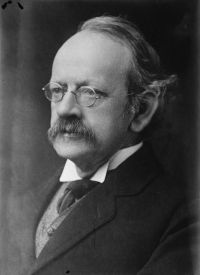
Portrait of Josiah Willard Gibbs Josiah Willard Gibbs,  Scientific Papers of Josiah Willard Gibbs (1906)

“ If, however, we make the assumption, which is hardly likely to be strictly accurate, but which may quite conceivably be not far removed from the truth, that the manner in which the general or average flux in any small part of the medium distributes itself among the molecules and intermolecular spaces is independent of the period, the quantities etc., and etc., will be constant, and we obtain a very simple relation between V and p, which appears to agree tolerably well with the results of experiment. ”
Source: Wikisource

Portrait of Josiah Willard Gibbs Josiah Willard Gibbs,  Scientific Papers of Josiah Willard Gibbs (1906)

“ But these functions will vary with the position of the point considered with reference to the adjacent molecules. Now the expression for the kinetic energy of the irregular part of the flux,
indicates that the we may regard the infinitesimal element the energy (due to this part of the flux) Let us consider the energy due to the irregular flux which will belong to the above defined element which is not infinitely small, but which has the advantage of being one of physically similar elements which make up the whole medium.
”
Source: Wikisource

Get perspective with Kwize: daily news enlightened by great literature