“ In one word, to fix the human personality, to give to each human being an identity, an individuality that can be depended upon with certainty, lasting, unchangeable, always recognisable and easily adduced, this appears to be in the largest sense the aim of the new method. ”
Identity (social science)
Definition and stakes
The theme of “identity (social science)” has been addressed by authors such as John Stuart Mill, John Dewey, F. H. Bradley, Thomas Sergeant Perry and Alfred H. Lloyd. It is often associated with terms like personality, society, individual, self and race.
Quotes about “identity (social science)”
 John Stuart Mill,
A System of Logic, Ratiocinative and Inductive
John Stuart Mill,
A System of Logic, Ratiocinative and Inductive
“ I allude to what may be termed Political Ethology, or the theory of the causes which determine the type of character belonging to a people or to an age. Of all the subordinate branches of the social science, this is the most completely in its infancy. The causes of national character are scarcely at all understood, and the effect of institutions or social arrangements upon the character of the people is generally that portion of their effects which is least attended to, and least comprehended. ”
 Sir Muhammad Iqbal,
The Secrets of the Self (Asrar-i Khudi…
Sir Muhammad Iqbal,
The Secrets of the Self (Asrar-i Khudi…
“ Among the topics discussed are the origin of society, the divine guidance of man through the prophets, the formation of collective life-centres, and the value of History as a factor in maintaining the sense of personal identity in a people. ”
Henry K. Rowe, Society: Its Origin and Development
“ The pull of their individual desires is not the same, the influence of the various social interests is not in the same proportion. The situation is complicated by hereditary tendencies, and by physical and social environment. Consequently every human being possesses his own distinctive individuality or personality. ”
Martin Weller, The Battle for Open (2014)
“ A strong component in the construction of identity is the degree to which either we absorb the values of the community we are in or find a community whose values we can absorb comfortably, summarised in the dictum ‘self reflects society’. ”
Various, Popular Science Monthly (1893)
“ We should, therefore, regard as a form of heredity and organic identity through ages, everything that maintains among a people continuity of character, spirit, habits, and aptitudes; in short, a national consciousness and a national will. ”
 Emily Davies,
Special Systems of Education for Women
(1868)
Emily Davies,
Special Systems of Education for Women
(1868)
“ The abstract questions as to equality and identity may be quickly dismissed. The advocates of the "common" principle—those who hold what may be called the humane theory—altogether disclaim any ambition to assert either. ”
 F. H. Bradley,
Ethical Studies — Essay V.
(1876)
F. H. Bradley,
Ethical Studies — Essay V.
(1876)
“ And we must remark here in passing that, if we accept (as I think we must) the fact that the essence of a man involves identity with others, the question what the final reality of that identity is, is still left unanswered: we should still have to ask what is the higher whole in which the individual is a function, and in which the relative wholes subsist, and to enquire whether that community is, or can be, a visible community at all. ”
John Stuart Mill,
Autobiography (Mill) — Chapter VII. 1840-1870
(1874)
“ In particular, I have long felt that the prevailing tendency to regard all the marked distinctions of human character as innate, and in the main indelible, and to ignore the irresistible proofs that by far the greater part of those differences, whether between individuals, races, or sexes, are such as not only might but naturally would be produced by differences in circumstances, is one of the chief hindrances to the rational treatment of great social questions, and one of the greatest stumbling blocks to human improvement. ”
 Bernard Bosanquet,
The Philosophical Theory of the State
Bernard Bosanquet,
The Philosophical Theory of the State
“ Necessarily, as the relation of the individual to society is the root of every social problem, psychological sociology consists to a great extent in exercises upon the theme of identity and difference. These exercises have hitherto been for the most part unconscious and involuntary. And the high degree of substantial truth which is attained by inquirers who have not thought the logic of identity worthy of a single glance, is the strongest possible confirmation of the common experience that it is safer to neglect theory than to be careless of facts. ”
 Franklin Henry Giddings,
Popular Science Monthly
(1909)
Franklin Henry Giddings,
Popular Science Monthly
(1909)
“ What are the true relations of esthetic and economic, of ethical and social phenomena to one another, and to life in its wide inclusiveness? What, especially, is the precise point of departure of social evolution from all that precedes it and prepares for it? And what is the precise discrimination needful of things social from things merely organic or psychological? The modes and the phases of the struggle for existence suggest intelligible answers. ”
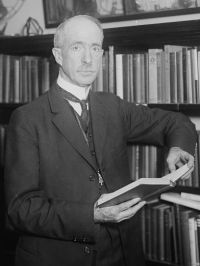 Sidney Lewis Gulick,
Evolution Of The Japanese, Social And Psychic
Sidney Lewis Gulick,
Evolution Of The Japanese, Social And Psychic
“ In doing this, although our aim is constructive, we shall attain our end with greater ease if we rise to positive results through further criticism of defective views. We naturally begin with definitions."Individuality" is defined by the Standard Dictionary as "the state or quality of being individual; separate or distinct existence." "Individual" is defined as "Anything that cannot be divided or separated into parts without losing identity.... A single person, animal, or thing." "Personality" is defined as "That which constitutes a person ”
W.H.R.Rivers, Kinship and social organisation
“ Even at the present time, however, it is possible to support sociological arguments by means of considerations provided by psychological motives, and the assistance thus rendered to sociology will become far greater as the science of social psychology advances. ”
Twentieth Century Negro Literature
“ But so positive and indivisible is the human identity that even the influence of individualism and environments is overcome by the great universal processes of education, the great processes of mind quickening and mind development. ”
 John Ruskin,
The Ethics of the Dust — Second Preface to the Second Edition
(1875)
John Ruskin,
The Ethics of the Dust — Second Preface to the Second Edition
(1875)
“ But on the habit of measuring and reverencing our powers and talents that we may kindly use them, will be founded a true Social science, developing, by the employment of them, all the real powers and honorable feelings of the race. ”
F. H. Bradley,
Ethical Studies — Essay V.
(1876)
“ Against these assertions I shall put some others, viz. that identity and diversity, sameness and difference, imply one another, and depend for their meaning on one another; that mere diversity is nonsense, just as mere identity is also nonsense; that resemblance or likeness, strictly speaking, falls not in the objects, but in the person contemplating (likening, ver-gleichend) ; that ‘is A really like B?’ does not mean ‘does it seem like?’ It may mean ‘would it seem like to everybody?’ but it generally means ‘is there an “objective identity”? ”
 Henri Bergson,
Creative Evolution
Henri Bergson,
Creative Evolution
“ But this itself reveals to us, in the genesis of the individual, a haunting of the social form, as if the individual could develop only on the condition that its substance should be split up into elements having themselves an appearance of individuality and united among themselves by an appearance of sociality. There are numerous cases in which nature seems to hesitate between the two forms, and to ask herself if she shall make a society or an individual. ”
William Hazlitt, The collected works of William Hazlitt… (1902)
“ Up to the present point, the spot on which we stand, the doctrine of personal identity holds good; hitherto the proud and exclusive pretensions of self ‘come, but no farther.’ The rest is air, is nothing, is a name, or but the common ground of reason and humanity. If I wish to pass beyond this point and look into my own future lot, or anticipate my future weal or woe before it has had an existence, I can do so by means of the same faculties by which I enter into and identify myself with the welfare, the being, and interests of others, but only by these. ”
Nels Anderson, The Hobo: The Sociology of the Homeless Man (1923)
“ That means that every community, through the very character of the environment which it imposes upon the individuals that compose it, tends to determine the personal traits as it does determine the language, the vocation, social values, and, eventually, the personal opinions, of the individuals who compose it. ”
1911 Encyclopædia Britannica (1911)
“ And essential to any method of analysis is the recognition of the individuality of the individual. Constitutional differences of a radical nature may be concealed beneath apparent identity of external form. ”
 Thomas Sergeant Perry,
Popular Science Monthly
(1883)
Thomas Sergeant Perry,
Popular Science Monthly
(1883)
“ In social matters we perceive a similar movement toward the emancipation of the individual. All knowledge advances from vague generalities to the comprehension of particulars, and as human beings have succeeded in understanding themselves they have thrown aside the convenient habit of dividing the rest of the world into vast homogeneous classes, and have recognized the dignity and importance of each individual of the race. ”
 James Frederick Ferrier,
Philosophical Works of the Late James Frederick Ferrier
(1888)
James Frederick Ferrier,
Philosophical Works of the Late James Frederick Ferrier
(1888)
“ In order to reach still more definite results, let us consider what their psychology, that is to say, what their doctrine, was in regard to the nature of man, considered as an isolated individual, or viewed in his unsocial capacity. You will observe that man presents himself to our notice under two points of view; as a member of society, and as a man simply, and irrespective of all social relations; in other and shorter words, as a citizen and as an individual. Now, the question is, What are the attributes and constituents of man considered as an individual? ”
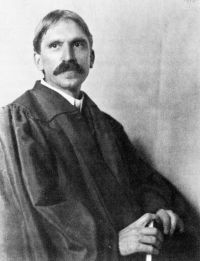 John Dewey,
Democracy and Education
(1916)
John Dewey,
Democracy and Education
(1916)
“ They regarded the individual mind as a separate entity, complete in each person, and isolated from nature and hence from other minds. Thus a legitimate intellectual individualism, the attitude of critical revision of former beliefs which is indispensable to progress, was explicitly formulated as a moral and social individualism. ”
 Scott Nearing,
Civilization and Beyond: Learning from History
(1975)
Scott Nearing,
Civilization and Beyond: Learning from History
(1975)
“ Individuals, born or reared in any form of society are adjusted, shaped and conditioned by the social pattern of which they are a part. Each society attempts to stamp the individuals with its own image and likeness. ”
 Everett Dean Martin,
The Behavior of Crowds: A Psychological Study
Everett Dean Martin,
The Behavior of Crowds: A Psychological Study
“ To each the social is nil except in so far as he experiences it himself, and to each it is something unique when viewed from within. The uniformity and illusion of identity—in short, the impersonal aspect of social thinking and activity appears only when we try to view social behavior from without—that is, as objectively manifest in the behavior of others. ”
 William Isaac Thomas,
Sex and Society: Studies in the Social Psychology of Sex
William Isaac Thomas,
Sex and Society: Studies in the Social Psychology of Sex
“ To the student of ethnology no point in the character of primitive man is more interesting and surprising than his vanity. This unique susceptibility to social influence is, indeed, essential to the complex institutional and associational life of mankind. The transmission of language, tradition, morality, knowledge, and all race experience from the older to the younger, and from one generation to another, is accomplished through mental suggestibility, and the activity of the individual in [pg 207] associational life is mediated largely through it. ”
 W. H. Mallock,
Memoirs of Life and Literature
W. H. Mallock,
Memoirs of Life and Literature
“ This work took the form of a short treatise or essay, called Social Equality, or a Study in a Missing Science. The science to which I referred was the science of human character as connected with the efforts by which wealth and all material civilizations are produced. ”
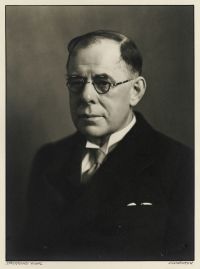 A. E. Taylor,
Elements of metaphysics
(1903)
A. E. Taylor,
Elements of metaphysics
(1903)
“ As the very etymology of such words as “society” and “community” shows—to say nothing of the results of psychological inquiry into the process of learning by imitation—the conception of human selves as independent units which somehow happen to stand in merely accidental or external relations is in flagrant conflict with the most fundamental facts of our social experience. It is only by the systematic suppression of fact that personal and social life can be made to support the hypothesis of Pluralism. ”
Irwin Edman, Human Traits and their Social Significance
“ Part I consists of an analysis of the types of behavior, a survey of individual traits and their significance in social life, a brief consideration of the nature and development of the self, individual differences, language and communication, racial and cultural continuity. Those fruits of psychological inquiry have been stressed which bear most strikingly on the relations of men in our present-day social and economic organization. ”
 Josiah Royce,
The World and the Individual, Second Series
(1901)
Josiah Royce,
The World and the Individual, Second Series
(1901)
“ This world would appear to such an insight as a Social Order. For the categories of the World of Appreciation, as we shall later more fully see, when we come to the study of our human Social consciousness, are the categories of the Self in Social form and expression. But as I discriminate the world, taking account now of ɑ and now of b, my discrimination, determined as it is by the interest of ray individual development, does not seize upon the facts in the order in which they are actually determined by the Will whose expression is the world. ”
William Isaac Thomas,
The Unadjusted Girl, With Cases and Standpoint for Behavior Analysis
“ Eventually the life of the individual is the measure of the totality of social influence, and the institution should be studied in the light of the personality development of the individual. And as we accumulate records of personal evolution, with indications of the means by which the wishes seek expression and of the conditions of their normal satisfaction, we shall be in a better position to measure the influence of particular institutions in the formation of character and life-organization and to determine lines of change in the institutions themselves. ”
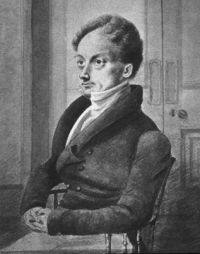 James Mill,
Analysis of the Phenomena of the Human Mind
James Mill,
Analysis of the Phenomena of the Human Mind
“ We are aware, by the liveliness of our impression, that we have gone in upon an old track; we have the peculiar consciousness called the consciousness of Identity or Agreement. This is one step, but not the whole. In order that the complete restoration may be effected, the features of community must be in such firm contiguous alliance with the features of difference—the special part of the previous subject that the one shall reinstate the idea of the other. ”
Sidney Lewis Gulick,
Evolution Of The Japanese, Social And Psychic
“ Sociological phenomena cannot be fully expressed by any combination of exclusively physical, biological, and psychic terms, for the significant element of man and of society consists of something more than these—namely, personality. It is this that differentiates human from animal evolution. The unit of human sociology is a self-conscious, self-determinative being. The causative factor in the social evolution of man is his personality. The goal of that evolution is developed personality. Personality is thus at once the cause and the end of social progress. ”
A. S. Draper, Report of the Committee of Fifteen
“ Man has two selves, they say, the individual self, and the collective self of the organized state or nation. The study of history is, then, the study of this larger, corporate, social and civil self. The importance of this idea is thus brought out more clearly in its educational significance. For to learn this civil self is to learn the substantial condition which makes possible the existence of civilized man in all his other social combinations—the family, the Church, and the manifold associated activities of civil society. ”
 Agnes Repplier,
Under dispute
(1924)
Agnes Repplier,
Under dispute
(1924)
“ It is the foundation upon which are reared the superstructures of sociology, psychology, philosophy and ethics. It is our clue to the problems of the race. It is the gateway through which we glimpse the noble and terrible things which have stirred the human soul. ”
 Alfred H. Lloyd,
The will to doubt
Alfred H. Lloyd,
The will to doubt
“ Personally, just to sum up what has been said, all individuals are all things in one, and this idea, as it is understood, should correct that erroneous treatment of individualism, whether as a movement in the life of society or even as an incident of the scientific method of induction, to which reference was made in the discussion of the rise of science. ”
 Boris Sidis,
The Source and Aim of Human Progress…
(1919)
Boris Sidis,
The Source and Aim of Human Progress…
(1919)
“ I pointed out an important law in Social Psychology, namely, that greatness of individuality is inversely proportional to the mass of the social aggregate. ”
F. H. Bradley,
Ethical Studies — Essay V.
(1876)
“ If we suppose then that the results of the social life of the race are present in a latent and potential form in the child, can we deny that they are common property? Can we assert that they are not an element of sameness in all? Can we say that the individual is this individual, because he is exclusive, when, if we deduct from him what he includes, he loses characteristics which make him himself, and when again he does include what the others include, and therefore does (how can we escape the consequence?) ”
Josiah Royce,
The World and the Individual, First Series
(1899)
“ But we also find it socially convenient to view the common objects of our human and social knowledge as independent both of my fellow and myself, even while we still view these objects as the same for both of us, and for all other actual and possible human observers. ”