Intelligent design (ID) is a pseudoscientific argument for the existence of God, suggesting that certain biological and cosmic features are best accounted for by an intelligent cause rather than by unguided mechanisms such as natural selection. Originating from creationist thought in the late 20th century, it sidesteps explicit religious references while drawing upon theological traditions such as the teleological argument. Advocates, including those associated with the Discovery Institute, present ID as a scientific alternative to evolution, highlighting concepts such as "irreducible complexity" and "specified complexity.
" Nevertheless, critics point out its absence of empirical support and dependence on claims that cannot be tested. From a wider viewpoint, writers like John Ruskin and William Whewell examined design in nature and art, emphasizing humanity’s role in forming purposeful structures, whereas others, such as Jean-Jacques Rousseau, doubted whether natural harmony could exist without an intelligent cause. Although ID aims to challenge methodological naturalism, its blending of theological reasoning with scientific language remains controversial, illustrating ongoing discussions about purpose in the natural world.
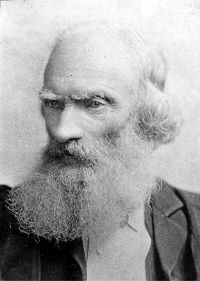 Sir Daniel Wilson,
Prehistoric man
Sir Daniel Wilson,
Prehistoric man