Main body

Definition and stakes

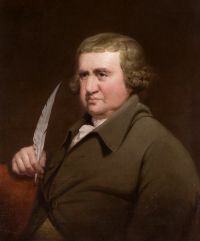
Ernest G. Martin,  Physiology: The Science of the Body

“ Nearly everyone learns in school the main facts about the construction of the body; that there is a bony skeleton which supports the softer parts; that motions are made by muscles; that sense organs inform us as to what is going on in the world around; that the brain is the seat of the mind; that heart, lungs, stomach, kidneys, and other organs contribute in various ways to our well-being. ”

Source: Gutenberg

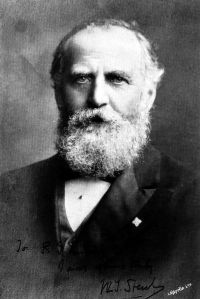
Portrait of Bhagvat Singh Bhagvat Singh,  A Short History of Aryan Medical Science (1896)

“ One whose hands, feet, sides, back, nipples, teeth, shoulders, mouth, and forehead are large ; whose arms, fingers, breath, and eyesight are long, brows and chest are broad ; legs, genital organ, and neck short, voice and navel are deep ; whose vigour is great, whose head protrudes backward, whose joints, veins, and arteries are buried in flesh, whose limbs are strongly built ; who is cool and collected, free from disease, and has hair growing on the ears ; whose body, intellect, and experience grow gradually, — such a man is expected to enjoy long life. ”
Source: Wikisource

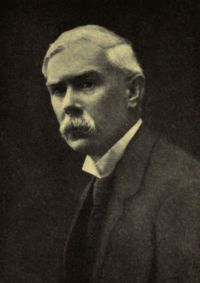
Thomas Brown,  Lectures on the Philosophy of the Human Mind…

“ The first of these classes,—that which includes the various modifications of resistance,—I examined at great length, and showed, I trust, that it is not to our organ of touch we are indebted for these, but that they are feelings of another sense, of which our muscular frame is the organ,—the feelings, in short, of which every one must have been conscious, who has attempted to grasp any body, or to press against it, when the full contraction of the muscles must, of course, have been impeded. ”
Source: Gutenberg

Get perspective with Kwize: daily news enlightened by great literature