
“ The name then is perfectly general; for, no matter what the something is that good is held to mean, the theory is still Naturalism. Whether good be defined as yellow or green or blue, as loud or soft, as round or square, as sweet or bitter, as productive of life or productive of pleasure, as willed or desired or felt: whichever of these or of any other object in the world, good may be held to mean, the theory, which holds it to mean them, will be a naturalistic theory. ”
Naturalism (literature)
Definition and stakes
The theme of “naturalism (literature)” has been addressed by authors such as Rudolf Otto, Albert Parker Fitch, Irving Babbitt, P. H. Emerson and Abel J. Jones. It is often associated with terms like nature, art, philosophy, science and idealism.
Quotes about “naturalism (literature)”
 William Ralph Inge,
Outspoken Essays
“ But the difference between naturalism and idealism may, I think, be better stated otherwise than by emphasising the contrast between existence and value, which it is impossible for either side to maintain. Naturalism seeks to interpret the world by investigation of origins ”
Giovanni Gentile, The Reform of Education
“ For naturalism reduces itself to the affirmation that we think nature, but do not ourselves exist; nature alone exists. We do not exist and yet we think, and we think of nature as existing. We do not exist and yet nature exists, of whose existence we have no other testimony than our thoughts. And if thought is a shadow, what will reality then be? ”
 Albert Parker Fitch,
Preaching and Paganism
“ How deeply sunk in the modern world are the roots of this naturalism is shown by its long course in history, paralleling humanism. It has seeped down through the Protestant centuries in two streams. One is a sort of scientific naturalism. It exalts material phenomena and the external order, issues in a glorification of elemental impulses, an attempted return to childlike spontaneous living, the identifying of man's values with those of primitive nature. ”
Abel J. Jones, Rudolph Eucken : a philosophy of life
“ He first treats of Naturalism, that solution of the problem that makes the sense experience of surrounding nature the basis of life, subordinating even the life of the soul to the level of the natural, material world.Nature in the early ages had been superficially explained, often in the light of religious doctrine. Man gave to nature a variety of explanations and of colouring, depending largely upon his ideas of the place of nature in relation to himself and to the invisible world. ”
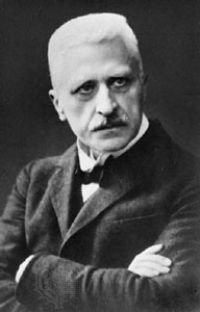 Rudolf Otto,
Naturalism and Religion
“ Thought can turn its attention upon itself, can establish that it takes place, and how it runs its course, can reflect upon the forms in which it expresses itself, its powers, its laws, possibilities, and limits, and can ponder over the general nature of thought and the contingent individual nature of the particular thinking subject. (The very possibility and preliminary condition of moral freedom is implied in this.) How naturalism is to do justice to this fact it is not easy to see. ”
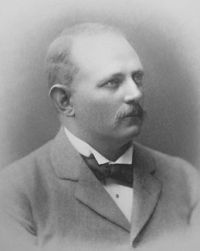 P. H. Emerson,
Naturalistic Photography for Students of the Art
“ Of course Naturalism premisses that all the suggestions for the work are taken from and studied from nature. The subject in nature must be the thing which strikes the man and moves him to render it, not the plate he has to fill. Directly he begins thinking how he can fill a certain canvas or plate, he is no longer naturalistic, he may even then show he is a good draughtsman or a good colourist, but he will not show that he is naturalistic. ”
 Irving Babbitt,
Rousseau and Romanticism
“ An equally indubitable fact is that scientific or rationalistic naturalism tended from the early eighteenth century to produce emotional naturalism, and that both forms of naturalism were hostile to the doctrine of imitation. ”
Rudolf Otto,
Naturalism and Religion
“ The True Naturalism. But naturalism becomes fundamentally different when it ceases to remain at the level of naïve or fancifully conceived ideas of “nature” and “natural occurrences,” when, instead of poetry or religious sentiments, it incorporates something else, namely, exact natural science and the idea of a mathematical-mechanical calculability in the whole system of nature. “Nature” and “happening naturally”, as used by the naïve intelligence, are half animistic ideas and modes of expression, which import into nature, or leave in it, life and soul, impulse, and a kind of will. ”
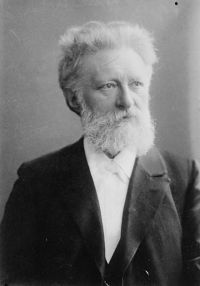 Rudolf Eucken,
Ethics and Modern Thought: A Theory of Their Relations
“ For if we accept naturalism as the only valid conception of life, and develop it consistently in all its bearings, we cannot but see its incapacity to embrace the whole of life. The apparent victory of naturalism thus contains the germ of a defeat, the beginning of a great reaction. ”
Rudolf Otto,
Naturalism and Religion
“ With these it deals and through them it works. Even in the most elementary naturalistic idea, that “everything happens of itself,” there lurks that aversion to purpose which characterises all naturalistic systems. ”
Abel J. Jones, Rudolph Eucken : a philosophy of life
“ To produce from the phenomena of nature a scientific conception of nature demands the activity of an independent, originative power of thought, which, though it may be conditioned by, and must be related to, sense impressions, is far above mere sense impressions.Naturalism, in directing attention to the things that are experienced, fails to take proper account of the mind that experiences them; it postulates nature without mind, when only by the mind processes can man become aware of nature, and construct a naturalistic scheme of life. ”
 James Frederick Ferrier,
Scottish Philosophy: The Old and the New
(1856)
“ What would be thought of a naturalist, were he, in composing a treatise on fishes, first of all, to set about proving to himself and others that there were such creatures? Would he not be thought rather a natural than a naturalist? Such very reasonably might I have been thought, if I had ever dreamt of proving to the world, either that Knowledge was, or that Being was. ”
William James, Essays in Radical Empiricism
“ Most rationalists nowadays will agree that naturalism gives a true enough account of the way in which our intellect arose at first, but they will deny these latter implications. The case, they will say, resembles that of sexual love. ”
 Evelyn Underhill,
Mysticism: A Study in Nature and Development of Spiritual Consciousness…
(1911)
“ Let us then consider shortly the results arrived at by these traditional schools—the great classic theories concerning the nature of reality. In them we see crystallized the best that the human intellect, left to itself, has been able to achieve.I. The most obvious and generally accepted explanation of the world is of course that of Naturalism, or naive Realism: the point of view of the plain man. Naturalism states simply that we see the real world, though we may not see it very well. What seems to normal healthy people to be there, is approximately there. ”
 Ralph Waldo Emerson,
The American Scholar
(1838)
“ Yet when this spiritual light shall have revealed the law of more earthly natures,—when he has learned to worship the soul, and to see that the natural philosophy that now is, is only the first gropings of its gigantic hand, he shall look forward to an ever expanding knowledge as to a becoming creator. He shall see, that nature is the opposite of the soul, answering to it part for part. One is seal, and one is print. Its beauty is the beauty of his own mind. Its laws are the laws of his own mind. Nature then becomes to him the measure of his attainments. ”
Charles H. Caffin, A Child's Guide to Pictures
“ They have become ardent “realists” or “naturalists.” “Realists,” because they are occupied with what we are in the habit of calling the realities of life. [12] “Naturalists,” because they love nature and try to represent her actual appearances, as they are enveloped in and affected by light and atmosphere. ”
 Friedrich Schiller,
Aesthetical Essays of Friedrich Schiller
“ Nature, in being capricious and defying logic, in pulling down great and little, in crushing the noblest works of man, taking centuries to form—nature, by deviating from intellectual laws, proves that you cannot explain nature by nature's laws themselves, and this sight drives the mind to the world of ideas, to the absolute. ”
Various, The Journal of Speculative Philosophy…
“ Not thus reads the ideal naturalist the Book of lives. But opening at spirit, and thence proceeding to ideas and finding their types in matter, life unfolds itself naturally in organs, faculties begetting forces, mind moulding things substantially, its connections and inter-dependencies appear in series and degrees as he traces the leaves, thought the key to originals, man the connexus, archetype, and classifier of things ”
Charles Frederick Hoffmann, Popular Science Monthly (1879)
“ The proper sentiment of the naturalist is this, that so far from pretending to inspiration or infallibility, he humbly recognizes the limitations inherent in his own intellectual powers, and imposed upon him and his time; while with all the faculties of his mind and soul, and with faith, he labors unbiased and assuredly, aiming at truth and confident of the usefulness of his life-work to his own or to subsequent generations, who sooner or later will recognize every true contribution to the stock of knowledge and to a purer and profounder insight into the wonders of the creation. ”
James Ward, The Realm of Ends or Pluralism and Theism (1911)
“ Agreeably to its contention for the priority of its own standpoint, Naturalism terms the contents of its world phenomenal, and those of consciousness merely epiphenomenal. But now the tangible, visible, sonorous world, the world of external perception — from which the naturalist starts and to which in all his observations and experiments he appeals to verify the applicability of his theory — this world belongs entirely to the epiphenomenal series. So too does every concept in his theory as such ”
Fred S. Lincoln, An Indiana Girl — Chapter 16 (1901)
“ Tell me—where would one derive naturalness but from nature? You grant that?" he asked, as she poised her lips in good-humored stubbornness. "Well, then, we people see nature so little that it affects us not at all, and we are far from natural, which makes that virtue unusual among us. ”
 Josiah Royce,
The World and the Individual, Second Series
(1901)
“ As industrial art regards its facts as mere contrivances that have no life of their own, but that merely express their human artificer’s intents, so a philosophy of Nature, founded solely upon our special sciences, tends to treat the facts of Nature (regarded in the light of our cunningly contrived conceptions) as having no inner meaning, and as being mere embodiments of our formulas. ”
Leon H. Vincent, American literary masters (1906)
“ It makes no difference ‘whether Orion is up there in heaven or some god paints the image in the firmament of the soul.’ Culture has the uniform effect of leading us to regard nature as a phenomenon, not a substance. Nature herself gives us the hint of Idealism. The poet teaches the same lesson. The philosopher seeking, not Beauty, but Truth, dissolves the ‘solid seeming block of matter’ by a thought. ”
Rudolf Otto,
Naturalism and Religion
“ But undoubtedly we must reject in great measure the claims which naturalism makes upon our domain, and maintain that the most important starting-points for the higher view are to be found in the priority of everything spiritual over everything material, in the underivability of the spiritual and the impossibility of describing it in corporeal-mathematical terms and concepts. ”
Cora May Williams, A Review of the Systems of Ethics Founded on the Theory of Evolution
“ The emotions one feels, the acts one performs, must mould one's character, one's thought, opinion, the mental world in which one lives, and so one's creative genius. Nature is by no means all dunghill or reptile-haunted swamp, or even common kitchen ”
 Thomas Hill Green,
An Estimate of the Value and Influence of Works of Fiction in Modern Times
“ ASPECT OF NATURE4. But though the world of nature is, in this sense, a world of man's own creation, it is so in a different way from the world of art and of philosophy. Thought is indeed its parent, but thought in its primary stage fails to recognize it as its own, fails to transfer to it its own attributes of universality, and identity in difference. It sees outward objects merely in their diversity and isolation. It seeks to penetrate nature by endless dichotomy, glorying in that dissection of unity which is the abdication of its own prerogative. ”
 F. Max Müller,
The Silesian Horseherd - Questions of the Hour
“ That is [pg 059] the thought, the idea, the logos of dog. Can there be a thought without a thinker? Did the ideas in nature, the millions of objects which make up our knowledge, fall from the clouds? Did they make themselves or did nature make them? Who, then, is nature? Is it a masculine, feminine, or neuter? If nature can choose, then it can also think and produce. But can it? No, nature is a word, very useful for certain purposes; but empty, intangible, and incomprehensible. Nature is an abstraction, as much as dog or tree, but far more inclusive. ”
Ralph Waldo Emerson,
Nature
(1836)
“ I only wish to indicate the true position of nature in regard to man, wherein to establish man, all right education tends; as the ground which to attain is the object of human life, that is, of man's connexion with nature. Culture inverts the vulgar views of nature, and brings the mind to call that apparent, which it uses to call real, and that real, which it uses to call visionary. ”
Rudolf Otto,
Naturalism and Religion
“ The aggressive naturalism which we have discussed has from very early times exercised itself on this point, and has instinctively and rightly felt that herein lies the kernel of the whole problem under dispute. ”
Giovanni Gentile, The Reform of Education
“ But he also feels that between these ideal creations of his own, and the solid, sound, real living forms of nature, there is an abyss. He must, indeed, fall in with nature, in the process of generating other living beings of flesh and blood. He must avail himself of nature by first submitting to its unfailing laws, if he intends to give body, that is, real existence, to the ideal conceptions of his intelligence. On one side then we have thought; on the opposite side reality,—that reality, Nature. ”
Ralph Waldo Emerson,
Art
(1841)
“ What is a man but nature's finer success in self-explication? What is a man but a finer and compacter landscape than the horizon figures, — nature's eclecticism? and what is his speech, his love of painting, love of nature, but a still finer success? ”
“ This feeling in practice would not triumph over fear and greed; but the feeling is natural, and everybody with a grain of nature in him can imagine its triumph. Nature tends towards that impossibility, and art, lifting, so to speak, the lid which fact drops upon nature, reveals nature in belying fact. ”
Josiah Royce,
The World and the Individual, First Series
(1899)
“ So much the more must an idealist to-day be unwilling to talk of nature as coming for the first time to self-consciousness in man, or to limit the categories in terms of which nature is to be interpreted, to those which are found directly serviceable in the human process of cataloguing and describing the natural phenomena which come within our finite ken. ”

“ CLEINIAS: But why is the word 'nature' wrong? ATHENIAN: Because those who use the term mean to say that nature is the first creative power; but if the soul turn out to be the primeval element, and not fire or air, then in the truest sense and beyond other things the soul may be said to exist by nature; and this would be true if you proved that the soul is older than the body, but not otherwise. ”
Robert Lynd, The Art of Letters
“ He holds that man should rise from the plane of nature to the plane of humanism or the plane of religion, and that to live according to one’s temperament, as the romanticists preach, is to sink back from human nature, in the best sense, to animal nature. ”
Josiah Royce,
The World and the Individual, Second Series
(1901)
“ Whatever the deeper reality behind Nature may turn out to be, — our Nature, the realm of matter and of laws with which our science and our popular opinions have to do, is a realm which we conceive as known or as knowable to various men, in precisely the same general sense in which we regard it as known or as knowable to our private selves. Take away the social factor in our present view of Nature, and you would alter the most essential of the characters possessed, for us, by that physical realm in which we all believe. ”
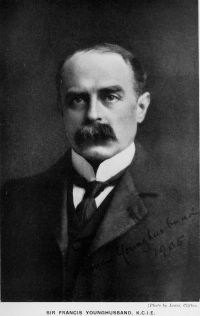 Sir Francis Edward Younghusband,
The Heart of Nature; or, The Quest for Natural Beauty
“ For it is in ourselves that the dominating spirit of Nature is most clearly manifested to us. And being ourselves the instruments and agents of Nature, and informed through and through with her spirit, we ought to be able to understand how she works if only we look carefully enough into the working of our own inner selves.What we find is that under the inspiration of the genius of Nature we are perpetually projecting in front of us a pattern or standard of what we think we ought to be, or should like to be, and of what we think our country and the world ought to be. We set up an ideal. ”
