Social economy

Definition and stakes

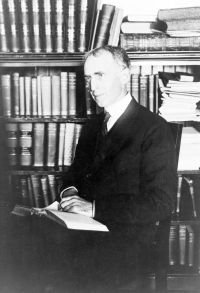
Portrait of John Bates Clark John Bates Clark,  Essentials of Economic Theory

“ Social Economy the Chief Subject of Study.—We care most to know how an organized society produces and uses its wealth, and in making this inquiry we encounter at once phenomena that are not universal. [Pg 60] The civilized society creates its wealth coöperatively, by the joint action of its various members; that is, it proceeds by means of a division of labor and an exchanging of products. Moreover, it has, in some way, to share the sum total of its gains among its various members. ”

Source: Gutenberg

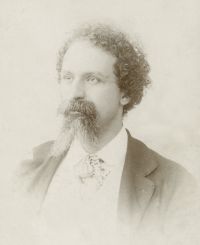
Portrait of S. Laing S. Laing,  A Modern Zoroastrian

“ On social and moral grounds, also, apart from dry considerations of political economy, progress intelligence and a higher standard of life are more likely to be found with large cities, manufactures, and a variety of industrial occupations than with a dead level of a few millionaires and a few shepherds, or of a few landlords and a dense population of poor peasants. ”
Source: Gutenberg

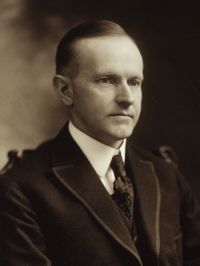
Portrait of John Stuart Mill John Stuart Mill,  Principles of Political Economy (1871)

“ But in so far as the causes are moral or psychological, dependent on institutions and social relations, or on the principles of human nature, their investigation belongs not to physical, but to moral and social science, and is the object of what is called Political Economy.
The production of wealth; the extraction of the instruments of human subsistence and enjoyment from the materials of the globe, is evidently not an arbitrary thing.
”
Source: Wikisource

Get perspective with Kwize: daily news enlightened by great literature