“ It would be very presumptuous to attempt to tell any man how to acquire the highest position in his community, especially as the answer is written in his heart, his intellect, his altruistic sympathy, and his ardent civic pride. A subject, however, that is not so serious or over-aweing, and which can perhaps have directions written for it, is the lesser ambition of acquiring a social position. ”
Social position
Definition and stakes
The theme of “social position” has been addressed by authors such as Henry K. Rowe, Herbert Spencer, Emily Post, George Stuart Fullerton and Scott Nearing. It is often associated with terms like society, duty, individual, class and character.
Quotes about “social position”
“ First of all, it is necessary to decide what one's personal idea of position is, whether this word suggests merely a social one, comprising a large or an exclusive acquaintance and leadership in social gaiety, or position established upon the foundation of communal consequence, which may, or may not, include great social gaiety. ”
 Auguste Comte,
A General View of Positivism
Auguste Comte,
A General View of Positivism
“ Thus the social position of women is in this respect very similar to that of philosophers and of the working classes. And we now see why these three elements should be united. It is their combined action which constitutes the moral or modifying force of society. ”
 William Isaac Thomas,
The Unadjusted Girl, With Cases and Standpoint for Behavior Analysis
William Isaac Thomas,
The Unadjusted Girl, With Cases and Standpoint for Behavior Analysis
“ Eventually the life of the individual is the measure of the totality of social influence, and the institution should be studied in the light of the personality development of the individual. And as we accumulate records of personal evolution, with indications of the means by which the wishes seek expression and of the conditions of their normal satisfaction, we shall be in a better position to measure the influence of particular institutions in the formation of character and life-organization and to determine lines of change in the institutions themselves. ”
 Franklin Henry Giddings,
Popular Science Monthly
(1909)
Franklin Henry Giddings,
Popular Science Monthly
(1909)
“ Here a word must be said about the subjective aspect of society, which, in its objective aspect, as we have seen, is merely the struggle and process of adjustment. What is the relation of adjustment to sympathy and to understanding, to communication and to concerted purpose, to the evolution of a social constraint through which the community controls and shapes the individual, to cooperation and to social organization? ”
 Ellen H. Richards,
The Cost of Shelter
Ellen H. Richards,
The Cost of Shelter
“ What is the value, of present-day knowledge if not to stimulate the conscious group, through the individual perhaps, but the group finally, to better use of its powers and opportunities toward a higher form of social life? ”
 Sabine Baring-Gould,
Arminell, a social romance
(1896)
Sabine Baring-Gould,
Arminell, a social romance
(1896)
“ You have been left too much to yourself or with unsatisfactory governesses. You must be taught your proper place. You must go into the stream of social life, and feel the current and its irresistidle force. ”
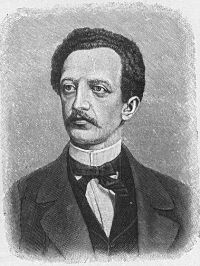 Ferdinand Lassalle,
The Working Man's Programme
(1884)
Ferdinand Lassalle,
The Working Man's Programme
(1884)
“ We have now seen, gentlemen, two periods of the world, each of which is dominated by the ruling idea of a particular class of the community which impresses its own principle on all the social arrangements of its time. ”
George Herbert Palmer, Altruism: Its Nature and Varieties
“ Society, the special field for the cultivation of manners, would soon be sterile soil were it not abandoned during lenten intervals and summers in the country. After meeting a multitude of people and being obliged to adjust ourselves to only such matters as all can understand, what a relief it is to be in the open fields, social conventions dropped, responsibilities forgotten, and no regard for others marking our words, acts, or dress! ”
Edith B. Ordway, The Etiquette of To-day
“ A certain social sense is, therefore, the foundation upon which all concerted action rests; and this, permeating the character and winning conformity in the life, produces a social order which is at once the criterion of civilization and the source of its power. ”
Emory Adams Allen, The Golden Gems of Life; Or, Gathered Jewels for the Home Circle
“ How can one in the seclusion of private life accurately measure the force of {278} the influence those are subjected to who live and act in the center of vast and powerful civil and social circles? The more you mix with men the less you will be disposed to quarrel, and the more charitable and liberal will you become. The fact that you do not understand another is quite as likely to be your fault as his. ”
Durant Drake, Problems of Conduct: An Introductory Survey of Ethics
“ The people generally would be dignified and educated by their participation in industrial, as now in political decisions. If some of the tougher strains of character, grit, push, endurance, etc. would be less fostered, the gentler and more social aspects of character would find better soil. ”
 George Stuart Fullerton,
A Handbook of Ethical Theory
George Stuart Fullerton,
A Handbook of Ethical Theory
“ SOCIAL WILL AND SOCIAL HABITS.—Within the province of the social will fall what may not inaptly be called the habits of a community—ways of acting acquired largely without premeditation and followed to a great extent through mere inertia. The province of the social will is a broad one. Deliberate choices; those half-conscious choices analogous to the unheeded expressions of preference which fill the days of the individual; impulses and tendencies which scarcely emerge into the light—all are expressions of the social will. ”
 John Stuart Mill,
Auguste Comte and Positivism
John Stuart Mill,
Auguste Comte and Positivism
“ The modification of men's moral natures, caused by the continuous discipline of social life, which adapts them more and more to social relations, is therefore the chief proximate cause of social progress. ”
E. W. Burgess, Introduction to the Science of Sociology
“ Everything now which is present in the individuals—the immediate concrete locations of all historical actuality—in the nature of impulse, interest, purpose, inclination, psychical adaptability, and movement of such sort that thereupon or therefrom occurs influence upon others, or the reception of influence from them—all this I designate as the content or the material of socialization. In and of themselves, these materials with which life is filled, these motivations which impel it, are not social in their nature. ”
Cora May Williams, A Review of the Systems of Ethics Founded on the Theory of Evolution
“ That which, when we become capable of reflection, we term conscience, consists in pleasure in forms of action furthering the welfare of society—forms gradually moulded to habit with the development of social relations,—and in a corresponding pain at the realization of having failed of such action; the knowledge of the demand, by society as a whole or by a part of society, of action in accord with the general welfare, and the sense of the justice of this demand, constituting the feeling of obligation and duty. ”
 Scott Nearing,
Civilization and Beyond: Learning from History
(1975)
Scott Nearing,
Civilization and Beyond: Learning from History
(1975)
“ The success or failure of this effort to assure individual adjustment to the social norm and conformity to its practices varies with the prosilitizing enthusiasm of the society and with the ration of adaptability and self-consciousness of its individual members. ”
 Johann Gottlieb Fichte,
The Vocation of the Scholar — Lecture II. The Vocation of Man in Society
(1794)
Johann Gottlieb Fichte,
The Vocation of the Scholar — Lecture II. The Vocation of Man in Society
(1794)
“ The social impulse is also positively defined by the law of perfect internal harmony, and thus we arrive at the peculiar vocation of man in Society. All the individuals who compose the human race differ from each other ”
 Randolph Silliman Bourne,
Untimely papers
(1919)
Randolph Silliman Bourne,
Untimely papers
(1919)
“ By the time we find ourselves here we are caught in a network of customs and attitudes, the major directions of our desires and interests have been stamped on our minds, and by the time we have emerged from tutelage and reached the years of discretion when we might conceivably throw our influence to the reshaping of social institutions, most of us have been so molded into the society [190] and class we live in that we are scarcely aware of any distinction between ourselves as judging, desiring individuals and our social environment. ”
 Boris Sidis,
The Source and Aim of Human Progress…
(1919)
Boris Sidis,
The Source and Aim of Human Progress…
(1919)
“ I pointed out an important law in Social Psychology, namely, that greatness of individuality is inversely proportional to the mass of the social aggregate. ”
Scott Nearing,
Civilization and Beyond: Learning from History
(1975)
“ Individuals, born or reared in any form of society are adjusted, shaped and conditioned by the social pattern of which they are a part. Each society attempts to stamp the individuals with its own image and likeness. ”

“ Here our difficulty is to understand the social conditions, so unlike those with which we are acquainted, and as society is greater than man, so we feel that society, and not individual men, should occupy the chief place in the picture. ”
Caroline Louisa Hunt, Home Problems from a New Standpoint
“ A better working theory, and one that is less likely to lead to undemocratic practices, is the one that sees in the individual the unit, and in the family relation one of the most important means for promoting his happiness and social usefulness. ”
Robert Chenault Givler, The ethics of Hercules (1924)
“ It treats of the relation of social psychology to political science, jurisprudence, economics, history and sociology, analyzing the psychological assumptions underlying the behavior of men living in social relations. ”
 Lillian D. Wald,
The house on Henry Street
(1915)
Lillian D. Wald,
The house on Henry Street
(1915)
“ We remind our young people from time to time that conventions established in sophisticated society have usually a sound basis in social experience, and the cultivation of the minor morals of good manners develops consideration for others. ”
George Stuart Fullerton,
A Handbook of Ethical Theory
“ We have seen that the forms under which they appear are not independent of the degree and kind of the development of the society we may happen to be contemplating. [Footnote: See chapter ii.] And we have realized that man is born into a world of ready-made duties which are literally forced upon his attention. He finds himself a member of a family, somebody's neighbor, a resident in a town or village, allotted to a social class, an employer or an employee, a citizen of a state. ”
Nels Anderson, The Hobo: The Sociology of the Homeless Man (1923)
“ That means that every community, through the very character of the environment which it imposes upon the individuals that compose it, tends to determine the personal traits as it does determine the language, the vocation, social values, and, eventually, the personal opinions, of the individuals who compose it. ”
Willard E. Hotchkiss, Higher Education and Business Standards
“ Laws and opinions of particular groups, group morality, individual morality, even inertia, and a long list of more subtle and often capricious reactions are channels through which social purpose finds expression. ”
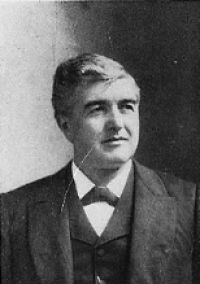 Arnold Tompkins,
The American Journal of Sociology
(1896)
Arnold Tompkins,
The American Journal of Sociology
(1896)
“ All the shiftings, surgings, and upheavals of society arise from the strained relations between the individual and the social organization through which the individual attempts to realize his life. Sociology seizes at once upon social organization as a means of personal development. ”
Samuel R. Wells, How to Behave: A Pocket Manual of Republican Etiquette…
“ Out of rights grow duties; the first of which is to live an honest, truthful, self-loyal life, acting and speaking always and everywhere in accordance with the laws of our being, as revealed in our own physical and mental organization. It is by the light of this fact that we must look upon all social requirements, whether in dress, manners, or morals. All that is fundamental and genuine in these will be found to harmonize with universal principles, and consequently with our primary duty in reference to ourselves. ”
Hector Denis, Social Comptabilism
“ Each individual would thus have the stereotype of his effective social life cast; each social being would have his effective life formulated, if one may so speak, by relation, always by relations, nothing but by relations—to that of all the rest, but in figures, and yet again, in nothing but figures. ”
 Herbert Spencer,
Popular Science Monthly
(1876)
Herbert Spencer,
Popular Science Monthly
(1876)
“ This relation, in which the mutual rendering of services is unforced and neither individual subordinated, becomes the predominant relation throughout society, in proportion as the industrial activities predominate. Daily determining the thoughts and sentiments, daily disciplining all in asserting their own claims, while forcing them to recognize the correlative claims of others, it produces social units whose mental structures and habits mould social arrangements into corresponding forms. ”
G. A. Johnston, An Introduction to Ethics, for Training Colleges… (1915)
“ Every one of our actions, whether we wish it or not, exercises some influence on other human beings in the social community in which we live. By our conduct we help to uphold or undermine the principles on which the various social institutions are based ”
Auguste Comte,
A General View of Positivism
“ There are three successive states of morality answering to the three principal stages of human life; the personal, the domestic, and the social stage. ”
Herbert Spencer,
Essays: Scientific, Political, & Speculative…
“ The strong divisions of rank and the immense inequalities of means, are at variance with that ideal of human relations on which the sympathetic imagination likes to dwell; and the average conduct, under the pressure and excitement of social life as at present carried on, is in sundry respects repulsive. ”
 Albion Woodbury Small,
The American Journal of Sociology
(1896)
Albion Woodbury Small,
The American Journal of Sociology
(1896)
“ Are men on the whole sane, or hysterical, or possibly paranoiac, in their attitude toward real and possible social conditions? Are the postulates of our social introspection valid or invalid? Have we learned all that can be known about the antecedents of present conditions, about the standards by which these conditions should be judged, about the type of future conditions toward which it is rational to aim, about the means at the disposal of man for the creation of a different social order? ”
 Edward L. Pierce,
The Freedmen at Port Royal
(1863)
Edward L. Pierce,
The Freedmen at Port Royal
(1863)
“ Let those who would study well this social question, or who in public trusts are charged with its solution, be most careful here. Every motive in the minds of these people, whether of instinct, desire, or duty, must be addressed. ”
 Charles Horton Cooley,
Social organization
(1909)
Charles Horton Cooley,
Social organization
(1909)
“ The point I wish particularly to bring out in this chapter is that the normal self is moulded in primary groups to be a social [Pg 36] self whose ambitions are formed by the common thought of the group. ”
E. W. Burgess, Introduction to the Science of Sociology
“ Classification of social problems.—Every society and every social group, capable of consistent action, may be regarded as an organization of the wishes of its members. This means that society rests on, and embodies, the appetites and natural desires of the individual man ”
 Patrick Geddes,
Civics: as Applied Sociology
(1905)
Patrick Geddes,
Civics: as Applied Sociology
(1905)
“ Each social formation, through each of its material activities, exerts its influence upon the civic whole; and each of its ideas and ideals wins also its place and power. ”
“ Thus Best Society is not a fellowship of the wealthy, nor does it seek to exclude those who are not of exalted birth; but it is an association of gentle-folk, of which good form in speech, charm of manner, knowledge of the social amenities, and instinctive consideration for the feelings of others, are the credentials by which society the world over recognizes its chosen members. ”
B. G. Jefferis, Searchlights on Health: The Science of Eugenics
“ If these societies have a tendency to teach the lessons of which I speak, they are a blessed thing.3. Do Your Part.—Do your part, and be a man among men. Assume your portion of social responsibility, and see that you discharge it well. If you do not do this, then you are mean, and society has the right to despise you just as much as it chooses to do so. You are, to use a word more emphatic than agreeable, a sneak, and have not a claim upon your neighbors for a single polite word. ”
W. Delisle Hay, Brighter Britain! (Volume 1 of 2…
“ And this society is not a mere set of wealthy exclusives banded together against the rest of the world; it comprehends everybody.One sees in the streets abundant evidence of these conditions of social relationship. ”
James Hayden Tufts, The American Journal of Sociology… (1896)
“ Society corresponds better to its definition in proportion as it creates itself." This consideration of the developing social consciousness will determine the categories which we are to apply to the explanation of its movements. ”
Henry K. Rowe, Society: Its Origin and Development
“ The Working of the Social Mind.—Conversation in the group develops a common purpose. The two men are conscious of common desires and interests, or through a conflict of ideas the will of one subordinates the will of the other, and under the control of the joint purpose, which is now the social mind, they move toward one goal. This goal soon appears to be the objective point of a larger social mind, for other men and boys are converging in the same direction. ”
 François Guizot,
Memoirs to Illustrate the History of My Time…
François Guizot,
Memoirs to Illustrate the History of My Time…
“ When social relations, applicable to mental or worldly pleasures, are alone involved, there are no longer distinctions of classes, or contests; differences of situation and opinion cease to exist; we have no thought but to enjoy and contribute in common our mutual possessions, [110] pretensions, and recommendations. ”
 Sarah Stickney Ellis,
The Daughters of England
(1842)
Sarah Stickney Ellis,
The Daughters of England
(1842)
“ How much is left undone, for the sake of society! But let us pause a moment, and ask what society is. Is it a community of tried and trusted friends, united together by the ties of perfect love? Listen to the remarks of those, even of your own family, who return from the evening party, or the morning call. Is it a community of beings with whom mind is all in all, and intellectual improvement the purpose for which they meet? Observe the preparations that are made—the dress, the furniture, the food, the expense that is lavished upon these. ”
Related terms
Authors who wrote about “social position”
Henry K. RoweHerbert Spencer Emily PostGeorge Stuart FullertonScott Nearing
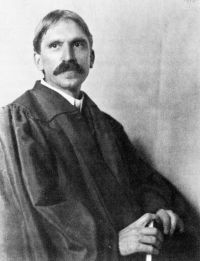 John DeweyE. W. BurgessAuguste Comte
 Bertrand Russell
 Émile Durkheim
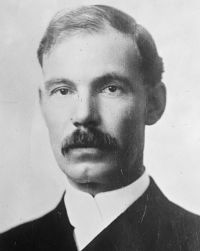 Edward Alsworth RossCharles Horton CooleyJohn Stuart MillCaroline Louisa HuntBoris SidisRandolph Silliman BourneJohann Gottlieb FichteCora May WilliamsDurant DrakeEdith B. Ordway
Herbert SpencerEmily PostGeorge Stuart FullertonScott NearingJohn DeweyE. W. BurgessAuguste ComteBertrand RussellÉmile DurkheimEdward Alsworth RossCharles Horton CooleyJohn Stuart MillCaroline Louisa HuntBoris SidisRandolph Silliman BourneJohann Gottlieb FichteCora May WilliamsDurant DrakeEdith B. Ordway