Thumb screw

Definition and stakes

Carolyn Sherwin Bailey,  Boys' Make-at-Home Things

“ In the remaining flat surface on the top two holes are whittled out into which the dodo’s feet are to be glued. Then a space two inches long and one inch wide is cut out to form the jaws of the vise. To tighten the vise there must be some sort of a screw through the lower jaw. A wooden thumb screw is not easy to get, so the best plan is to get a bolt about three eighths of an inch in diameter. Then cut a hole almost as large in your wood, and screw the bolt in, forcing it to cut its own “thread” in the soft wood. ”
Source: Gutenberg

Ira Samuel Griffith,  Essentials of woodworking (1908)

“ The thumb-screw should be released so that the legs may be moved without much effort. When the approximate setting has been secured, use the thumb-nut for adjusting to more accurate measurement. In describing circles, the dividers should be held as in Fig. 21 and swung to the right or left as is convenient. They should be leaned forward slightly and an effort made to secure a sharp, light line. For most work the two legs may be sharpened to points. Sometimes one is sharpened like a knife point. ”
Source: Gutenberg

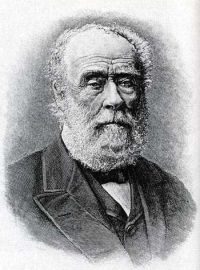
Portrait of Joshua Rose Joshua Rose,  Modern Machine-Shop Practice, Volumes I and II

“ The head of the pin c being chisel-shaped, prevents the pin and the outer sleeve a from revolving. If the thumb or friction screw f is unscrewed, it will permit the inner sleeve b to rotate freely upon the bearing of pin c, and within the friction sleeve a. As the screw f is tightened, the friction upon the inner sleeve b is increased, causing it to remain stationary, and consequently causing the screw on the drill spindle to feed the drill until the friction on the drill becomes greater than the friction on the sleeve b. ”
Source: Gutenberg

Get perspective with Kwize: daily news enlightened by great literature