Ancient Greek tragedy

Definition and stakes

W. Y. Sellar,  The Roman Poets of the Republic…

“ But it was as impossible for the Roman drama to reproduce the inner spirit of the noblest type of Greek tragedy as to rival its artistic excellence. Greek tragedy, in its mature glory, was not only a purely Greek creation, but was the artistic expression of a remarkable phase through which the human mind has once passed;—a phase in which the vivid fancies and emotions of a primitive age met and combined with the thought, the art, the social and political life of the greatest era of ancient civilisation. ”

Source: Gutenberg

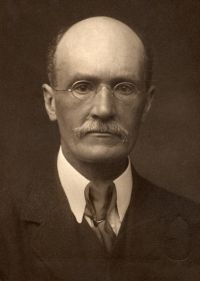
Portrait of Lewis Campbell Lewis Campbell,  Sophocles (1879)

“ Greek tragedy not only took shape and growth directly from the spirit of the time, but dealt with subjects of the most vital interest. For to the Athenians of the time of Cleisthenes or of Miltiades, and later still, the local or neighbouring hero was a living power, present in their midst, whose destinies were inseparably bound up with the national existence. Hence the imagination of the ancient spectator met the poet half-way and conspired with him in the production of an atmosphere of illusion. ”
Source: Wikisource

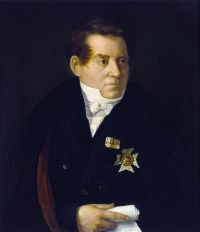
Portrait of Aeschylus Aeschylus,  The Lyrical Dramas of Aeschylus Translated into English Verse

“ In short, if a man will enjoy and judge a Greek “tragedy,” he must seek to know not what it is in reference to the general idea of tragedy which he brings with him from modern theatrical exhibitions, but what it was to the ancient Greeks, sitting in the open air, on their wooden bench, or on their seat hewn from the native rock, with the merry Bacchic echoes in their ears, long before Aristotle laid down those nice rules of tragic composition which only Shakespere might dare to despise. ”
Source: Gutenberg

Get perspective with Kwize: daily news enlightened by great literature