Röntgen rays

Definition and stakes

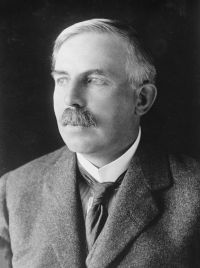
Portrait of Ernest Rutherford Ernest Rutherford,  Radio-Activity

“ No certain evidence has yet been obtained that any body can be made radio-active by exposure to Röntgen rays or cathode rays. A metal exposed to the action of Röntgen rays gives rise to a secondary radiation which is very readily absorbed in a few centimetres of air. ”
Source: Gutenberg

Various,  McClure's Magazine, Vol. 6, No…

“ A detailed discussion of the characteristics of his rays the professor considered unprofitable and unnecessary. He believes, though, that these mysterious radiations are not light, because their behavior is essentially different from that of light rays, even those light rays which are themselves invisible. The Röntgen rays cannot be reflected by reflecting surfaces, concentrated by lenses, or refracted or diffracted. They produce photographic action on a sensitive film, but their action is weak as yet, and herein lies the first important field of their development. ”
Source: Gutenberg

Portrait of Ernest Rutherford Ernest Rutherford,  Radio-Activity

“ The β rays are the same as the cathode rays, while the γ rays resemble the Röntgen rays. In a vacuum tube, a large amount of electric energy is expended in producing the rays, but, in the radio-active bodies, the rays are emitted spontaneously, and at a rate uninfluenced by any chemical or physical agency. The α and β rays from the active bodies are projected with much greater velocity than the corresponding rays in a vacuum tube, while the γ rays are of much greater penetrating power than Röntgen rays. ”
Source: Gutenberg

Get perspective with Kwize: daily news enlightened by great literature