Systema Naturae

Definition and stakes

William MacGillivray,  Lives of Eminent Zoologists, from Aristotle to Linnæus

“ The work just mentioned bears the title of Systema Naturæ per Regna tria Naturæ, secundum Classes, Ordines, Genera, Species, cum Characteribus, Differentiis, Synonymis, Locis,—A System of Nature, in which are arranged the objects constituting the three kingdoms of nature, in classes, orders, genera, and species, with their characters, differences, synonymes, and places of occurrence. ”
Source: Gutenberg

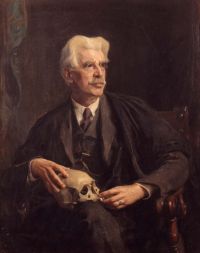
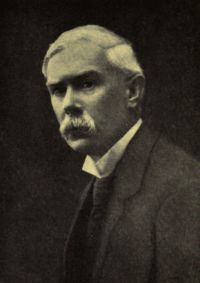
Portrait of John Arthur Thomson John Arthur Thomson,  The Outline of Science — Part II

“ There is a system of successive incarnations and matter is continually passing from one embodiment to another. These instances must suffice to illustrate the central biological idea of the web of life, the interlinked System of Animate Nature. Linnaeus spoke of the Systema Naturae, meaning the orderly hierarchy of classes, orders, families, genera, and species; but we owe to Darwin in particular some knowledge of a more dynamic Systema Naturae, the network of vital inter-relations. This has become more and more complex as evolution has continued, and man's web is most complex of all. ”
Source: Wikisource

William A. Locy,  Biology and Its Makers

“ The Organism.—In the time of Linnæus the attention of naturalists was mainly given to the organism as a whole. Plants and animals were considered from the standpoint of the organism—the external features were largely dealt with, the habitat, the color, and the general appearance—features which characterize the organism as a whole. Linnæus and Jussieu represent this phase of the work, and Buffon the higher type of it. Modern studies in this line are like addition to the Systema Naturæ. ”
Source: Gutenberg

Get perspective with Kwize: daily news enlightened by great literature