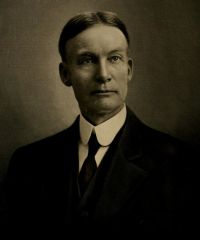
A central government represents the sovereign authority that governs a unitary state, overseeing national security, foreign policy, and the creation of laws, in contrast to federal systems where power is distributed. Scholars have long discussed its function: John Stuart Mill focused on the allocation of duties between national and local authorities, while Woodrow Wilson observed the increasing concentration of power within the federal government in the United States.
Victoria Woodhull pointed out that a powerful central authority does not necessarily mean a monarchy, promoting instead a shared commitment to civic unity. Chitta Ranjan Das emphasized its function in linking regional administrations, and Herbert Croly called for the nationalization of the central government to resist particular interests. These viewpoints together highlight the conflict between centralized control and local autonomy, illustrating the development of political thought and the realities of governance structures.