Common people
Definition and stakes
Quotes about “common people”
 D. H. Lawrence,
Sons and Lovers
(1913)
D. H. Lawrence,
Sons and Lovers
(1913)
“ Then why talk about the common people?” “Because the difference between people isn’t in their class, but in themselves. Only from the middle classes one gets ideas, and from the common people—life itself, warmth. You feel their hates and loves.” ”
 Henrik Ibsen,
An Enemy of the People
Henrik Ibsen,
An Enemy of the People
“ The common people are nothing more than the raw material of which a People is made. ”
 Adam Smith,
The Wealth of Nations
(1776)
Adam Smith,
The Wealth of Nations
(1776)
“ The education of the common people requires, perhaps, in a civilized and commercial society, the attention of the public, more than that of people of some rank and fortune. ”
 Desiderius Erasmus,
The Complaint of Peace
Desiderius Erasmus,
The Complaint of Peace
“ Hence even the common people, in the ordinary language of daily conversation, denominate whatever is connected with mutual good will, humane; so that the word humanity no longer describes man's nature, merely in a physical sense; but signifies humane manners, or a behaviour, worthy the nature of man, acting his proper part in civil society. ”
 William Eleroy Curtis,
Abraham Lincoln
William Eleroy Curtis,
Abraham Lincoln
“ I reckon I do, but I have found in the course of a long experience that common people"—repeating it—"common people, take them as they run, are more easily influenced and informed through the medium of a broad illustration than in any other way, and as to what the hypercritical few may think I don't care." ”
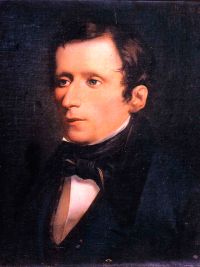 Giacomo Leopardi,
Essays and Dialogues
Giacomo Leopardi,
Essays and Dialogues
“ This is the most numerous of the three classes, and is held in general contempt. It embraces those who are known as the common people, or who deserve to be included with them, be their station in life what it may. ”
 Jean de La Bruyère,
The "Characters" of Jean de La Bruyère
Jean de La Bruyère,
The "Characters" of Jean de La Bruyère
“ The words “common people” include several things; they are a comprehensive expression, and we may be surprised to see what they contain and how far they extend. The common people, in opposition to the great, signify the mob and the multitude; but, as opposed to wise, able, and virtuous men, they include the great as well as the little. ”
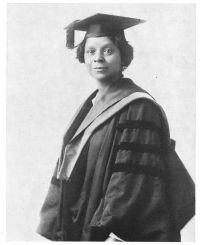 Georgiana Rose Simpson,
Herder's conception of "das Volk"
(1921)
Georgiana Rose Simpson,
Herder's conception of "das Volk"
(1921)
“ People—persons in relation to a superior, or to some one to whom they belong.People—the common people, the commonality; the mass of the community as distinguished from the nobility and ruling, or official, classes, etc. “A people’s voice! ”
Joseph Butler, Whole Works of Joseph Butler — Public sermons… (1850)
“ And thus the character of the common people, with whom these children are to live in the ordinary intercourse of business and company when they come out into the world, may more or less defeat the good effects of their education. And so likewise may the character of men of rank, under whose influence they are to live. ”
Louis A. Boettiger, Armenian Legends and Festivals
“ The social history of this sturdy people offers us a very clear-cut example of what really makes a society or a nation. Not mountains, not dynasties, not blood, but common interests, common traditions, common beliefs; in short, mental community. ”
 Charles Dickens,
Nicholas Nickleby
(1839)
Charles Dickens,
Nicholas Nickleby
(1839)
“ May not the complaint, that common people are above their station, often take its rise in the fact of uncommon people being below theirs? ”
 Bertrand Russell,
Philosophy
(1927)
Bertrand Russell,
Philosophy
(1927)
“ Consequently our words tend to conceal what is private and peculiar in our impressions, and to make us believe that different people live in a common world to a greater extent than is in fact the case. ”
George Thomas Daly, Catholic Problems in Western Canada
“ Few make up their minds; they are made up for them.The common opinion which reflects the mind of the great majority, embodies the prevailing idea, the universal sentiment, and directs the common action is called. ”
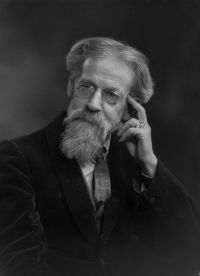 Patrick Geddes,
Civics: as Applied Sociology
(1905)
Patrick Geddes,
Civics: as Applied Sociology
(1905)
“ The types of people, their kinds and styles of work, their whole environment, all become represented in the mind of the community, and these react upon the individuals, their activities, their place itself. ”
 Thomas Hill Green,
Lectures on the Principles of Political Obligation
Thomas Hill Green,
Lectures on the Principles of Political Obligation
“ They depend for their existence, indeed, on society, a society of men who recognise each other as ἴσοι καὶ ὅμοιοι, as capable of a common well-being, but not on society's having assumed the form of a state. ”
 John Stuart Mill,
A System of Logic, Ratiocinative and Inductive
John Stuart Mill,
A System of Logic, Ratiocinative and Inductive
“ Such are: the degree of knowledge, and of intellectual and moral culture, existing in the community, and in every class of it; the state of industry, of wealth and its distribution; the habitual occupations of the community; their division into classes, and the relations of those classes to one another; the common beliefs which they entertain on all the subjects most important to mankind, and the degree of assurance with which those beliefs are held ”
John Percival, Sermons at Rugby
“ But all our common life is somehow the outcome of our separate individual lives—of your life and mine. Therefore how important it is in the common interest that each of us should look above all things to his own life and its character, for this will determine his contribution to the life of his society. ”
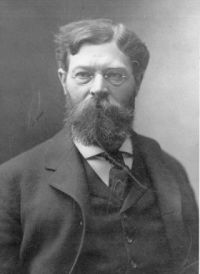 William De Witt Hyde,
Practical Ethics
William De Witt Hyde,
Practical Ethics
“ Here the recognition of a common good, a commonwealth in which each person has an equal worth with every other, is the only satisfactory solution. "Be a person, and [3] respect the personality of others," is the duty in this sphere. ”
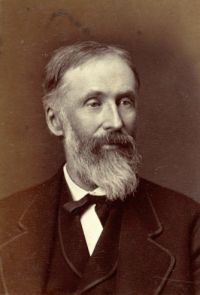 Edward L. Pierce,
The Freedmen at Port Royal
(1863)
Edward L. Pierce,
The Freedmen at Port Royal
(1863)
“ Let those who would study well this social question, or who in public trusts are charged with its solution, be most careful here. Every motive in the minds of these people, whether of instinct, desire, or duty, must be addressed. ”
 Harriet Beecher Stowe,
A Key to Uncle Tom's Cabin
(1853)
Harriet Beecher Stowe,
A Key to Uncle Tom's Cabin
(1853)
“ With a little more common sense, and much less of the uncommon sort, we should better understand Scripture, the institutions under which we live, the several rights of our fellow-citizens in all sections of the country, and the good, sound, practical, social relations, which ought to contribute infinitely more than they do to the happiness of mankind. ”
 Charles Horton Cooley,
Social organization
(1909)
Charles Horton Cooley,
Social organization
(1909)
“ The point I wish particularly to bring out in this chapter is that the normal self is moulded in primary groups to be a social [Pg 36] self whose ambitions are formed by the common thought of the group. ”
Tyrone Power, Impressions of America During the Years 1833…
“ I seek to describe its people as I saw them,—clear-headed, energetic, frank, and hospitable; a community suited to, and labouring for, their country's advancement, rather than for their own present comfort. ”
 Sarah Stickney Ellis,
The Daughters of England
(1842)
Sarah Stickney Ellis,
The Daughters of England
(1842)
“ How much is left undone, for the sake of society! But let us pause a moment, and ask what society is. Is it a community of tried and trusted friends, united together by the ties of perfect love? Listen to the remarks of those, even of your own family, who return from the evening party, or the morning call. Is it a community of beings with whom mind is all in all, and intellectual improvement the purpose for which they meet? Observe the preparations that are made—the dress, the furniture, the food, the expense that is lavished upon these. ”
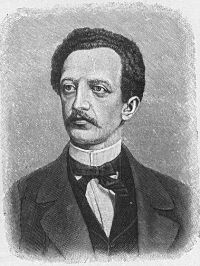 Ferdinand Lassalle,
The Working Man's Programme
(1884)
Ferdinand Lassalle,
The Working Man's Programme
(1884)
“ We have now seen, gentlemen, two periods of the world, each of which is dominated by the ruling idea of a particular class of the community which impresses its own principle on all the social arrangements of its time. ”
R. G. Latham, Opuscula: Essays chiefly Philological and Ethnographical
“ The common duties of every-day life, and the common rules of social policy, are matters which no moralist states once for all: on the contrary, they are reiterated as often as occasion requires—and occasion requires them very often. ”
 Jean-Jacques Rousseau,
The Social Contract
(1762)
Jean-Jacques Rousseau,
The Social Contract
(1762)
“ It is solely on the basis of this common interest that every society should be governed. ”
 Zona Gale,
Peace in Friendship Village
Zona Gale,
Peace in Friendship Village
“ I cut it out of the paper afterwards—this is it, word for word:"You who believe yourselves to be interested in social work, ask yourselves what it is that you are interested in really. I will tell you. Well, whether you know it or not, fundamentally what you care about is PEOPLE. Let us say it in a better way. It is FOLKS."I never took my eyes off her face after that. For "folks" is a word I know. Better than any other word in the language, I know that word "folks." ”
Emma Bennett, The Restless Compendium (2016)
“ Individualist doctrines celebrate the ‘I’, collective movements the ‘we’. Devoid of the fullness of self-assertion or the positive connotations of friendship, community and political solidarity, ‘you’ can tend to get overlooked. ”
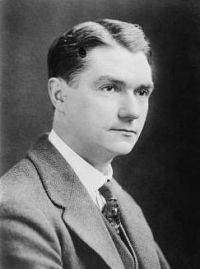 John Drinkwater,
Victorian Poetry
(1924)
John Drinkwater,
Victorian Poetry
(1924)
“ The common opinion, even the common critical opinion of some authority, that has been expressed in recent years about the Idylls of the King is a striking instance of this lack of balance and generosity. ”
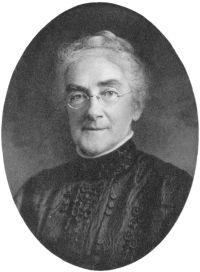 Ellen H. Richards,
The Cost of Shelter
Ellen H. Richards,
The Cost of Shelter
“ What is the value, of present-day knowledge if not to stimulate the conscious group, through the individual perhaps, but the group finally, to better use of its powers and opportunities toward a higher form of social life? ”
 Franklin Henry Giddings,
Popular Science Monthly
(1909)
Franklin Henry Giddings,
Popular Science Monthly
(1909)
“ Here a word must be said about the subjective aspect of society, which, in its objective aspect, as we have seen, is merely the struggle and process of adjustment. What is the relation of adjustment to sympathy and to understanding, to communication and to concerted purpose, to the evolution of a social constraint through which the community controls and shapes the individual, to cooperation and to social organization? ”
Cecil B. Hartley, The Gentlemen's Book of Etiquette and Manual of Politeness
“ This society, composed, as it is, of many varying natures and elements, where each individual must submit to merge his own identity into the universal whole, which makes the word and state, is divided and subdivided into various cliques, and has a pastime for every disposition, grave or gay; and with each division rises up a new set of forms and ceremonies to be observed{4} if you wish to glide down the current of polite life, smoothly and pleasantly. ”
 George Grote,
The Great Events by Famous Historians…
(1905)
George Grote,
The Great Events by Famous Historians…
(1905)
“ This latter custom discloses the salutary influence of such institutions in presenting to men's minds a common object of reverence, common duties, and common enjoyments; thus generating sympathies and feelings of mutual obligation amid petty communities not less fierce than suspicious. ”
Patrick Geddes,
Civics: as Applied Sociology
(1905)
“ In the category of People, we observe that individuals, self and others, and this in interest, perhaps even more than in interests, commonly take precedence of groups. Institutions and Government are, however, of general interest, the state being much more prominent than is the church ”
 Ralph Waldo Emerson,
English Traits — Land
(1856)
Ralph Waldo Emerson,
English Traits — Land
(1856)
“ The practical common-sense of modern society, the utilitarian direction which labor, laws, opinion, religion take, is the natural genius of the British mind. ”
 Robert Southey,
Sir Thomas More, or, Colloquies on the Progress and Prospects of Society
Robert Southey,
Sir Thomas More, or, Colloquies on the Progress and Prospects of Society
“ Look, for example, at the great mass of your populace in town and country—a tremendous proportion of the whole community! Are their bodily wants better, or more easily supplied? Are they subject to fewer calamities? Are they happier in childhood, youth, and manhood, and more comfortably or carefully provided for in old age, than when the land was unenclosed, and half covered with woods? ”
 Edgar Wallace,
The Just Men of Cordova — XV.
(1917)
Edgar Wallace,
The Just Men of Cordova — XV.
(1917)
“ If it came to a question of believing you or believing me, who do you think Society would believe—a man of some position, one in the baronetage of Great Britain, or a man—well, not to put too fine a point on it—like you? ”
 Lillian D. Wald,
The house on Henry Street
(1915)
Lillian D. Wald,
The house on Henry Street
(1915)
“ We remind our young people from time to time that conventions established in sophisticated society have usually a sound basis in social experience, and the cultivation of the minor morals of good manners develops consideration for others. ”
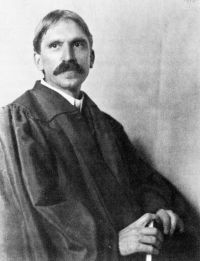 John Dewey,
Democracy and Education
(1916)
John Dewey,
Democracy and Education
(1916)
“ There is more than a verbal tie between the words common, community, and communication. ”
Willard E. Hotchkiss, Higher Education and Business Standards
“ Laws and opinions of particular groups, group morality, individual morality, even inertia, and a long list of more subtle and often capricious reactions are channels through which social purpose finds expression. ”
B. G. Jefferis and J. L. Nichols, Searchlights on Health — Social Duties (1919)
“ In other words, as a return for what you wish to have society do for you, what can you do for society? This is a very important question—more important to you than to society. The question is, whether you will be a member of society by right, or by courtesy. If you have so mean a spirit as to be content to be a beneficiary of society—to receive favors and to confer none—you have no business in the society to which you aspire. ”
 William Graham Sumner,
War and Other Essays
(1911)
William Graham Sumner,
War and Other Essays
(1911)
“ For instance, all the propositions about the "people" are grand and true if we mean by the people every soul in the community, with all the interests and powers which give them an aggregate will and power, with capacity to suffer or to work ”
Thomas Hill Green,
Lectures on the Principles of Political Obligation
“ That common source is the rational recognition by certain human beings—it may be merely by children of the same parent—of a common well-being which is their well-being, and which they conceive as their well-being whether at any moment any one of them is inclined to it or no, and the embodiment of that recognition in rules by which the inclinations of the individuals are restrained, and a corresponding freedom of action for the attainment of well-being on the whole is secured. ”
Elisabeth Luther Cary, William Morris: Poet, Craftsman…
“ The dignity and seriousness of the women, the nobility of the men, the social unity of the Marksmen, and the high standard of thought and action maintained by them as a community place the interest on a high plane. ”
Henry K. Rowe, Society: Its Origin and Development
“ Constant Factors in Social Phenomena.—Our study of social life has made it plain that it is a complex affair, but it has been possible to classify society in certain groups, to follow the gradual extension of relations from small groups to large, and to take note of the numerous activities and interests that enter into contemporary group life. ”
Edith B. Ordway, The Etiquette of To-day
“ Here all the rules of polite society may be observed, and yet the inner convictions, whether political, religious, or moral, of the circle, may find welcome expression and fair hearing. The growth of ideas and the progress of ideals in such a society is rapid and along the right lines. ”
Various, The Southern Literary Messenger…
“ All classes of society, from the proudest to the humblest spheres of life, have imbibed it, feel it, and act under its influence. It composes the chief interests, and engages the active feelings, of almost every community. ”
 James Anthony Froude,
The English in the West Indies…
James Anthony Froude,
The English in the West Indies…
“ Communities, however, have existed where people have thought more of their obligations than of their 'rights,' more of the welfare of their [Pg 323] country, or of the success of a cause to which they have devoted themselves, than of their personal pleasure or interest—have preferred the wise leading of superior men to their own wills and wishes. ”
Related terms
Authors who wrote about “common people”
Jean-Jacques RousseauThomas Hill GreenPatrick GeddesHarriet Beecher StoweJohn Dewey Theodore RooseveltWilliam Graham SumnerAdam Smith
 H. G. WellsD. H. LawrenceHenrik IbsenLouis A. BoettigerJoseph ButlerGeorgiana Rose SimpsonJean de La BruyèreGiacomo LeopardiWilliam Eleroy CurtisDesiderius ErasmusGeorge Thomas DalyWilliam De Witt Hyde