
“ All music is what awakes from you when you are reminded by the instruments, It is not the violins and the cornets, it is not the oboe nor the beating drums, nor the score of the baritone singer singing his sweet romanza, nor that of the men’s chorus, nor that of the women’s chorus, It is nearer and farther than they. ”
Men's chorus
Definition and stakes
The theme of “men's chorus” has been addressed by authors such as George P. Upton, Charles Burton Gulick, Karl Wilson Gehrkens, Horace Howard Furness and Edward Dickinson. It is often associated with terms like music, drama, musical, tragedy and poet.
Quotes about “men's chorus”
 Seneca,
Moral letters to Lucilius — Letter 84…
“ Do you not see how many voices there are in a chorus? Yet out of the many only one voice results. In that chorus one voice takes the tenor, another the bass, another the baritone. There are women, too, as well as men, and the flute is mingled with them. In that chorus the voices of the individual singers are hidden; what we hear is the voices of all together. 10. To be sure, I am referring to the chorus which the old-time philosophers knew; in our present-day exhibitions [5] we have a larger number of singers than there used to be spectators in the theatres of old. ”
Horace Howard Furness, On Shakespeare, or, What you will (1908)
“ Let me here make a digression, for a moment, to another land, and another dramatic literature. The French, as you know, adopted in their drama the three unities of Time, Place, and Action, but failed to adopt the Chorus. Now it is the Chorus alone which makes the unities of time and place necessary. The Chorus is composed of men or women, and inasmuch as they have to watch the whole play and even take part in it, their presence is limited by their power of endurance. Human nature cannot, while watching any proceeding, hold out, at the extremest limit, longer than from sunrise to sunset. ”
 Philip Schaff,
Nicene and Post-Nicene Fathers…
(1885)
“ And for so great a matter to be understood by an example, let what we are describing be compared to a great chorus. As then the chorus is composed of different people, children, women again, and old men, and those who are still young, and, when one, namely the conductor, gives the sign, each utters sound according to his nature and power, the man as a man, the child as a child, the old man as an old man, and the young man as a young man, while all make up a single harmony ”
Florence May, The Life of Johannes Brahms (Vol 2 of 2…
“ Here, by a fine inspiration, the chorus of men's voices enters for the first time pianissimo, supporting the solo voice in fervent supplication.Words and music are fitly associated throughout the movement, which is a treasure amongst works of art, and it is impossible to say that either of its parts is superior to the others, though the divine outpouring of love and pity in the last section often seems to appeal, especially, to the hearer listening for the first time to the composition. ”
 Fyodor Dostoyevsky,
Demons
(1872)
“ The scene opens with a chorus of women, followed by a chorus of men, then a chorus of incorporeal powers of some sort, and at the end of all a chorus of spirits not yet living but very eager to come to life. ”
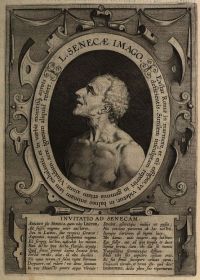 Lucius Annaeus Seneca,
The Tragedies of Seneca
“ Third choral interlude.—The chorus complains that while nature is so careful to maintain the order of the heavenly bodies, the atmospheric phenomena, the seasons, and the productiveness of wealth, for the affairs of men alone she has no care. ”
Karl Wilson Gehrkens, Essentials in Conducting (1919)
“ Because these things are so difficult of attainment under present conditions our feeling is that, all in all, chorus music is probably considerably more effective as a vehicle for making a religio-esthetic appeal, than solo singing. ”
Lewis R. Freeman, In the Track of the Trades
“ There are several parts as a rule, but they wander in and out of one another at will, and every now and then a single voice will break away and embroider a little improvisation of its own upon the melody that is like a sudden scatter of spray from the crest of a rolling breaker. Then the chorus takes it up and answers it, and the whole mass of the voices hurls itself upon the tune like the breaker [164] falling and bursting upon the shore. ”
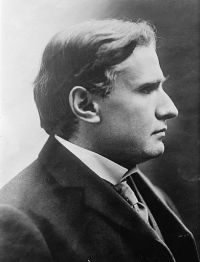 Walter Damrosch,
My Musical Life
“ My father also believed the development of amateur choruses to be a very strong factor in the musical growth of a people. Under his inspiration the chorus of the Oratorio Society constantly grew in numbers and technical proficiency; but it suffered from the great dearth of men singers, especially tenors. The terribly one-sided condition of musical development in our country, proceeding almost exclusively on feminine lines, showed itself markedly in this branch of the art. ”
 William Wordsworth,
The Poetical Works of William Wordsworth…
“ While we were at the Waterfall, some half-score peasants, chiefly women and girls, assembled just out of reach of the Spring, and set up—surely, the wildest chorus that ever was heard by human ears,—a song not of articulate sounds, but in which the voice was used as a mere instrument of music, more flexible than any which art could produce,—sweet, powerful, and thrilling beyond description. ”
 George P. Upton,
The Standard Oratorios: Their Stories…
“ The two solo voices join in a lament of a most touching nature, accompanied by the chorus exclaiming in short, hurried phrases, "Let Him go! Hold! Bind Him not!" until at last the double chorus bursts in like a tempest, accompanied with the full power of the instruments, expressing the world's indignation at the deed which is to be committed, in the words:-- "Ye lightnings, ye thunders, in clouds are ye vanished! ”
 Charles Kingsley,
Lectures Delivered in America in 1874
“ A chorus now, as you know, means merely any number of persons singing in full harmony on any subject. The Chorus was then in tragedy, and indeed in the higher comedy, what Schlegel well calls ‘the ideal spectator,’—a personified reflection on the action going on, the incorporation into the representation itself of the sentiments of the poet, as the spokesman of the whole human race. ”
 John Greenleaf Whittier,
Our American Holidays - Christmas
(1949)
“ Sing of glory to God and of good-will to man! Hark! joining in chorus The heavens bend o'er us! The dark night is ending and dawn has begun; Rise, hope of the ages, arise like the sun, All speech flow to music, all hearts beat as one! ”
The World's Best Poetry, Volume 09…
“ True, the individuals of the chorus are seldom interesting in themselves. The black fellow of Australia shall not soothe our grief with his howlings for his dead, nor even the Corsican widow with her vocero. But the chorus as chorus is impressive enough; it is a part of the piece; heard or unheard, it belongs with the triumphs of individual art. Somewhere in every great poem lurks this legacy of communal song. It may better be called the silent partner, without whose capital, at the least, no poet can now trade in Parnassian ware; and as for lyric verse, there the partner is not even silent. ”
 Friedrich Schiller,
The Bride of Messina, and On the Use of the Chorus in Tragedy
“ As the chorus gives life to the language—so also it gives repose to the action; but it is that beautiful and lofty repose which is the characteristic of a true work of art. For the mind of the spectator ought to maintain its freedom through the most impassioned scenes; it should not be the mere prey of impressions, but calmly and severely detach itself from the emotions which it suffers. The commonplace objection made to the chorus, that it disturbs the illusion, and blunts the edge of the feelings, is what constitutes its highest recommendation ”
Friedrich Schiller,
The Bride of Messina, and On the Use of the Chorus in Tragedy
“ The chorus thus renders more substantial service to the modern dramatist than to the old poet—and for this reason, that it transforms the commonplace actual world into the old poetical one; that it enables him to dispense with all that is repugnant to poetry, and conducts him back to the most simple, original, and genuine motives of action. ”
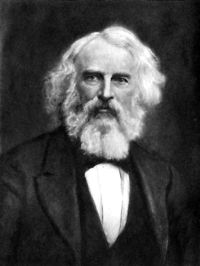 Henry Wadsworth Longfellow,
Hyperion
(1839)
“ And then mark! how, amid the chorus of a hundred voices and a hundred instruments,--of flutes, and drums, and trumpets,--this universal shout and whirl-wind of the vexed air, you can so clearly distinguish the melancholy vibration of a single string, touched by the finger,--a mournful, sobbing sound! Ah, this is indeed human life! where in the rushing, noisy crowd, and amid sounds of gladness, and a thousand mingling emotions, distinctly audible to the ear of thought, are the pulsations of some melancholy string of the heart, touched by an invisible hand. ”
 Sidney Colvin,
1911 Encyclopædia Britannica, Volume 10…
(1911)
“ From the clapping, or rudimentary rhythmical noise, has been evolved the whole art of instrumental music, down to the entrancing complexity of the modern symphony. From the shout, or rudimentary emotional utterance, has proceeded by a kindred evolution the whole art of vocal music down to the modern opera or oratorio. From the leap, or rudimentary expression of emotion by rhythmical movements of the body, has descended every variety of dancing, from the stately figures of the tragic chorus of the Greeks to the kordax of their comedy or the complexities of the modern ballet. ”
 Georg Wilhelm Friedrich Hegel,
The Philosophy of Fine Art, volume 4…
“ Critics have, no doubt, recognized the nature of the chorus to the extent of maintaining that in it we find an attitude of tranquil meditation over the whole, whereas the characters of the action remain within the limits of their particular objects and situations, and, in short, receive in the chorus and its observations a standard of valuation of their characters and actions in much the same way as the public discovers in it, and within the drama itself, an objective representative of its own judgment upon all that is thus represented. ”
Richard Hurd, The works of Richard Hurd, volume 1…
“ The chorus, says the poet, is to take the side of the good and virtuous, i. e. is always to sustain a moral character. But this will need some explanation and restriction. To conceive aright of its office, we must suppose the chorus to be a number of persons, by some probable cause assembled together, as witnesses and spectators of the great action of the drama. Such persons, as they cannot be wholly uninterested in what passes before them, will very naturally bear some share in the representation. ”
William Hadfield, Brazil, the River Plate, and the Falkland Islands
“ During the time of carrying a wild kind of chorus is kept up; one man makes observations as he goes along, and the rest come in with a chorus, which seldom varies, however much the recitative solo part may. ”
 Gilbert Murray,
A History of Ancient Greek Literature
(1901)
“ Two main processes were needed to make a complete performance: the 'chorêgus' ' provided a chorus,' the poet 'taught the chorus'—those were the difficult things. The mere composition was a matter of detail, which any good poet was ready to do for you. All the technical terms are formed with reference to the chorus. The 'prologue' is all that comes before their entrance; an 'episodion' is the 'entry to' the chorus of any fresh character; the close of the play is an 'exodus,' because they then depart. But the chorus was doomed to dwindle as tragedy grew. Dialogue is the essence of drama ”
Otto Jahn, Life of Mozart, Vol. 1 (of 3)
“ The construction of this movement, the arrangement and gradations of the details, the alternations of solo and chorus, the characteristically careful elaboration of the accompaniment, are all so admirably calculated and balanced, and the whole movement is pervaded with so much earnestness and depth of sentiment, that beauty and grandeur seem here indeed to be wedded together. ”
Howard Washington Odum, Religious Folk-Songs of the Southern Negroes
“ They magnify the personal and the spectacular in religion. They satisfy the love of melody, rude poetry, and sonorous language. Simple thought is expressed in simple rhyming phrases. Repetition of similar thoughts and a single chorus, with simple and pleasing music which lends itself easily to harmonious expression, are characteristic. The music is specially adapted to the chorus-like singing which is produced by the clever and informal carrying of many parts by the singers. The song often requires a single leader, and a swelling chorus of voices take up the refrain. ”
Friedrich Schiller,
The Bride of Messina, and On the Use of the Chorus in Tragedy
“ The poet supplies only the words, to which, in a lyrical tragedy, music and rhythmical motion are essential accessories. It follows, then, that if the chorus is deprived of accompaniments appealing so powerfully to the senses, it will appear a superfluity in the economy of the drama—a mere hinderance to the development of the plot—destructive to the illusion of the scene, and wearisome to the spectators. ”
Edward Dickinson, Music in the History of the Western Church
“ Turning again to the analysis of the sixteenth-century chorus and striving to penetrate still further the secret of its charm, we are obliged to admit that it is not its purely musical qualities or the learning and cleverness displayed in its fabrication that will account for its long supremacy or for the enthusiasm which it has often excited in an age so remote as our own. ”
George P. Upton,
The Standard Cantatas: Their Stories…
“ At the close of this number begins a choral theme for trumpets, horns, and trombones, followed by [162] strings and woodwinds, and introducing a soprano recitative (“With Grace, thy Gaze, O Harmony”) descriptive of the blessing brought into the world by music, followed by a picture of the misery of the race without its consolation. At the close the brasses give out a solemn march-like theme. A short chorus (“Joy to us! Again descending, thou Heavenly One”) describes the might of song. ”
S. D. Gordon, Quiet Talks with World Winners
“ And as they sing, the angel chorus and the quartette drop to their knees, and swell the wondrous refrain. In chapter fourteen comes the music of the Chorus of Pure Ones.19 They are gathered close about the person of Jesus. They sing to the accompaniment of a great company of harpers. They sing with a peculiar clearness in their tones. Theirs is a new song. Purity always makes a music of its own, unapproachable for sweetness and clearness. ”
Georg Wilhelm Friedrich Hegel,
The Philosophy of Fine Art, volume 4…
“ The chorus is the actual substance of the heroic life and action itself: it is, as contrasted with the particular heroes, the common folk regarded as the fruitful heritage, out of which individuals, much as flowers and towering trees from their native soil, grow and whereby they are conditioned in this life. ”
Friedrich Schiller,
The Bride of Messina, and On the Use of the Chorus in Tragedy
“ The old tragedy, which at first only concerned itself with gods, heroes and kings introduced the chorus as an essential accompaniment. The poets found it in nature, and for that reason employed it. It grew out of the poetical aspect of real life. In the new tragedy it becomes an organ of art, which aids in making the poetry prominent. The modern poet no longer finds the chorus in nature ”
Emma Seiler, The Voice in Singing
“ The numerous vocal music Unions and Männerchöre, as such, contribute as little as school singing to the elevation and improvement of the vocal art, the sole object of which is to cultivate the individual voice for artistic singing. Considered as a means of moral culture, the rise and increasing prevalence of chorus singing among all orders of the people merit commendation and aid, but not in the interest of the art of song. ”
Louis Spohr, Louis Spohr's Autobiography
“ The final chorus, a prayer of the disciples full of sorrow and hopeful faith, is simple, melodious and elevated; a poetical outpouring in music, which must excite the sympathy of every human being who has a trusting belief in a future life.—When the last accord died away in its tragic grandeur, we looked around us—not a breath was to be heard, deep silence everywhere—all were impressed with feelings more powerful than they could express. ”
 Charles Burton Gulick,
The Harvard Classics Vol. 51
(1914)
“ The early composers of tragedy—for the author composed music, invented dance steps, and trained the chorus to sing—were content with one actor who by changing mask and costume in a neighboring booth (skênê) could take different rôles. The chorus leader was his interlocutor and bore the most difficult part, if we may judge from the plays of Æschylus. ”
Various, The Southern Literary Messenger… (1836)
“ And your imagination will easily conceive, how fine an ode the description of the night preceding the battle of Agincourt would have made in his hands, and what additional grace it would receive from that form of composition.” He also shows that the chorus augmented the pathetic, both in its odes and dialogue; by music, by the dance, by aiding and carrying forward the impression, and by showing to the spectators other spectators strongly affected by the action. ”
Related terms
Authors who wrote about “men's chorus”
George P. UptonCharles Burton GulickKarl Wilson GehrkensHorace Howard FurnessEdward DickinsonOtto JahnLouis SpohrHoward Washington OdumAgnes Rush BurrWalter DamroschLucius Annaeus Seneca August Wilhelm von SchlegelGilbert MurrayVariousFriedrich SchillerRichard Hurd
 Georg EbersCharles KingsleyGeorg Wilhelm Friedrich Hegel
 Edwin Abbott Abbott
