Mode (music)

Definition and stakes

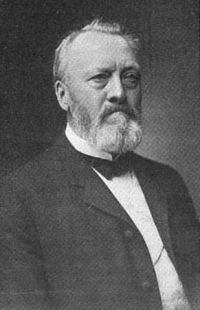
Portrait of Georg Wilhelm Friedrich Hegel Georg Wilhelm Friedrich Hegel,  The Philosophy of Fine Art, volume 3…

“ To put the matter in other words, in every genuine melody a truly melodic, songful impulse, which is its essential type as music, must declare itself as predominant and independent, as something which it neither forgets nor loses in the plenitude of its expression. Thus regarded melody presents, no doubt, an infinite power of adaptation and co-ordination in the progressive motion of tones, but the mode or form of this must be such that throughout we are made aware of an essentially complete and self-subsistent whole. ”
Source: Gutenberg

De Witt H. Parker,  The Principles of Aesthetics

“ Music is the most signal example of a mode of expression that has attained to a complete and pure aesthetic character, an unmixed beauty. Yet this was not true of music in its earlier forms, and a long process of development was necessary before freedom was realized. For we must look for the beginning of music in any and all sounds through which primitive men sought to express and communicate themselves. ”
Source: Gutenberg

Portrait of Georg Wilhelm Friedrich Hegel Georg Wilhelm Friedrich Hegel,  The Philosophy of Fine Art, volume 3…

“ Thirdly, and finally, it is the melody, by virtue of which on these foundations of a beat characterized by rhythmical vitality and of distinctions and movements of harmony itself that the realm of tones is unitedly discharged in a spiritually free mode of expression, and conducts us thereby to the final main section of our subject, which will undertake to consider music in its concrete unity with the spiritual content it is intended to express in beat, harmony, and rhythm. ”
Source: Gutenberg

Get perspective with Kwize: daily news enlightened by great literature