Negative electrode

Definition and stakes

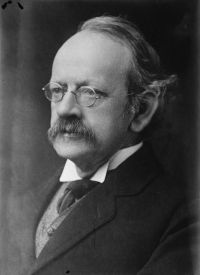
Portrait of Michael Faraday Michael Faraday,  Experimental Researches in Electricity…

“ The anode is therefore that surface at which the electric current, according to our present expression, enters: it is the negative extremity of the decomposing body; is where oxygen, chlorine, acids, &c., are evolved; and is against or opposite the positive electrode. The cathode is that surface at which the current leaves the decomposing body, and is its positive extremity; the combustible bodies, metals, alkalies, and bases, are evolved there, and it is in contact with the negative electrode. ”

Source: Gutenberg

Portrait of William Arnold Anthony William Arnold Anthony,  Elementary Text-book of Physics (1897)

“ The discharge seems to be independent of the position of the positive electrode, and to take place in nearly straight lines, which start normally from the negative electrode. If two negative electrodes be fixed in the tube, the discharge from one seems to be deflected by the other, and two discharges which meet at right angles seem to deflect one another.
If the discharge from a flat electrode be made to fall upon a body which can be moved, such as a glass film, or the vane of a light wheel, mechanical motions will be set up.
”
Source: Wikisource

William Edwards Henderson,  An Elementary Study of Chemistry

“ The general method used in the electrolysis of a solution is illustrated in Fig. 31. The vessel D contains the electrolyte. Two plates or rods, A and B, made of suitable material, are connected with the wires from a battery (or dynamo) and dipped into the electrolyte, as shown in the figure. These plates or rods are called electrodes. The electrode connected with the zinc plate of the battery is the negative electrode or cathode, while that connected with the carbon plate is the positive electrode or anode. ”
Source: Gutenberg

Get perspective with Kwize: daily news enlightened by great literature