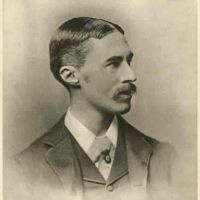
Poetic temperament

Definition and stakes

Elizabeth Atkins,  The Poet's Poet : essays on the character and mission of the poet as interpreted in English verse…

“ In the more fundamental questions that poets considered, relating to the poet's temperament, his loves, his inspiration, his morality, his religion, his mission, the same cleavage invariably appeared. What constitutes the poetic temperament? It is a fickle interchange of joy and grief, for the poet is lifted on the wave of each new sensation; it is an imperturbable serenity, for the poet dwells apart with the eternal verities. What is the distinguishing characteristic of his love? The object of his worship must be embodied, passionate, yet his desire is for purely spiritual union with her. ”
Source: Gutenberg

W. Y. Sellar,  The Roman Poets of the Republic…

“ The finer sensibility and more passionate agitation of the poetic temperament appear, in some cases, to exhaust prematurely the springs of life; while, in natures more happily balanced, or formed by more favourable circumstances, the gifts of genius are accompanied by stronger powers of life, and thus maintain the freshness of youth unimpaired till the last. ”
Source: Gutenberg

Various,  The Path, Vol. I.—1886-'7

“ The poetic temperament is one which enables an approach to that state which some exalted men attain in perfection, and which is the ultimate destiny of the entire human race. The poet perceives fragments of the Divine thought as embodied in natural materials; he reads pages of the great book of Creation and interprets more or less clearly the significance of the symbols that exist on every hand in growing things, in things inanimate, in the waters and the heavens, and in the thoughts, sentiments, passions and emotions of men. ”
Source: Gutenberg

Get perspective with Kwize: daily news enlightened by great literature