Positive ion

Definition and stakes

Portrait of Ernest Rutherford Ernest Rutherford,  Radio-Activity

“ The ions which are produced in gases at ordinary pressure have an apparent size, as determined from their rates of diffusion, large compared with the molecule of the gas in which they are produced. The negative ion consists of an electron with a cluster of molecules attached to and moving with it; the positive ion consists of a molecule from which an electron has been expelled, with a cluster of molecules attached. At low pressures under the action of an electric field the electron does not form a cluster. The positive ion is always atomic in size, even at low pressures of the gas. ”
Source: Gutenberg

Portrait of A. Frederick Collins A. Frederick Collins,  The Radio Amateur's Hand Book

“ In other words a positive ion is an atom that has lost some of its negative electrons while a negative ion is one that has acquired some additional negative electrons. When a number of electrons are being constantly given by the atoms of an element, which let us suppose is a metal, and are being attracted to atoms of another element, which we will say is also a metal, a flow of electrons takes place between the two oppositely charged elements and form a current of negative electricity as represented by the arrows at A in Fig. ”
Source: Gutenberg

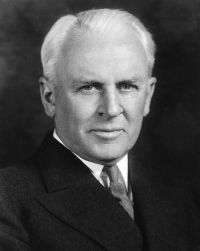
Portrait of Robert Andrews Millikan Robert Andrews Millikan,  The electron, its isolation and measurement and the determination of some of its properties (1924)

“ This result seems to show with considerable certainty that the negative ions in gases ionized by X-rays or similar agencies carry on the average the same charge as that borne by the univalent ion in electrolysis. When we consider the work on the positive ion, our confidence in the inevitableness of the conclusions reached by the methods under consideration is perhaps somewhat shaken. ”
Source: Gutenberg

Get perspective with Kwize: daily news enlightened by great literature