Ritual impurity refers to a state of being unclean or spiritually affected, typically regulated by cultural or religious norms. Scholars such as Andrew Lang highlight the lasting significance of ritual in both primitive and advanced societies, viewing it as a way to placate supernatural entities. W.H.R. Rivers associates complex ceremonies with the need to counter threats arising from the desecration of holy items, while The Urantia Book stresses the importance of precise execution to maintain spiritual effectiveness.
James George Frazer ties rituals to practical symbolism, such as the protective function of fire, and A.C. Seward observes how ritual can dampen rational thought to enhance emotional or volitional involvement. Together, these viewpoints illustrate ritual impurity as a dynamic interaction between human action, cosmic balance, and the mediation of the sacred.
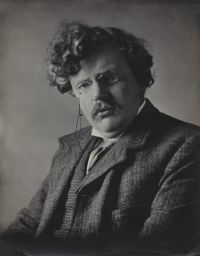 Gilbert Keith Chesterton,
Heretics — Chapter 18: The Fallacy of the Youg Nation
(1905)
Gilbert Keith Chesterton,
Heretics — Chapter 18: The Fallacy of the Youg Nation
(1905)