“ Is there then a sort of self-analysis, which can be carried out for its own sake, and which can be, at the same time, of vital use? Is all self-analysis when practised for its own sake necessarily harmful, and unprofitable? It is time to ask these questions if we are ever to know how to analyse ourselves with profit, if we are ever to know ourselves. And we none of us do. As students, we are content with every other knowledge but this. After all the self probing of the religious and philosophical, during long centuries, what have we learned? Truly to ourselves, we are enigmas. ”
Self-analysis
Definition and stakes
The theme of “self-analysis” has been addressed by authors such as F. H. Bradley, Arachne, A. E. Taylor, G. A. Johnston and Henry Stephen. It is often associated with terms like psychology, consciousness, philosophy, experience and mind.
Quotes about “self-analysis”
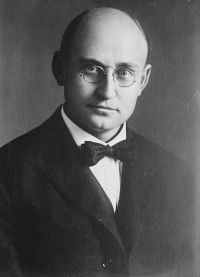 Harry L. Hollingworth,
Vocational Psychology: Its Problems and Methods
“ There is perhaps no proof required that complete and systematic self-analysis is more desirable than random and undirected introspections, whatever value may be attached to the results of such analysis. ”
“ From this continual reaction of your mind on your heart, from this insatiable need of occupying your thoughts, is born the fatal habit of self-examination, that entices you to such horrid study of your own conduct, and the spirit of analysis that leads you to the discovery of such unworthy motives in others. ”
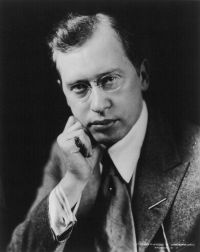 George Sylvester Viereck,
The House of the Vampire — VI
(1907)
“ It is true that personal feeling colours our spectacles and distorts the perspective. Still, we should not shrink from self-analysis. We must learn to see clearly into our own hearts if we would give vitality to our work. ”
“ I. OUR IGNORANCE OF OURSELVES. Self-Analysis, apart from its scientific uses, has seldom rewarded those who have practised it. To probe into the inner world of motive and desire has proved of small benefit to any one, whether hermit, monk or nun, indeed it has been altogether mischievous in result, unless the mind that probed, was especially healthy. ”
J. D. Buck, The New Avatar and The Destiny of the Soul
“ A quickened conscience, a moral uplift, a desire to do right, a noble ideal, mark the beginning; but self-study, a rigid and persistent self-analysis, taking account of stock of all our resources and capacities, all our real possessions and opportunities, is the scientific process by which man may become master of his own life and evolve to higher and still higher planes of being, even here in the present life. ”
Harry L. Hollingworth,
Vocational Psychology: Its Problems and Methods
“ Whatever be the purpose of self analysis, it will be the more useful and suggestive the more completely it compasses the total range of capacities and inclinations. Comparison of different analyses by different individuals should result in a synthesis of traits, an acceptable terminology and a mode of statement better calculated to throw light on individual equipment than is secured by the methods of casual and unguided rumination. ”
James Ward, 1911 Encyclopædia Britannica (1911)
“ But what is this true self more than our ideal? Or perhaps we prefer to say that we were free and could have acted otherwise; and no doubt we might, if the place of the purely formal and abstract concept of self had been occupied by some other phase of that empirical self which is continuously but at no one moment completely, presented. It must then be admitted that psychological analysis in this case is not only actually imperfect, but must always remain so—so long, at any rate, as all that we discern by reflection is less than all we are. ”
 Gore Vidal,
Messiah
(1954)
“ His passion for self-analysis flourished in our mid-century, at least among the articulate few who were capable of analysis and who, in time, like their great ancestor, chose the ear of the world for their confessional. ”
“ For fruitful self analysis it is apparently necessary then to have a clear, definite aim outside self—such as achieving the gain of some special piece of knowledge, and we find such definite aims in psychology, and certain systems of philosophy—Greek, English, and German, in Plato Locke, Kant, and in the meditations of Descartes, and many others. ”
Mary MacLane, I, Mary MacLane: A Diary of Human Days
“ I am lithe but fragile from constant involuntary self-analysis. ”
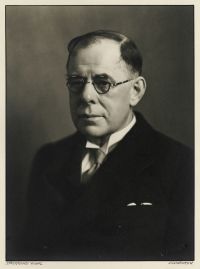 A. E. Taylor,
Elements of metaphysics
(1903)
“ Some philosophers would indeed be prepared to go further, and to maintain that a more or less explicit consciousness of distinction between self and not-self, or again between subject and object, is logically involved in the very possibility of an experience. The question, as a psychological one, need not be raised here; it must, however, be carefully remarked that whatever view we may adopt as to the number and character of the aspects which analysis reveals within the contents of the simplest experience, those aspects, as directly apprehended, originally constitute an unanalysed whole. ”
William Hazlitt, The Collected Works of William Hazlitt…
“ Now the same word, self, is indifferently applied to the whole of my being, past, present, and to come; and it is supposed from the use of language and the habitual association of ideas, that this self is one thing as well as one word, and my interest in it all along the same necessary, identical interest. That a man must love himself as such, seems a self-evident and simple proposition. The idea appears like an absolute truth, and resists every attempt at analysis, like an element in nature. ”
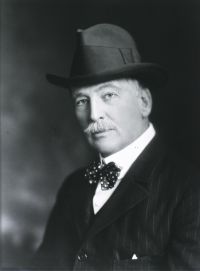 Morton Prince,
The unconscious
(1921)
“ The self-regarding sentiment, according to McDougall’s theoretical analysis—and I may say his analysis has been confirmed by my own practical analyses of concrete cases—has structurally organized within it by experience the two opposing instincts, self-abasement and self-assertion, but either may be the dominating one. The idea or conception of self, proper, is, according to the theory, a complex and integrated whole organized by experience like the self-regarding sentiment. ”
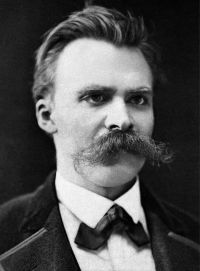 Friedrich Wilhelm Nietzsche,
The Joyful Wisdom ("La Gaya Scienza"…
“ Cheers for Physics!—How many men are there who know how to observe? And among the few who do know,—how many observe themselves? "Everyone is furthest from himself"—all the "triers of the reins" know that to their discomfort; and the saying, "Know thyself," in the mouth of a God and spoken to man, is almost a mockery. But that the case of self-observation is so desperate, is attested best of all by the manner in which almost everybody talks of the nature of a moral action, that prompt, willing, convinced, loquacious manner, with its look, its smile, and its pleasing eagerness! ”
 F. H. Bradley,
Ethical Studies — Note to Essay II.
(1876)
“ To say ‘thoughts of what is and is to be, exist in you, are in your head, and then you carry them out, and that is action,’ is futile; because these thoughts, if desired, are not merely in me, they are felt to be mine, ideally to be myself, and, when they are carried out, that therefore is self-realization. Or shall we be told that ‘to talk of carrying out is nonsense. In action we produce changes in things and in ourselves, answering to thoughts: things resemble thoughts, but, strictly speaking, thought is not realized, because that is unmeaning’? ”
Carveth Read, Logic: Deductive and Inductive
“ To impute bad motives, indeed, when good are just as probable, is to be wanting in the scientific spirit, which views every subject in 'a dry light.' Nor can we help 'judging others by ourselves'; for self-knowledge is the only possible starting-point when we set out to interpret the lives of others. ”
 William Dean Howells,
Imaginary Interviews
“ The truth is we have been very much interested by your notion—if it was yours, which is not altogether probable—and we have been turning its light upon our own experience, in what we should not so much call self-celebration as self-exploitation. One uses one's self as the stuff for knowledge of others, or for the solution of any given problem. There is no other way of getting at the answers to the questions.""And what is your conclusion as to my notion, if it is mine?" the veteran observer asked, with superiority. ”
William James, Essays in Radical Empiricism
“ They never take us off the superficial plane. We knew the facts already—less spread out and separated, to be sure—but we knew them still. We always felt our own activity, for example, as ‘the expansion of an idea with which our Self is identified, against an obstacle’ ”
Herbert Wildon Carr, The Problem of Truth
“ As in the case of the thing and its qualities, we think that there is something distinct from the qualities in which they inhere and yet find ourselves unable to present to the mind any consistent idea of such thing, so we think that there must be some substance or basis of personal identity, some real self which has the successive changing conscious states, which has the character which distinguishes our actions as personal but which nevertheless is not itself these things. The self-contradiction {37} in the idea of self, or I, or subject, is that it both cannot change and is always changing. ”
 John Stuart Mill,
Utilitarianism
“ And now to decide whether this is really so; whether mankind do desire nothing for itself but that which is a pleasure to them, or of which the absence is a pain; we have evidently arrived at a question of fact and experience, dependent, like all similar questions, upon evidence. It can only be determined by practised self-consciousness and self-observation, assisted by observation of others. ”
F. H. Bradley,
Appearance and Reality — Chapter XXV
(1893)
“ In moral self-assertion the materials used may be drawn from any source, and they may belong to any world. They may, and they must, largely realize ends which visibly transcend my life. But it is self-assertion when, in applying these elements, I am guided by the idea of the greatest system in myself. If the standard used in measuring and selecting my material is, in other words, the development of my individual perfection, then my conduct is palpably not self-sacrifice, and may be opposed to it. It is self-sacrifice when I pursue an end by which my individuality suffers loss. ”
Giovanni Gentile, The Reform of Education
“ Now I say that no concept of experience can be validly entertained which does not take into account that truth which presents itself to us as truly fundamental and therefore to be used as an indispensable basis for all subsequent conceptual constructions.Such fundamental truth we have previously attained when we established that “We” are not what we seem to be in the dim empirical representation of our personality, a thing among things. Our “Self” is the deeper one by means of which we see all things in whose midst our other self too is discernible. ”
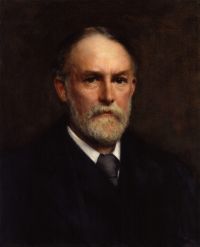 F. W. H. Myers,
Human Personality and Its Survival of Bodily Death
“ In other words, there must needs be some scheme of self-suggestion,—some general theory which can give the individual a basis for his appeal, whether he regards that appeal as directed to an intelligence outside himself or to his own inherent faculties and informing soul. ”
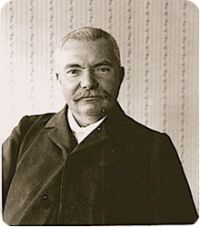 Charles Wagner,
The Simple Life
“ Another habit in urgent need of correction, ordinary attendant on conventional life, is the mania for examining and analyzing one's self at every turn. I do not invite men to neglect introspection and the examination of conscience. The endeavor to understand one's own mental attitudes and motives of conduct is an essential element of good living. But quite other is this extreme vigilance, this incessant observation of one's life and thoughts, this dissecting of one's self, like a piece of mechanism. ”
F. H. Bradley,
Ethical Studies — Concluding Remarks
(1876)
“ We find the same difficulty, that the real is to be realized, both in art and science. The self dimly feels, or fore-feels, itself as full of truth and beauty, and unconsciously sets that fulness before it as an object, a not-itself which is against itself as this or that man. ”
F. H. Bradley,
Ethical Studies — Essay II.
(1876)
“ Let us take this for granted then; but is this what we mean by self-realization? Is the conclusion that, in trying to realize, we try to realize some state of ourself, all that we are driving at? No, the self we try to realize is for us a whole, it is not a mere collection of states. ”
Herbert Wildon Carr, The Problem of Truth
“ The same self-contradiction characterises our ideas when we try to present the real object of inner perception as when we try to present the real object of external perception. Not, of course, that it is possible to doubt the reality of our own existence, but that we fail altogether to express the meaning of the self we so surely know to exist in any idea which does not fall into self-contradiction. ”
 Josiah Royce,
The Spirit of Modern Philosophy
(1892)
“ He sees himself in all he sees. And this self that a man sees crystallized in all his world of sense, of society, and of philosophy, is simply his own fashion of conduct, his busy world-building temperament. ”
 H. Addington Bruce,
Adventurings in the Psychical
“ In that case it will at once become clear that the situation has again changed completely, and that we are back to the traditional, the intuitive, the “common-sense” conception of personality, with the single difference that the term “self” means something broader and nobler than when we limit it to the now demonstrated unstable, and ever-changeable self of ordinary consciousness.And it is precisely to such a view of the self that the discoveries of the modern investigators, when closely scrutinized, irresistibly impel us. ”
T. Troward, The Edinburgh Lectures on Mental Science
“ If Mental Science does not teach you to be yourself it teaches you nothing. Yourself, more yourself, and yet more yourself is what you want; only with the knowledge that the true self includes the inner and higher self which is always in immediate touch with the Great Divine Mind. ”
A. E. Taylor,
Elements of metaphysics
(1903)
“ That our conclusion is so frequently opposed by philosophers who adopt a generally idealistic position, is, I believe, to be accounted for by the prevalence of the belief that experience, as such, is essentially characterised by consciousness of self. To experience at all, it is commonly thought, is to be aware of one’s self as in relation to an environment of the not-self. ”
 Bertrand Russell,
The Problems of Philosophy
“ Self-assertion, in philosophic speculation as elsewhere, views the world as a means to its own ends; thus it makes the world of less account than Self, and the Self sets bounds to the greatness of its goods. ”
 Charles Carroll Everett,
Fichte's Science of Knowledge…
(1892)
“ This life, in order to attain to complete self-consciousness, requires not only the subjective element manifested in these points of concentration; it needs, also, an objective element. It must manifest itself to itself. ”
Various, The Journal of Speculative Philosophy…
“ Now, if we look back upon the facts stated, we have the manifestation, the realization, and the actualization of self-conscious intelligence as the three spheres or stages in the process which evolves and involves the entire activity of man, both practical and theoretical. It is also obvious that the realization of self-conscious intelligence in the family, society, and the state, and its actualization in Art, Religion, and Philosophy, depend in their genesis upon its manifestation in the individual. ”
Josiah Royce,
The Conception of God
(1897)
“ We have seen how our empirical self-consciousness gets formed; namely, as what we have called a social contrast-effect, which arises within the circle of our actual and empirical consciousness. We are primarily conscious of the self as a very varying, unstable, and ill-defined mass of contents — thoughts, wishes, interests, memories, desires, sensations — which we find different from, and opposed to, or contrasted with, a largely ideal world of contents which we conceive as the minds, wishes, interests, etc., of others, namely, our fellows in society. ”
William James, The Principles of Psychology, Volume 1…
“ On these terms the personal self rather than the thought might be treated as the immediate datum in psychology. The universal conscious fact is not 'feelings and thoughts exist,' but 'I think' and 'I feel.' [216] No psychology, at any rate, can question the existence of personal selves. The worst a psychology can do is so to interpret the nature of these selves as to rob them of their worth. ”
A. E. Taylor,
Elements of metaphysics
(1903)
“ Now, in real life we never find this complete and absolute harmony of the contents of experience; there are always, if we look for them, elements in our actual experience which are discordant, and conflict with the system of interests which, on the whole, dominates it. Hence self, in the last resort, is seen to be an ideal which actual experience only imperfectly realises,—the ideal of a system of purposes and interests absolutely in harmony with itself. And there must be, at least, grave doubt as to the logical self-consistency of this ideal, doubts which we must shortly face. ”