“ Here, as so often in art, when grace and beauty are the objects aimed at, economy of effort is the grand secret.There should never be any strain or forcing of any sort or kind, and on the same principle, it may be noted, is the rule as to the amount of breath emitted, which should always be the smallest quantity possible which suffices to produce the tone required. Let out enough breath and no more—keeping the remainder in reserve—that is one of the fundamental secrets of beautiful tone production. ”
Tone production
Definition and stakes
The theme of “tone production” has been addressed by authors such as Edmund J. Myer, Denman W. Ross, Wesley Mills, D. A. Clippinger and Guy Debord. It is often associated with terms like art, music, color, artist and musical.
Quotes about “tone production”
Victor Oscar Freeburg, Pictorial Beauty on the Screen
“ Our attention swings back from these far flights into a quiet response to the delicacy of arrangement of line and shape, of texture and tone, of blending and weaving and vanishing values. We feel an exquisiteness too fine for understanding, which tapers away at last until it is too fine for the most sensitive feeling. And during all the while that we are rapt by the poignancy, the imagination, the exquisiteness of the master’s production, we feel that a rich reserve lies beyond our grasp or touch. ”
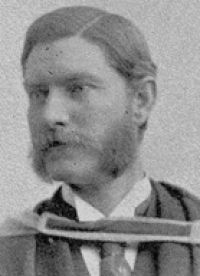 Wesley Mills,
Voice production in singing and speaking…
“ It cannot be too well borne in mind, obvious though it is, that all speaking and singing, whatever else they be, are tone-production; hence the first thing for every one to ascertain regarding himself is the extent to which he can form and hold tones of good quality—in other words, the success with which he can establish the essential co-ordinations or harmonious actions of the breathing and laryngeal mechanisms, and maintain them for a considerable length of time. ”
Margaret Blake Alverson, Sixty Years of California Song
“ While he is to be admired for his grand tones and magnificent work, it has taken years of technique to produce those tones through perfect knowledge of breath control.Teachers of the eighteenth century required many years of hard study from the pupils before they were considered competent to illustrate the art of tone production and before the masters considered them singers or sent them [Pg 170] forth as exponents of their art. Why all this work to acquire the art of producing beautiful tones? ”
“ Indeed, it is present in all creative activity, gilding earnest work with a sportive glitter. In artistic production, however, it has the special office o395f differentiating it from ordinary toil and making appreciation of the thing created go hand in hand with its production. Each new-found harmony of tone or colour or outline appealing to criticism of its creator causes him intense enjoyment all through the progress of its production, and the indifference sometimes felt toward the finished work results from frequent repetition which has dulled the edge of appetite. ”
D. A. Clippinger, The Head Voice and Other Problems…
“ Of this we may be sure, that the tone the pupil sings will not be better than the one he has in mind. A tone exists first as a mental concept, and the quality of the mental concept determines the quality of the tone.If there be such a thing as scientific voice production it will be found in the sense of what is inherently beautiful, and the scientific tone is one which will perfectly express a right idea or emotion, and in the nature of things there is an appropriate tone for everything that may be legitimately expressed, for they are correlated ideas. ”
 Georg Wilhelm Friedrich Hegel,
The Philosophy of Fine Art, volume 3…
“ This triple mode of seizing on reality offers art the well-known division into first, the plastic arts, which elaborate their content for vision in the external form and colour of objects, secondly, in the art of sound, music, and thirdly, into poetry, which as the art of speech uses tone merely as a symbol, in order, by means of it, to address itself directly to what is ideal in the contemplation, emotion, and imagination of our spiritual life. ”

“ Meanwhile the poet’s rich, resonant voice filled the studio with an agreeable and rambling monotone:“Verse is a vehicle for expression; expression is a vehicle for verse; sound, in itself, is so subtly saturated with meaning that it requires nothing of added logic for its vindication. Sound, therefore, is sense, modified by the mysterious portent of tone. Thank you for understanding, thank you for a thought—very, very precious, a thought beautiful.” ”
Frederic Henry Balfour, Leaves from my Chinese Scrapbook (1887)
“ The forms imparted by that which has form are real enough; but that which imparted form in the first instance has no existence. The tones produced by sound [in the abstract] are audible; but the tone-producing sound has never gone forth. The hues manifested by colour are varied; but that which imparts those hues—colour in the abstract—has never been seen. The sensation produced by flavour is experienced by gustation; but the taste-producing flavour has not been discovered. All these phenomena are functions of the principle of Inaction. ”
 Anna J. Cooper,
A Voice from the South
“ Each thing in its place is best, and have wrought into their products, lovingly and impartially and reverently, every type, every tint, every tone that they felt or saw or heard, just to that degree have their expressions, whether by pen or brush or rhythmic cadence, adequately and simply given voice to the thought of Nature around them. ”
Henry Albert Phillips, The photodrama (1914)
“ The illiterate writer is beyond imagining and might be compared with a blind painter or a mute singer. The next step toward eventual harmony is the choice of an appropriate idea and a subsequent coherent development. The units of development should not merely stick together; they must cling to each other. Thus we fulfill the unities of impression, which is the simpler part of our task.Perfect unity in expression is harmony. There is a measure, a key, a pitch, a tone—or a color scheme, if you will—that cannot be violated. ”
 James Sully,
1911 Encyclopædia Britannica
(1911)
“ One serious obstacle to a scientific theory of aesthetic experience is the illusive character of many of its finer elements—for example, the subtle differences of feeling-tone produced by the several colours as well as by their several tones and shades, by the several musical intervals, and so forth. ”
William James, The Principles of Psychology, Volume 1…
“ But even within the sphere of these sensations, which do correspond to outer things, training and practice make themselves felt. It is well known how much finer and quicker the painter is in discriminating colors and illuminations than one whose eye is not trained in these matters; how the musician and the musical-instrument maker perceive with ease and certainty differences of pitch and tone which for the ear of the layman do not exist; and how even in the inferior realms of cookery and wine-judging it takes a long habit of comparing to make a master. ”
Edmund J. Myer, The Renaissance of the Vocal Art
“ The other voice may be bright, free, and clear, yet may use the same quality or color of tone constantly on all styles of singing, and on all degrees of power, it matters not what the thought or sentiment may be; and this style of voice is by no means uncommon, even among many of our public singers. Now consider the difference in the commercial value of these two voices, which should bear at least some relation to their artistic value. No artist can be truly great or fully developed without the power of vitalized, emotional energy, and variety of tone color and character. ”
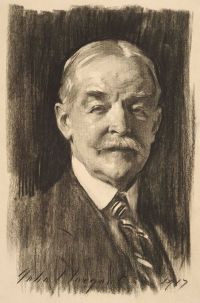 Denman W. Ross,
A theory of pure design: harmony…
“ The study of tones and tone-relations means the study of pigment-materials and their effects, to find out what quantities of light we can produce, what qualities of color, what intensities of color, what neutralizations. ”
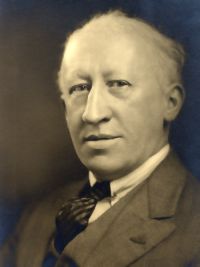 Ernest Newman,
Musical Studies
“ On the other hand, in thousands of works that have been written without a formal programme, the expression—it may be throughout the work, or only in parts of it—is so vivid, so strenuous, so suggestive of something more than an abstract delight in making a beautiful tone-pattern, that it spontaneously evokes in us images of definite scenes or characters or actions. ”
Georg Wilhelm Friedrich Hegel,
The Philosophy of Fine Art, volume 3…
“ And on account of this the realm of tone, inasmuch as it cannot serve merely as a symbol, is by virtue of this emancipated function of its life [406] able to attain to a mode of configuration, which makes the form that is its peculiar possession, that is to say, the modes of tone as artistically developed, its fundamental aim and object. In recent times especially, the art of music, by its wresting itself from all content that is independently lucid, has withdrawn into the depths of its own medium. ”
Georg Wilhelm Friedrich Hegel,
The Philosophy of Fine Art, volume 4…
“ We have already seen that poetry possesses for its external medium that of tone in common with music. The wholly external, or, as we might say in the false sense of the expression, the objective material in the progressive series of the particular arts finally vanishes in the subjective medium of sound, which is divested of all visibility, and which suffers an ideal content only to be apprehended by a conscious state independent of sight. ”
“ If mellowness of quality be sought, a slight alteration of its position or form will produce a favourable change of singular extent; if intensity of tone be requisite, the sound-post is again the regulator. ”
Georg Wilhelm Friedrich Hegel,
The Introduction to Hegel's Philosophy of Fine Arts
“ But the productive fancy of the artist is the fancy of a great mind and heart, the apprehension and creation of ideas and of shapes, and, indeed, the exhibition of the profoundest and most universal human interests in the definite sensuous mould of pictorial representation. From this it follows at once, that in one aspect Fancy unquestionably rests on natural gifts—speaking generally, on talent—because its mode of production requires a sensuous medium. ”
Georg Wilhelm Friedrich Hegel,
The Philosophy of Fine Art, volume 3…
“ In poetry, as we have found already in our general differentiation of the several arts, tone is not as such elicited and artistically produced by various humanly constructed instruments, but the articulate sound of the human organ of speech is reduced to the mere symbol of speech, retaining thereby nothing more than the value of a sign of ideas, which is by itself devoid of significance. ”
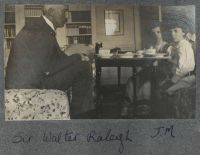 Sir Walter Alexander Raleigh,
Style
“ Of no less import is the power of melody which chooses, rejects, and orders words for the satisfaction that a cunningly varied return of sound can give to the ear. Some critics have amused themselves with the hope that here, in the laws and practices regulating the audible cadence of words, may be found the first principles of style, the form which fashions the matter, the apprenticeship to beauty which alone can make an art of truth. ”
Otto Jahn, Life of Mozart, Vol. 2 (of 3)
“ Of a different kind to these general preparatory studies, is that which may be properly be called the labour of production: such a technical skill and perfection as enables an artist to clothe his ideas in form. ”
Georg Wilhelm Friedrich Hegel,
The Philosophy of Fine Art, volume 1…
“ It is for all that bound, emanating as it does from the creative medium and operations of mind, and despite the living resemblance to real things we may find upon it, to permeate the whole with this universal quality. And in this we have that higher ideality of the poetical product as contrasted with the purely formal ideality of the art of production. ”
Edmund J. Myer, The Renaissance of the Vocal Art
“ The student of the voice who studies or who is trained in this way, develops, not only in character and beauty of tone, but in actual physical power and control. This study of tone color and tone character develops new power in every way. "The mechanical and mental alone are but half development, but this is full and complete development of the entire being." In proof of this, sing a light, bright, happy thought or tone, using the clear timbre, about the middle of the voice. ”
Georg Wilhelm Friedrich Hegel,
The Philosophy of Fine Art, volume 3…
“ The purely natural expression, however, of interjections is not as yet music, for though these outcries are no doubt no intentionally articulate sign of ideas as speech is and consequently express no conceived content in its generalized form as concept, but give vent to a mood and emotion in and through tone itself, a state which is reposed immediately in similar tones and opens the heart in the outburst of the same, yet this emancipation is not one which is promoted by art. ”
De Witt H. Parker, The Principles of Aesthetics
“ Although each tone, as separate and individual, possesses its own feeling in its own right, the tonal effects are immensely accentuated by contrast with one another,—the high against the low, the poor against the rich, the loud against the soft—and through the summation, by means of repetition, of the influences of many tones of like character; the full meaning of music depends upon the relations of tones, especially the temporal relations. ”
David Hannay, The Later Renaissance
“ The point is that it represents not the exceptional work of the time, but the average production, which we may almost call commercial, or the poets’ corner, and that being this, it maintains such an extraordinarily high level of inspiration and melody. ”
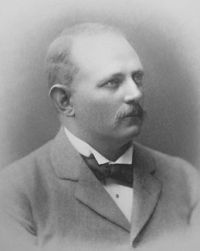 P. H. Emerson,
Naturalistic Photography for Students of the Art
“ In short, it all depends on what the student wishes to express. Some of the best work done has been produced from negatives made purposely thin, which have at the same time been true in tone, and full of breadth. |Intensification.| The density of a negative can be increased by intensifying the negative; but it must not be forgotten that intensification does not, in our opinion, correct the tonality, this is a matter of great importance which has been overlooked. ”
Edmund J. Myer, The Renaissance of the Vocal Art
“ All artistic tone is the result of certain conditions, conditions demanded by Nature and not man's ideas or fancies. These conditions are dependent upon form and adjustment, or we might better say adjustment and form, as form is the result of the adjustment of the parts. So far all writers on the voice, and all teachers, agree ”
James Sully,
Popular Science Monthly
(1885)
“ If the rich biographical literature of modern times teaches us anything, it is that original production is the severest strain of human faculty, the most violent and exhausting form of cerebral action. The pleasing fiction that the perfectly-shaped artistic product occurs to the creative mind as a kind of happy thought is at once dispelled by a little study of great men's recorded experience. ”
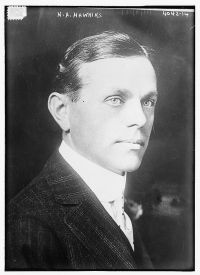 Norval A. Hawkins,
Certain Success
“ There is selling value, too, in the placing of tones in your mouth. A tone placed far forward indicates lack of thought and instability. It is the tone we associate with "lip judgments." On the contrary, hidden thoughts, unwillingness to tell all you know, are suggested by tones placed far back in your mouth. The middle-of-the-mouth tone makes the impression that the voice is properly balanced, and suggests the associated idea of mind balance. Avoid the extremes in placing your tones, if you would make certain of the most effective use of your voice in selling ideas. ”
Edmund J. Myer, The Renaissance of the Vocal Art
“ All artistic tone is reinforced sound. There are two ways of reinforcing tone. First, by direct muscular effort, the wrong way; second, by expansion and inflation, the added resonance of air in the cavities, the right way. This condition of expansion and inflation is the distinguishing feature of many great voices, and is possible only through right bodily position and action. These movements are used by many great artists, who develop them as they themselves develop, through giving expression to thought, feeling, and emotion, through using the impressive, persuasive tone, the fervent voice. ”
Edmund J. Myer, The Renaissance of the Vocal Art
“ There is a stage of study, as we have said, in the experience of all students of the voice, when, in order to become artists, Nature demands of them more than mere sound. There comes a time when every tone of the voice must mean something, must express something, through the character of the tone, the idealized tone. In this way the personal magnetism of the singer is imparted, heard, and felt. This means the expression of thought and feeling through the color and character of the tone, the highest known form of expression. ”
 Gilbert Seldes,
The Seven Lively Arts
“ Skill in production is part of it, but not all, for the same elements: colour, light, sound, movement, can be combined into other forms which lack that particular air of urbanity, of well-being, of rich contentment and interest which is the special atmosphere of musical shows. ”
Related terms
Authors who wrote about “tone production”
Edmund J. MyerDenman W. RossWesley MillsD. A. ClippingerGuy Debord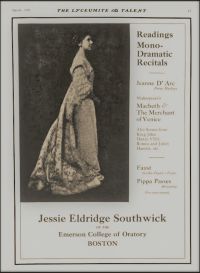 Jessie Eldridge SouthwickHarold Speed
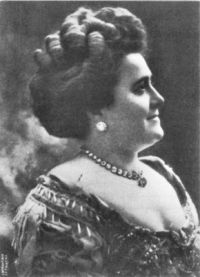 Luisa Tetrazzini
 John Stuart MillNorval A. HawkinsGilbert SeldesDe Witt H. ParkerGeorg Wilhelm Friedrich HegelP. H. Emerson
 John DeweyJames SullyLaura Fry KreadyMargaret Blake AlversonVictor Oscar FreeburgKarl Groos
Denman W. RossWesley MillsD. A. ClippingerGuy DebordJessie Eldridge SouthwickHarold SpeedLuisa TetrazziniJohn Stuart MillNorval A. HawkinsGilbert SeldesDe Witt H. ParkerGeorg Wilhelm Friedrich HegelP. H. EmersonJohn DeweyJames SullyLaura Fry KreadyMargaret Blake AlversonVictor Oscar FreeburgKarl Groos