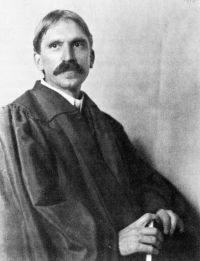
“ But vague meanings are too gelatinous to offer matter for analysis, and too pulpy to afford support to other beliefs. They evade testing and responsibility. Vagueness disguises the unconscious mixing together of different meanings, and facilitates the substitution of one meaning for another, and covers up the failure to have any precise meaning at all. It is the aboriginal logical sin—the source from which flow most bad intellectual consequences. Totally to eliminate indefiniteness is impossible ”
Vagueness doctrine
Definition and stakes
The theme of “vagueness doctrine” has been addressed by authors such as Thomas Hobbes, Arthur Schopenhauer, William James, Bertrand Russell and G. K. Chesterton. It is often associated with terms like truth, error, judgment, fallacy and human.
Quotes about “vagueness doctrine”
“ Definiteness versus vaguenessIn the abstract meaning is intensionIn its application it is extensionA being that cannot understand at all is at least protected from mis-understandings. But beings that get knowledge by means of inferring and interpreting, by judging what things signify in relation to one another, are constantly exposed to the danger of mis-apprehension, mis-understanding, mis-taking—taking a thing amiss. A constant source of misunderstanding and mistake is indefiniteness of meaning. Through vagueness of [Pg 130] meaning we misunderstand other people, things, and ourselves ”
 G. K. Chesterton,
Fancies versus fads
(1923)
“ In several books and newspapers I happened to read lately, I have noticed a certain tone touching the uneducated witness; phrases like "the vagueness characteristic of their class," or "easily confused, as such witnesses are." Now such vagueness is simple truthfulness. Nine times out of ten, it is the confusion any man would show at any given instant about the complications which crowd human life. ”
 Arthur Schopenhauer,
The Essays of Arthur Schopenhauer…
“ An obscure and vague manner of expression is always and everywhere a very bad sign. In ninety-nine cases out of a hundred it comes from vagueness of thought; and this again almost always means that there is something radically wrong and incongruous about the thought itself—in a word, that it is incorrect. ”
United States District Court, E. D. Wisconsin., Holiday Magic, Inc. v. Warren 357 F.Supp… (1973)
“ Vagueness is not a wooden concept but a flexible one, based on a common sense evaluation of the notice given by a regulation and calling for consideration of the entire text, the subject matter dealt with, and the difficulty in being more precise. ”
William James, The Varieties of Religious Experience…
“ So the reproach of vagueness and subjectivity and “on the whole”-ness, which can with perfect legitimacy be addressed to the empirical method as we are forced to use it, is after all a reproach to which the entire life of man in dealing with these matters is obnoxious. ”
Victor Alvin Ketcham, The theory and practice of argumentation and debate
“ Vagueness in delivery is just as harmful as vagueness in language or substance. If one word in a sentence is pronounced so ineffectively that it is not understood, it may be impossible for the person hearing that sentence to grasp its meaning. In any event it requires the listener to make the mental effort of figuring out what the sentence means, and this mental effort tires the hearer, prevents him from giving his undivided attention to the substance of the argument, and ultimately results in his losing all interest in the discussion. ”
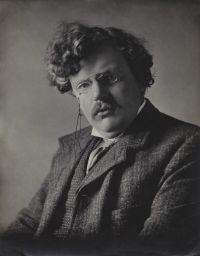 Gilbert Keith Chesterton,
What's Wrong with the World — Chapter 1 part 3
(1910)
“ And this is a strictly true parable of the effect of our modern vagueness in losing and separating men as in a mist.It is not merely true that a creed unites men. Nay, a difference of creed unites men--so long as it is a clear difference. ”
 Barry Pain,
The New Gulliver, and Other Stories
“ One knows the vagueness with which the ordinary man assigns a fact to the sixteenth or seventeenth century—a fact which in reality belongs to the eighteenth. The further back we go the more vague we become. ”
Mihai Nadin, The Civilization of Illiteracy
“ Political fear of vagueness can only be compared to the fear of a vacuum that once upon a time branded physics and political doctrines. Faster rhythms of existence and the acknowledged need to adapt to circumstances of action never before experienced-scale of politics, globality, scale of humankind-speak against many of the literate expectations of politics as a stabilizing form of human practice. ”
William James, The Principles of Psychology (1890)
“ At a certain stage in the development of every science a degree of vagueness is what best consists with fertility. On the whole, few recent formulas have done more real service of a rough sort in psychology than the Spencerian one that the essence of mental life and of bodily life are one, namely, 'the adjustment of inner to outer relations.' Such a formula is vagueness incarnate; but because it takes into account the fact that minds inhabit environments which act on them and on which they in turn react ”
Victor Alvin Ketcham, The theory and practice of argumentation and debate
“ Vagueness and ambiguity are the very substance of fallacies. Sometimes the student must use his knowledge of constructive logic to build up a parallel argument in the way it ought to stand and show more plainly by means of contrast the defects of the unsound argument. In such cases it often happens that the evidence points in an opposite direction from that which is needed to support a valid argument. ”
 George Eliot,
The Essays of "George Eliot"
“ They have enough of organizing purpose in them to make their facts illustrative, and to leave a distinct result in the mind even when most of the facts are forgotten; and they have enough of vagueness and vacillation in their theory to win them ready acceptance from a mixed audience. The vagueness and vacillation are not devices of timidity ”

“ It is curious that this vagueness, this uncertainty and obscurity, should exist in one who is on the other hand so frequently and wearisomely minute in microscopic details. He constantly calls on us to believe what he gives us no data for believing. Even in the Trionfo he constantly introduces persons and [Pg 18] incidents having no connection with the narrative. ”
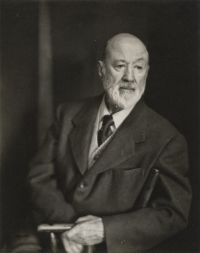 Charles Ives,
Essays Before a Sonata
“ Vagueness, is at times, an indication of nearness to a perfect truth. ”
 Bertrand Russell,
Free thought and official propaganda
“ For my part, I should wish to preach the "will to doubt." None of our beliefs are quite true; all have at least a penumbra of vagueness and error. ”
Famous Reviews, Selected and Edited with Introductory Notes by R. Brimley Johnson
“ The real cause of the modern vagueness is rather to be found in shallow and unsound culture, and in that inability, or carelessness about seeing any object clearly, which besets our poets just now; as the cause of antique clearness lies in the nobler and healthier manhood, in the severer and more methodic habits of thought, the sounder philosophic and critical training which enabled Spenser and Milton to draw up a state paper, or to discourse deep metaphysics, with the same manful possession of their subject which gives grace and completeness to the Penseroso or the Epithalmion. ”
G. K. Chesterton,
What's Wrong with the World
(1910)
“ Our political vagueness divides men, it does not fuse them. ”
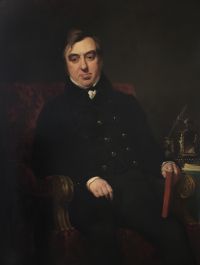 John Ayrton Paris,
The Life of Sir Humphry Davy, Bart…
“ It is much more difficult to eradicate an ancient error than to establish a new truth; and on this occasion, he had not only to contend against the pampered errors of a domineering system, but against the equivocal and illusive evidence, or, if I may be allowed the expression, the apparent neutrality of facts by which the truth of his theory was to be judged. ”
 H. G. Wells,
First and Last Things: A Confession of Faith and Rule of Life
“ And because these things are vague and impalpable and wilfully attained, it is none the less important that they should be rendered with all the truth of one’s being. To be atmospherically vague is one thing ”
Clara Vaughan, Volume 3 (of 3)
“ With one of the contradictions so common in human nature, he would even be false in order to be true: that is, he would be treacherous wherever he was unpledged, if it assisted him towards a purpose to which he was committed. ”
Virginius Dabney, The story of Don Miff (1886)
“ But when doubts have their origin in the higher rather than the lower nature,—when a mind, at once candid and searching, gradually finds itself forced to question dogmas learned from a mother’s lips,—for this phase of scepticism, the cure is far more difficult, and rarely radical. You may mow down the doubts with irresistible logic, they may be crushed into the very earth by the enormous weight of unanimous opposing opinion, but they are not dead. Remove the pressure, and the mind bristles, instantly, with interrogation-points. ”
 David Hume,
A Treatise of Human Nature
(1738)
“ When I reflect on the natural fallibility of my judgment, I have less confidence in my opinions, than when I only consider the objects concerning which I reason; and when I proceed still farther, to turn the scrutiny against every successive estimation I make of my faculties, all the rules of logic require a continual diminution, and at last a total extinction of belief and evidence. ”
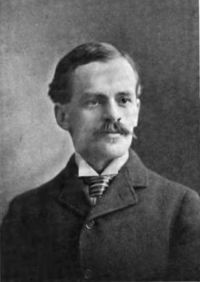 Alfred H. Lloyd,
The will to doubt
“ Alike in ordinary life and in science, even in science where such a result was perhaps hardly to be expected, we found what at least seemed like illusion and what certainly was paradox, and almost against our will we had to conclude that a spirit of contradiction and duplicity and vacillation dwelt at the very centre and the very heart of our human experience. ”
Sir John Rhys, Celtic Folklore: Welsh and Manx…
“ In the relations of this visible world we find them to have been as rational, and shrewd to detect an historic anomaly, as ourselves. But when once the invisible world was supposed to be opened, and the lawless agency of bad spirits assumed, what measures of probability, of decency, of fitness, or proportion—of that which distinguishes the likely from the palpable absurd—could they have to guide them in the rejection or admission of any particular testimony? ”
 Georg Wilhelm Friedrich Hegel,
Science of Logic
(1816)
“ For to err is human:—Who has not been mistaken on one point or another, whether he had fresh or pickled cabbage for dinner, and about innumerable things more or less important? But the difference of more or less importance disappears if everything turns on the subjectivity of conviction and on persistency in it. But the said noble illogicality which admits error to be possible, when it comes round to say that a wrong conviction is only an error, really only falls into a further illogicality—the illogicality of dishonesty. ”
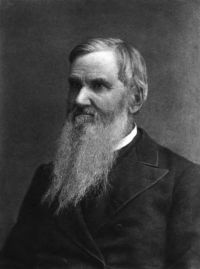 Robert Lewis Dabney,
A Defence of Virginia
“ When we consider the weakness of human reason, and the mortifying history of its vagaries; when we remember how many dogmas once held for axioms are now exploded, and what monstrous crimes and follies have been upheld by the unanimous consent of philosophers, we are not afraid to adopt the teachings of the All-Wise, in preference to the deductions of blundering and purblind mortals. ”
 John Wesley Powell,
Truth and Error — Chapter XIX.
(1898)
“ Judgments of reflection seem to be especially subject to error and as such to be compounded into false concepts and to be long entertained as such. In the act of making the judgment there must be judgments of bodies impinging on one another, leading to judgments of apprehension. ”
John Wesley Powell,
Truth and Error — Chapter XXI.
(1898)
“ Having already found how judgments of perception are considered and how such judgments are verified, we have now to exhibit in what manner there comes into existence a multitude of judgments of perception which are never verified, and yet are entertained in the mind as if they were veridical. Fallacies of perceptions are errors of judgment respecting forms. Such judgments may occur through unverified judgments of sensation, and the fallacy is repeated in a higher state of mind. ”
 William Whewell,
Novum organon renovatum
(1858)
“ But the tendency of all such controversy is to diffuse truth and to dispel errour. Truth is consistent, and can bear the tug of war; Errour is incoherent, and falls to pieces in the struggle. True Conceptions can endure the sun, and become clearer as a fuller light is obtained; confused and inconsistent notions vanish like visionary spectres at the break of a brighter day. And thus all the controversies concerning such Conceptions as science involves, have ever ended in the establishment of the side on which the truth was found. ”
John Alberger, Monks, Popes, and their Political Intrigues
“ If such is the fearlessness of truth, and such the cowardice of error, the secrecy of the silent orders commends them less to the confidence which candor inspires, than to the suspicion which secrecy begets. ”
Dan King, Quackery Unmasked (1858)
“ Even hags of a low order often accomplish much in their way: common sense and common decency are confounded by their babbling, reason falls before their flying artillery, and empiricism and fraud triumph over truth and reason. ”
Steven David Justin Sills, An Apostate: Nawin of Thais
“ And for whatever activities he might devise as distractions from his thoughts, fears of the vacuous nature of existence would always be man's ineluctable truth, and without agenda vacuous truth was his in excess. ”
 F. H. Bradley,
Appearance and Reality — Chapter XXVII
(1893)
“ In theory you cannot indulge with consistency in an ultimate doubt. You are forced, willingly or not, at a certain point to assume infallibility. For, otherwise, how could you proceed to judge at all? ”
David Hume,
A Treatise of Human Nature
(1738)
“ After this chain of reasoning and explication of my principles, I am now prepared to answer all the objections that have been offered, whether derived from metaphysics or mechanics. The frequent disputes concerning a vacuum, or extension without matter prove not the reality of the idea, upon which the dispute turns; there being nothing more common, than to see men deceive themselves in this particular; especially when by means of any close relation, there is another idea presented, which may be the occasion of their mistake. ”
Alfred H. Lloyd,
The will to doubt
“ Would that I had the ability to write with the penetration and the clearness of statement that the [p.101] subject should certainly elicit, upon the strange equanimity with which mankind, in science or in practical life, receives and faces a direct negative or an open contradiction. Perhaps the habit of easy division into positive and negative, the ready resort to dichotomy, explains the mystery; perhaps the fact that negation or opposition is and can only be in kind, that there never is or can be any real change or need of change in a mere negation, is at least an important factor in the case ”
F. H. Bradley,
Appearance and Reality — Chapter XVI
(1893)
“ For that might be taken as a statement that the contradiction already is present in the mere predicate, before judgment is attempted; and this, if defensible, would be misleading. Error is the qualification of a reality in such a way that in the result it has an inconsistent content, which for that reason is rejected. Where existence has a “what” colliding within itself, there the predication of this “what” is an erroneous judgment. If a reality is self-consistent, and its further determination has introduced discord, there the addition is the mistake, and the reality is unaffected. ”

“ What does it matter how you build, if you have bad bricks to build with; or how you reason, if every idea with which you begin is foul or false? And in general all fatal false reasoning proceeds from people’s having some one false notion in their hearts, with which they are resolved that their reasoning shall comply. ”
Charles Coppens, Moral Principles and Medical Practice…
“ Their unsoundness arises from the fact that they reason from false premises; and they get their false premises from their diseased imaginations, whose vagaries they take for realities.2. Here a difficulty presents itself, which we must explain at once, namely, how can there be unsoundness of mind at all? Is not the intellect of man a simple power, and his soul a simple being? How can a simple being become deranged? ”
Jaime Luciano Balmes, Fundamental Philosophy, Vol. 1…
“ True, the other criteria are, in exceptional circumstances, liable to error; in certain cases when a doubt arises an appeal is taken to the testimony of others: but why? Simply, in order to make sure that one has not labored under one of those derangements to which human misery is subject. We know that what is natural is general; and he who doubts inquires of others, that he may ascertain if he has by some accident been out of his ordinary natural state. ”
Georg Wilhelm Friedrich Hegel,
The Phenomenology of Mind — PrefaceOn Scientific Knowledge in General
“ All the same, we cannot for that reason say that falsehood is a moment or forms even a constituent part of truth. That “in every case of falsity there is something true” is an expression in which they are taken to be like oil and water, which do not mix and are merely united externally. Just in the interest of their real meaning, precisely because we want to designate the aspect or moment of complete otherness, the terms true and false must no longer be used where their otherness has been cancelled and superseded. ”


