Assyrian king

Definition and stakes

Elizabeth A. Reed,  Persian Literature, Ancient and Modern

“ In this primitive mythology we find also
ASSUR. The “god of judges” was the especial patron of Assyria, and afterward made to express the power of the later Assyrian empire by becoming “father of the gods” and the head of the pantheon.
The Assyrian kings claimed that their power was derived from this deity, and in one of the inscriptions it is said that
“The universal king, [72] king of Assyria, the king whom Assur,
King of the spirits of heaven, appointed with a kingdom,
Without rival has filled his hand.
”
Source: Gutenberg

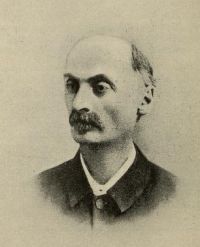
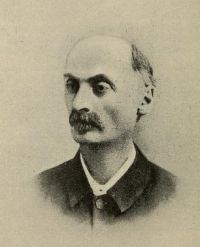
Portrait of A. H. Sayce A. H. Sayce,  A Primer of Assyriology

“ The Assyrian king accordingly marched into the very heart of Arabia, through burning and waterless deserts, and struck terror into the Arabian tribes. The march must have been one of the most remarkable ever made.
Esar-haddon was at last free to complete the policy of Tiglath-pileser III by conquering the ancient kingdom of Egypt. Palestine gave no more trouble; Manasseh of Judah was already an obedient vassal of the Assyrian king. In b.c. 674 'the Assyrians marched into Egypt.' But two more campaigns were needed for its subjection.
”
Source: Gutenberg

Archibald H. Sayce, Leonard W. King and Morris Jastrow,  1911 Encyclopædia Britannica (1910)

“ The Assyrian king was murdered by his son, Assur-nazir-pal I., and Hadad-nadin-akhi made king of Babylonia. But it was not until several years later, in the reign of the Assyrian king Tukulti-Assur, that a reconciliation was effected between the two rival kingdoms. The next Assyrian monarch, Bel-kudur-uzur, was the last of the old royal line. He seems to have been slain fighting against the Babylonians, who were still under the rule of Hadad-nadin-akhi, and a new dynasty was established at Assur by In-aristi-pileser, who claimed to be a descendant of the ancient prince Erba-Raman. ”
Source: Wikisource

Get perspective with Kwize: daily news enlightened by great literature