Alpha particle

Definition and stakes

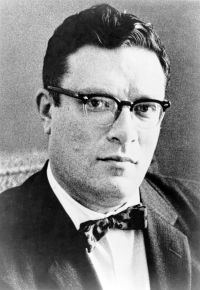
Portrait of Isaac Asimov Isaac Asimov,  Worlds Within Worlds: The Story of Nuclear Energy…

“ Furthermore, the alpha particle was much more massive than the electron. It was, indeed, as massive as a helium atom (the second lightest known atom) and four times as massive as a hydrogen atom. Nevertheless, the alpha particle can penetrate matter in a way in which atoms cannot, so that it seems much smaller in diameter than atoms are. The alpha particle, despite its mass, is another subatomic particle.
Here, then, is the meeting point of electrons and of atoms—the particles of electricity and of matter.
”

Source: Gutenberg

Portrait of F. P. Venable F. P. Venable,  A Brief Account of Radio-activity

“ Parallel with the experiments mentioned, there is what is called the stopping power of substances. This means the depth or thickness of a substance necessary to put a stop to the course of the alpha particles. This gives the range of the alpha particles in such substances and is connected in a simple way with the atomic weight, that is, it is again fixed by the mass of the opposing atom. This stopping power of an atom for an alpha particle is approximately proportional to the square root of its atomic weight. ”
Source: Gutenberg

Various,  Popular Science Monthly (1915)

“ In this way, one gram of radium in equilibrium was found to expel the enormous number of alpha particles each second.
Another interesting result followed from these experiments. It has long been known that the alpha particles produce a marked phosphorescence in crystalline zinc sulphide. When examined by a lens, the light is found not to be uniform but exhibits a very beautiful scintillating effect. By counting the number of scintillations due to the alpha particles, it was found that each scintillation was produced by the impact of a single alpha particle.
”
Source: Wikisource

Get perspective with Kwize: daily news enlightened by great literature