Electric charge

Definition and stakes

Various,  Encyclopaedia Britannica, 11th Edition…

“ We have next to consider the energy storage which takes place when electric charge is created, i.e. when the dielectric is strained or polarized. Since the potential of a conductor is defined to be the work required to move a unit of positive electricity from the surface of the earth or from an infinite distance from all electricity to the surface of the conductor, it follows that the work done in putting a small charge dq into a conductor at a potential v is v dq. ”
Source: Gutenberg

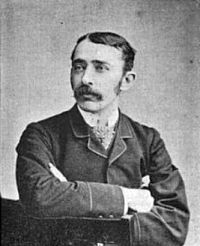
Portrait of John Ambrose Fleming John Ambrose Fleming,  1911 Encyclopædia Britannica (1911)

“ The work of Benjamin Franklin, Henry Cavendish, Michael Faraday and J. Clerk Maxwell demonstrated, however, that all electric charge or electrification of conductors consists simply in the establishment of a physical state in the surrounding insulator or dielectric, which state is variously called electric strain, electric displacement or electric polarization. ”
Source: Wikisource

Various,  Scientific American Supplement…

“ It was pointed out by Sir W. Grove that if the extremities of a piece of platinum wire be placed in a candle flame, one at the bottom and the other near the top, an electric current will flow through the wire, indicating the presence of electricity. If an electrified body be heated, the electricity escapes more rapidly as the temperature rises. If a vessel of water be electrified, and the water then converted into steam, the electric charge will be rapidly dissipated. ”
Source: Gutenberg

Get perspective with Kwize: daily news enlightened by great literature