Electrical conductivity

Definition and stakes

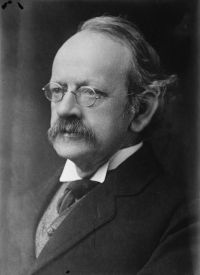
Portrait of Sir Oliver Lodge Sir Oliver Lodge,  Signalling across space without wires (1900)

“ The substances which up to the present have presented the greatest variations in conductivity are the powders or filings of metals. The enormous resistance offered by metal in a state of powder is well known; indeed, if we take a somewhat long column of very fine metallic powder the passage of the current is completely stopped. The increase in the electrical conductivity by pressure of powdered conducting substances is well known, and has had various practical applications. ”

Source: Gutenberg

by the United States government,  Chapters (2002)

“ Electrical Conductivity Water without impurities is a very poor conductor of electricity. However, when salt is in solution in water, the salt molecules are ionized and become carriers of electricity. (What is commonly called freshwater has many impurities and is a good conductor of electricity; only pure distilled water is a poor conductor.) Hence, the electrical conductivity of seawater is directly proportional to the number of salt molecules in the water. For any given salinity, the conductivity increases with an increase in temperature. ”
Source: Wikisource

Get perspective with Kwize: daily news enlightened by great literature