Man of pleasure
Definition and stakes
Quotes about “man of pleasure”
 Maturin M. Ballou,
Pearls of Thought
Maturin M. Ballou,
Pearls of Thought
“ Fly the pleasure that bites to-morrow.—George Herbert.Look upon pleasures not upon that side that is next the sun, or where they look beauteously, that is, as they come towards you to be enjoyed, for then they paint and smile, and dress themselves up in tinsel, and glass gems, and counterfeit imagery.—Jeremy Taylor.Pleasure has its time; so, too, has wisdom. Make love in thy youth, and in old age attend to thy salvation.—Voltaire.A man of pleasure is a man of pains.—Young.Pleasure is very seldom found where it is sought. ”
Earl of Philip Dormer Stanhope Chesterfield, Letters, sentences and maxims (1903)
“ The Man of Pleasure.—The character which most young men first aim at is that of a man of pleasure; but they generally take it upon trust; and, instead of consulting their own taste and inclinations, they blindly adopt whatever those with whom they chiefly converse are pleased to call by the name of pleasure; and a man of pleasure, in the vulgar acceptation of that phrase, means only a beastly [Pg 110] drunkard, an abandoned whoremaster, and a profligate swearer and curser. ”
 Marcus Tullius Cicero,
The Academic Questions, Treatise De Finibus…
(1891)
Marcus Tullius Cicero,
The Academic Questions, Treatise De Finibus…
(1891)
“ No less pleasure, says he, is derived from the most ordinary things than from the most valuable. Now to say this, is not only not to have a heart, but not to have even a palate. For they who despise pleasure itself, may be allowed to say that they do not prefer a sturgeon to a herring. But the man who places his chief good in pleasure, must judge of everything by his sensations, not by his reason, and must pronounce those things best which are most pleasant. ”
Marcus Tullius Cicero,
The Academic Questions, Treatise De Finibus…
“ For in the mind, the old philosophers—those most learned men—thought that there was something heavenly and divine. But if the chief good consisted in pleasure, as you say, then it would be natural that we should wish to live day and night in the midst of pleasure, without any interval or interruption, while all our senses were, as it were, steeped in and influenced wholly by pleasure. But who is there, who is worthy of the name of a man, who would like to spend even the whole of one day in that kind of pleasure? ”
 Charles James Lever,
Arthur O'Leary: His Wanderings And Ponderings In Many Lands
Charles James Lever,
Arthur O'Leary: His Wanderings And Ponderings In Many Lands
“ But, better than all, how many enjoyments which to the glitter of wealth or the grandeur of a high position would seem insignificant and valueless, are to the humble man sources of hourly delight! And is our happiness anything but an aggregate of these grains of pleasure? ”
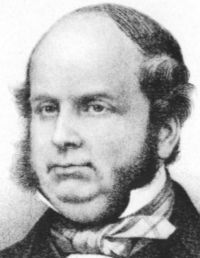 Henry Thomas Buckle,
History of Civilization in England…
Henry Thomas Buckle,
History of Civilization in England…
“ If we could suppose a man completely perfect, we should take for granted that he would unite these two forms of pleasure in the highest degree, and would extract, both from body and mind, every enjoyment consistent with his own happiness, and with the happiness of others. ”
Marcus Tullius Cicero,
The Academic Questions, Treatise De Finibus…
“ I say that all men who are free from pain are in pleasure, and in the greatest pleasure too. Do you, then, say that the man who, not being thirsty himself, mingles some wine for another, and the thirsty man who drinks it when mixed, are both enjoying the same pleasure? ”
Bernard Simon Talmey, Love: A Treatise on the Science of Sex-attraction
“ But is it possible that the attainment of happiness and of the fleeting transitory joy shall be the only purpose of life? The philosophy of pleasure allots to man not only the right but also the duty of making his attainment of happiness the only aim of his life. ”
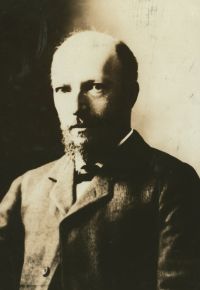 Felix Adler,
Creed and Deed: A Series of Discourses
Felix Adler,
Creed and Deed: A Series of Discourses
“ I think we shall derive some assistance in discussing this question, by attempting to resolve the conception of happiness into its constituent elements. Pleasure has been defined to consist in the satisfaction of any of man's natural wants. The variety of our pleasures corresponds to the diversity of our wants. Food to the hungry, rest to the weary, are sources of pleasure. To feel on some cold wintry day the genial warmth of true hearth fire creeping into our blood, and the frozen limbs relaxing their stiffness, is pleasure. All men admire the beautiful and delight in adornment. ”
Lord Henry Home Kames, Elements of Criticism, Volume II
“ The delight we had in the gratification of the appetite, inflames the imagination, and makes us, with avidity, search for the same gratification in whatever other object it can be found. And thus frequency and uniformity in gratifying the same passion upon different objects, produceth at the longrun a habit. In this manner, a man acquires an habitual delight in high and poignant sauces, rich dress, fine equipage, crowds of company, and in whatever is commonly termed pleasure. ”
 F. H. Bradley,
Ethical Studies — Essay III.
(1876)
F. H. Bradley,
Ethical Studies — Essay III.
(1876)
“ The third alternative is not to give up pleasure as an end, but to place happiness elsewhere than in the greatest possible amount of ‘grateful feeling.’ This is what the prudent man of the world, with a love for pleasure, generally does do. We take a certain quantity of pleasure, and absence of pain, as a fair amount, which we may call happiness, because we feel we can do with it: and to get this amount we take up some way of living, which we follow, in general without thinking of pleasure. ”
 Philip Schaff,
Nicene and Post-Nicene Fathers…
(1885)
Philip Schaff,
Nicene and Post-Nicene Fathers…
(1885)
“ If thou pursuest those worldly things for pleasure, I will show thee that here is greater pleasure. Which is sweeter, tell me, which more marvelous, to see a man wrestling with a man, or a man buffering with a devil, a body closing with an incorporeal power, and him who is of thy race victorious? ”
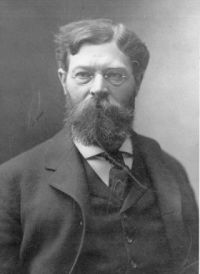 William De Witt Hyde,
The Five Great Philosophies of Life
William De Witt Hyde,
The Five Great Philosophies of Life
“ What the good man thinks is pleasure will be pleasure; what he delights in will be truly pleasant. Those pleasures which perfect the activity of the perfect and truly happy man may be called in the truest sense the pleasures of a man. ”
 George Edward Moore,
Principia Ethica — Chapter III
(1903)
George Edward Moore,
Principia Ethica — Chapter III
(1903)
“ Is it the pleasure, as distinct from the consciousness of it, that we set value on? Do we think the pleasure valuable in itself, or must we insist that, if we are to think the pleasure good, we must have consciousness of it too? ”
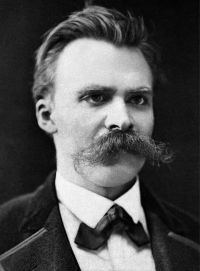 Friedrich Wilhelm Nietzsche,
Human, All-Too-Human: A Book for Free Spirits…
Friedrich Wilhelm Nietzsche,
Human, All-Too-Human: A Book for Free Spirits…
“ Pleasure and Social Instinct.—Out of his relations with other men, man obtains a new [Pg 97] species of pleasure in addition to those pleasurable sensations which he derives from himself; whereby he greatly increases the scope of enjoyment. ”
William Temple, Observations upon the United Provinces of the Netherlands… (1687)
“ But the pleasures of Imagination, as they heighten and refine the very pleasures of Sense, so they are of larger extent, and longer duration. And if the most sensual Man will confess there is a Pleasure in Pleasing, He must likewise allow, there is Good to a Man's Self, in doing Good to others ”
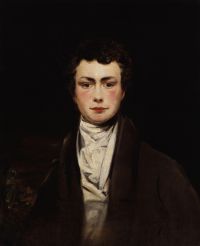 Thomas Moore,
The Complete Poems of Sir Thomas Moore
Thomas Moore,
The Complete Poems of Sir Thomas Moore
“ "Pleasure's the only noble end "To which all human powers should tend, "And Virtue gives her heavenly lore, "But to make Pleasure please us more. "Wisdom and she were both designed "To make the senses more refined, "That man might revel, free from cloying, "Then most a sage when most enjoying!" ”
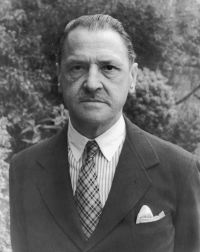 W. Somerset Maugham,
Of Human Bondage
(1915)
W. Somerset Maugham,
Of Human Bondage
(1915)
“ You have a hierarchy of values; pleasure is at the bottom of the ladder, and you speak with a little thrill of self-satisfaction, of duty, charity, and truthfulness. You think pleasure is only of the senses; the wretched slaves who manufactured your morality despised a satisfaction which they had small means of enjoying. You would not be so frightened if I had spoken of happiness instead of pleasure: it sounds less shocking, and your mind wanders from the sty of Epicurus to his garden. But I will speak of pleasure, for I see that men aim at that, and I do not know that they aim at happiness. ”
 Letitia Elizabeth Landon,
Romance and Reality
(1831)
Letitia Elizabeth Landon,
Romance and Reality
(1831)
“ We have provided for our comforts; let us now attend to our happiness;—let each man sedulously nurture those faculties of pleasure which exist both for himself and others. It is the mental world that now requires discovery and cultivation. ”
F. Marion Crawford, A Roman Singer
“ But as his hereafter is nowhere, disregard it in the argument, and say that man should only do, or actually does, everything solely for the sake of pleasure here; say that pleasure is good, so long as it does not interfere with the pleasures of others, and good is pleasure. ”
 Saint Thomas More,
Dialogue of Comfort Against Tribulation
Saint Thomas More,
Dialogue of Comfort Against Tribulation
“ Now, tell some carnal-minded man of this manner of pleasure, and he shall take little pleasure in it, and say he careth not to have his flesh shine, he, nor like a spark of fire to skip about in the sky. ”
Mrs. S. A. Barnett, Practicable Socialism, New Series
“ Pleasure, while offering excitement, should not depend on excitement; it should not involve a fellow-creature’s loss or pain, nor lay its foundation on greed or gain.2. Pleasure should not only give enjoyment, it should also increase capacities for enjoyment. It should strengthen a man’s whole being, enrich memory and call forth effort. ”
Philip Schaff,
Nicene and Post-Nicene Fathers…
(1885)
“ It has therefore only the name of pleasure.But not such are the pleasures enjoyed by us; they are truly delightful, they do not agitate nor inflame. They leave the soul free, and cheer and expand it. ”
 L. Adams Beck,
The ninth vibration and other stories
L. Adams Beck,
The ninth vibration and other stories
“ How should he withstand the passionate crying of the flesh or believe that through pleasure comes satiety and the loss of that in the spirit whereby alone pleasure can be enjoyed? For his gift was that he could win all hearts. ”
 Harriet Martineau,
Household Education
Harriet Martineau,
Household Education
“ This entreaty still rings in my ears, and leads me so to use any influence I may now have over parents.Is it not true that the strongest delight the human being ever has is in well-doing? Is it not true that this pleasure, like the pleasures of the eye and ear, the pleasures of benevolence, the pleasures of the understanding and the imagination, will seek its own continuance and gratification, if it have fair play? ”
 Ralph Waldo Emerson,
The Conduct of Life — Fate
(1860)
Ralph Waldo Emerson,
The Conduct of Life — Fate
(1860)
“ The pleasure of life is according to the man that lives it, and not according to the work or the place. ”
 Aristotle,
The Ethics of Aristotle
Aristotle,
The Ethics of Aristotle
“ The man of Perfected Self-Mastery avoids Pleasures. 3. The man of Practical Wisdom aims at avoiding Pain, not at attaining Pleasure. 4. Pleasures are an impediment to thought, and the more so the more keenly they are felt. An obvious instance will readily occur. 5. Pleasure cannot be referred to any Art: and yet every good is the result of some Art. ”
 William Cleaver Wilkinson,
French Classics
William Cleaver Wilkinson,
French Classics
“ I am very fond of pleasure; I will therefore give myself wholly up to gratify my senses, to lead a voluptuous life, to have the spectacle follow the feast, debauchery the spectacle, and so on; but I will never take the least pains to secure that fullness of joy which is at God’s right hand, that river of pleasure whereof he gives to drink to those who put their trust under the shadow of his wings. ”
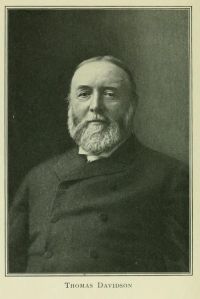 Thomas Davidson,
Aristotle and Ancient Educational Ideals
Thomas Davidson,
Aristotle and Ancient Educational Ideals
“ Of course, as to the nature of this pleasure, there is at present a variety of opinions, every one having his own preferences due to his character and habits, and the highest type of man preferring the highest type of pleasure and that which arises from the noblest things. ”
 Samuel Johnson,
The History of Rasselas, Prince of Abyssinia
(1759)
Samuel Johnson,
The History of Rasselas, Prince of Abyssinia
(1759)
“ I can discover within me no power of perception which is not glutted with its proper pleasure, yet I do not feel my self delighted. Man has surely some latent sense for which this place affords no gratification, or he has some desires distinct from sense which must be satisfied before he can be happy." ”
 Vernon Lee,
Laurus Nobilis: Chapters on Art and Life
Vernon Lee,
Laurus Nobilis: Chapters on Art and Life
“ Pleasure, a life of pleasure.... Other lives, to be livable, must contain more pleasure than pain; and we know, as a fact, that all healthy work is pleasurable to healthy creatures. Intelligent converse with one's friends, study, sympathy, all give pleasure; and art is, in a way, the very type of pleasure. Yet we know that none of all that is meant in the expression: a life of pleasure. ”
 Mary Wood-Allen,
What a Young Woman Ought to Know
Mary Wood-Allen,
What a Young Woman Ought to Know
“ I wondered, as I saw the laughing face, so full of the indications of the love of pleasure, if he really would be good to himself, or if he would interpret it to mean to indulge himself in all kinds of sensuous gratification. It is a great thing to be truly good to one's self, and I would give the injunction with the highest ideal. ”
 Victor Mapes,
Heart and Soul by Maveric Post
Victor Mapes,
Heart and Soul by Maveric Post
“ Whenever the pleasure to be derived by an individual comes to him through sympathy and affection and consideration for the feelings of another—that sort of pleasure is so different in its origin and its essence from the pleasure which comes from the gratification of personal appetites and desires that the mass of mankind has recognized the difference since the beginning of civilization. ”
Marcus Tullius Cicero,
The Academic Questions, Treatise De Finibus…
(1891)
“ For we are not at present pursuing that pleasure alone which moves nature itself by a certain sweetness, and which is perceived by the senses with a certain pleasurable feeling; but we consider that the greatest of all pleasures which is felt when all pain is removed. For since, when we are free from pain, we rejoice in that very freedom itself, and in the absence of all annoyance,—but everything which is a cause of our rejoicing is pleasure, just as everything that gives us offence is pain,—accordingly, the absence of all pain is rightly denominated pleasure. ”
 Agnes Repplier,
Essays in Miniature
Agnes Repplier,
Essays in Miniature
“ He is even able, through some fine choice of words, to convey to us the precise degree and quality of pleasure which they yield him, and which he wins us to share, not by exhortations or reproaches, but gently, with alluring smiles, and hinted promises of reward. ”
W. R. Sorley, On the Ethics of Naturalism
“ If greatest apparent pleasure—or greatest present pleasure—is by an inexorable law of human nature always sought, how can it be shown that we ought to sacrifice the apparent to the real—the present pleasure that is small to the greater future pleasure? If the individual necessarily pursues his own pleasure, how can we show that he ought to subordinate it to the pleasures of the "greatest number"? ”
 Giacomo Casanova,
The Memoirs of Jacques Casanova de Seingalt…
Giacomo Casanova,
The Memoirs of Jacques Casanova de Seingalt…
“ What is meant by prejudices?” “Pleasure is the actual enjoyment of our senses; it is a complete satisfaction given to all our natural and sensual appetites; and, when our worn-out senses want repose, either to have breathing time, or to recover strength, pleasure comes from the imagination, which finds enjoyment in thinking of the happiness afforded by rest. ”
 Thomas Henry Huxley,
Darwiniana : Essays — Volume 02
Thomas Henry Huxley,
Darwiniana : Essays — Volume 02
“ Or, to put it to the common sense of mankind, is the gratification of affection a pleasure or a pain? Surely a pleasure. So that whether the motive which leads us to perform an action is the love of our neighbour, or the love of God, it is undeniable that pleasure enters into that motive. ”
 John Lancaster Spalding,
Education and the Higher Life
John Lancaster Spalding,
Education and the Higher Life
“ Many, indeed, love and win notoriety, but such as they need not detain us here. A lower race of youth, in whom the blood is warmer than the [Pg 11] soul, think pleasure life's best gift, and are content to let occasion die, while they revel in the elysium of the senses. But to make pleasure an end is to thwart one's purpose, for joy is good only when it comes unbidden. The pleasure we seek begins already to pall. ”
 Diogenes Laërtius,
The Lives and Opinions of Eminent Philosophers
Diogenes Laërtius,
The Lives and Opinions of Eminent Philosophers
“ Again, pleasure is an irrational elation of the mind over something which appears to be desirable; and its different species are enjoyment, rejoicing at evil, delight, and extravagant joy. Enjoyment now, is a pleasure which charms the mind through the ears. Rejoicing at evil (ἐπιχαιρεκακία) , is a pleasure which arises at the misfortunes of others. Delight (τέρψις) , that is to say turning (τρέψις) , is a certain turning of the soul (προτροπή τις ψυχῆς) , to softness. Extravagant joy is the dissolution of virtue. ”
Frederic Seebohm, The Oxford Reformers: John Colet…
“ They defined ‘pleasure’ as ‘every emotion or state of body or mind in which nature leads us to take delight.’ And from reason they deduced, as modern utilitarians do, that not merely the pleasure of the moment must be regarded as the object of life, but what will produce the greatest amount and highest kind of pleasure in the long run; that, e.g. a greater pleasure must not be sacrificed to a lesser one, or a pleasure pursued which will be followed by pain. ”
W. Somerset Maugham,
Of Human Bondage
(1915)
“ It is clear that men accept an immediate pain rather than an immediate pleasure, but only because they expect a greater pleasure in the future. Often the pleasure is illusory, but their error in calculation is no refutation of the rule. You are puzzled because you cannot get over the idea that pleasures are only of the senses; but, child, a man who dies for his country dies because he likes it as surely as a man eats pickled cabbage because he likes it. ”
Related terms
Authors who wrote about “man of pleasure”
Marcus Tullius Cicero Francis BaconW. R. SorleyDiogenes LaërtiusGeorge Edward MooreEarl of Philip Dormer Stanhope Chesterfield
 Alexander Bain
 PlatoF. H. BradleySaint Thomas MoreWilliam De Witt Hyde
 G. E. MooreAristotleG. A. JohnstonLord Henry Home KamesWilliam Crosbie Hunter
 Baruch Spinoza
 SenecaThomas Campbell Foster
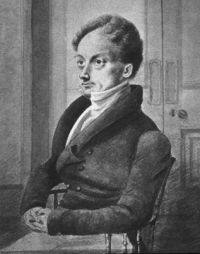 James Mill