Measurement error

Definition and stakes

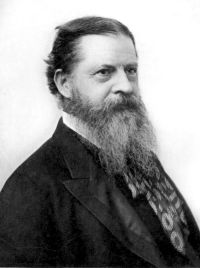
Portrait of William Stanley Jevons William Stanley Jevons,  The principles of science

“ When we have made a number of determinations with a certain apparatus or method of measurement, there is a great advantage in altering the arrangement, or even devising some entirely different method of getting estimates of the same quantity. The reason obviously consists in the improbability that the same error will affect two or more different methods of experiment. If a discrepancy is found to exist, we shall at least be aware of the existence of error, and can take measures for finding in which way it lies. ”
Source: Gutenberg

Portrait of William Stanley Jevons William Stanley Jevons,  The principles of science

“ Ordinary measurement by a foot rule, a surveyor’s chain, or the excessively careful measurements of the base line of a trigonometrical survey by standard bars, are sufficient instances of this procedure.
In the second case, where p y/x = q, we multiply or divide a magnitude until we get what is equal to the unit, or to some magnitude easily comparable with it. As a general rule the quantities which we desire to measure in physical science are too small rather than too great for easy determination, and the problem consists in multiplying them without introducing error.
”
Source: Gutenberg

by the United States government,  Chapters (2002)

“ One of the two categories of errors of observation and measurement, the other category being systematic error. Random errors are the errors which occur when irregular, randomly occurring conditions affect the observing instrument, the observer and the environment, and the quantity being observed so that observations of the same quantity made with the same equipment and observer under the same observing conditions result in different values of the observed quantity. ”
Source: Wikisource

Get perspective with Kwize: daily news enlightened by great literature