 Friedrich Engels,
The origin of the family, private property…
Friedrich Engels,
The origin of the family, private property…
“ What is good for the ruling class, is alleged to be good for the whole of society with which the ruling class identifies itself. ”
The ruling class refers to the social stratum that determines a society's political and economic course, often through control of the means of production or cultural influence. In Marxist theory, this group—typically the bourgeoisie in capitalist systems—molds ideology to justify its authority, while 21st-century analyses suggest a transnational capitalist class may arise from globalization.
Authors like Karl Marx observed that "the ruling ideas of each age have ever been the ideas of its ruling class," while Aristotle contended that rulers should possess property to ensure virtuous governance. Conversely, John Marshall Harlan's dissent in Plessy v. Ferguson denied the existence of a permanent ruling class in the U.S., stressing legal equality. Modern debates, such as Mattei Dogan’s critique of fragmented elites, emphasize changing dynamics where traditional hierarchies may break down into specialized, decentralized power structures.
Friedrich Engels,
The origin of the family, private property…
“ What is good for the ruling class, is alleged to be good for the whole of society with which the ruling class identifies itself. ”
 Theodore Parker,
The Collected Works of Theodore Parker
(1864)
Theodore Parker,
The Collected Works of Theodore Parker
(1864)
“ So there is no exclusive, permanent servile class—none that does all the work, and enjoys none of the results: there is no exclusive and permanent ruling class; all are masters, all servants; all command, and all obey. ”
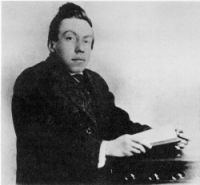 Randolph Silliman Bourne,
Untimely papers
(1919)
Randolph Silliman Bourne,
Untimely papers
(1919)
“ The State thus becomes an instrument by which the power of the whole herd is wielded for the benefit of a class. The rulers soon learn to capitalize the reverence which the State produces in the majority, and turn it into a general resistance towards a lessening of their privileges. The sanctity of the State becomes identified with the sanctity of the ruling class and the latter are permitted to remain in power under the impression that in obeying and serving them, we are obeying and serving society, the nation, the great collectivity of all of us. ”
Augustus J. Thébaud, The Irish Race in the Past and the Present
“ They formed the germ of a new class, destined to be the ruling class of the world, by whom human rights were first to be understood and proclaimed, and the necessary amount of freedom granted to all and secured by just laws justly administered. ”
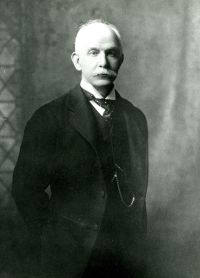 Brooks Adams,
The Theory of Social Revolutions
Brooks Adams,
The Theory of Social Revolutions
“ As nothing in the universe is stationary, ruling classes have their rise, culmination, and decline, and I conjecture that this class attained to its acme of popularity and power, at least in America, toward the close of the third quarter of the nineteenth century. ”
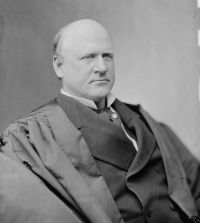 John Marshall Harlan,
Plessy v. Ferguson, 163 U.S. 537…
John Marshall Harlan,
Plessy v. Ferguson, 163 U.S. 537…
“ But in view of the Constitution, in the eye of the law, there is in this country no superior, dominant, ruling class of citizens. There is no caste here. ”
 Karl Marx,
Manifesto of the Communist Party
(1910)
Karl Marx,
Manifesto of the Communist Party
(1910)
“ The ruling ideas of each age have ever been the ideas of its ruling class. ”
 Aristotle,
Politics
(4th century BC)
Aristotle,
Politics
(4th century BC)
“ Such a distribution of duties will be expedient and also just, and is founded upon a principle of conformity to merit. Besides, the ruling class should be the owners of property, for they are citizens, and the citizens of a state should be in good circumstances; whereas mechanics or any other class which is not a producer of virtue have no share in the state. ”
 William Graham Sumner,
Folkways
William Graham Sumner,
Folkways
“ Corruption of the mores. In every societal system or order there must be a ruling class or classes; in other words, a class gets control of any society and determines its political form or system. The ruling class, therefore, has the power. Will it not use the power to divert social effort to its own service and gain? It must be expected to do so, unless it is checked by institutions which call into action opposing interests and forces. There is no class which can be trusted to rule society with due justice to all, not abusing its power for its own interest. ”
 William Mackintire Salter,
Nietzsche the thinker
(1917)
William Mackintire Salter,
Nietzsche the thinker
(1917)
“ They give the supreme direction to social action, make the supreme law of the social constitution. The second class are their instruments for governing. They are the warders of justice, the guardians of order and security, the higher ranks of soldiers, above all the king as the highest formula of soldier, judge, and maintainer of the law. They take from the first class all that is gross and rude (grob) in the work of ruling—are their attendants, their right hand, their best pupils. ”
John Spargo, Socialism: A Summary and Interpretation of Socialist Principles
“ It is easy to visualize the class divisions of monarchical countries, where there are hereditary ruling classes—even though these are only nominally the ruling classes in most cases—fixed by law. But it is not so easy to recognize the fact that, even in these countries, the power is held by the financial and industrial lords, and not by the kings and their titular nobility. ”
Karl Marx,
The Civil War in France
(1871)
“ Instead of deciding once in three or six years which member of the ruling class was to misrepresent the people in Parliament, universal suffrage was to serve the people, constituted in Communes, as individual suffrage serves every other employer in the search for the workmen and managers in his business. ”
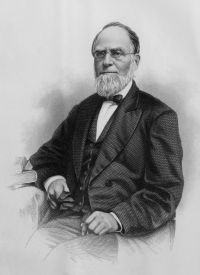 John S. C. Abbott,
The French Revolution of 1789, as Viewed in the Light of Republican Institutions
John S. C. Abbott,
The French Revolution of 1789, as Viewed in the Light of Republican Institutions
“ Ruling classes can no more acquire a knowledge of the dangers they have to avoid, without free institutions, than their inferiors can discern the rights they ought to preserve in the same circumstances. ”
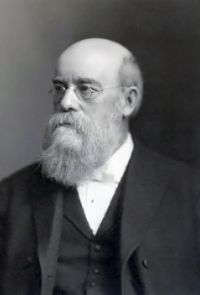 Washington Gladden,
The Labor Question
(1916)
Washington Gladden,
The Labor Question
(1916)
“ Hardie, but in democracy there arc no ruling classes. We call no man master, not even the walking delegate. And inverted feudalism, with the common man on top, would be no whit better than the old fashioned sort with the common man under foot. ”
William Mackintire Salter,
Nietzsche the thinker
(1917)
“ Will to Power, § 784, on the eventual rise of a Rangordnung even in an individual order of things. the bulk of the society, the others being the exceptions. The first class, who as the most spiritual are the strongest, are the supreme ruling class; but they rule by weight of their ideas and because they body forth a relative perfection of the human type, not in less ways or by lesser means—not then because they will to, but because of what they are: they are not at liberty to take a second place. ”
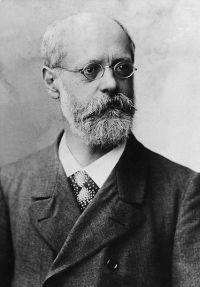 Karl Johann Kautsky,
The Road to Power
(1909)
Karl Johann Kautsky,
The Road to Power
(1909)
“ So we see that in the same degree that the problems of politics become more and more complicated and make greater demands on the knowledge, intellectual activity, foresight and decision of statesmen, that in just the same degree the ruling class substitutes superficial babbling for scientific earnestness, fickleness for intellectual stability, personal rivalry and narrow intrigues in place of calculated pursuit of a distant goal, constant wavering between provocative brutality and cowardly retreat in place of quiet, decisive firmness. ”
Walter Lyon Blease, A Short History of English Liberalism… (1913)
“ At the end of that period, as at its beginning, power was in the hands of a class which monopolized every privilege of race, sex, creed, and rank, and disposed, at its discretion, of the fortunes of all inferior persons. ”
William Graham Sumner,
The Forgotten Man, and Other Essays
(1918)
“ Whenever the privileges of an aristocracy are curtailed, there is heard a similar complaint. The truth is that the line of limit or demarcation between classes as regards civil power has been moved and what has been taken from one class is given to another. ”
Joseph P. Bradley, Thomas v. City of Richmond — Opinion of the Court
“ The distinction is well understood and recognized by the whole community. A power to execute and issue the one class cannot, without doing violence to language, be deemed to include power to issue the other. ”
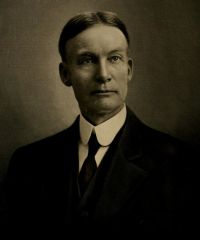 Frank W. Blackmar,
History of Human Society
Frank W. Blackmar,
History of Human Society
“ Classes of Society.—The classes of people were the freemen of noble blood, or the nobility, the common freemen, the freedmen, or half-free, and the slaves. The class of the nobility was based largely upon ancient lineage, some of whom could trace their ancestry to such a distance that they made tenable the claim that they were descended from the gods. The position of a noble was so important in the community that he found no difficulty in making good his claim to pure blood and a title of reverence, but this in no way gave him any especial political privilege. ”
Guy Debord, The Society of the Spectacle — Chapter 4… (1967)
“ The more powerful the class, the more it claims not to exist, and its power is employed above all to enforce this claim. ”
 John Stuart Mill,
Considerations on Representative Government
(1861)
John Stuart Mill,
Considerations on Representative Government
(1861)
“ But even in this democracy, absolute power, if they chose to exercise it, would rest with the numerical majority, and these would be composed exclusively of a single class, alike in biases, prepossessions, and general modes of thinking, and a class, to say no more, not the most highly cultivated. The constitution would therefore still be liable to the characteristic evils of class government ”
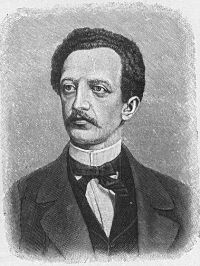 Ferdinand Lassalle,
The Working Man's Programme
(1884)
Ferdinand Lassalle,
The Working Man's Programme
(1884)
“ You see, gentlemen, that if the Revolution of 1789 was the Revolution of the Tiers état, the Third class, it is now the Fourth class, which in 1789 was still enfolded within the third class and appeared to be identical with it, which will now raise its principle to be the dominating principle of the community, and cause all its arrangements to be permeated by it. ”
 Frederick Jackson Turner,
The Frontier in American History…
(1921)
Frederick Jackson Turner,
The Frontier in American History…
(1921)
“ There are two kinds of governmental discipline: that which proceeds from free choice, in the conviction that restraint of individual or class interests is necessary for the common good; and that which is imposed by a dominant class, upon a subjected and helpless people. ”
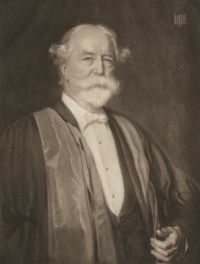 Sir Adolphus William Ward,
Dickens
Sir Adolphus William Ward,
Dickens
“ We believe it would attain a much higher position, and that those who wield its powers would be infinitely more respected as a class, and an important one, if it were purged of a disposition to sordid attacks upon itself, which only prevails in England and America. ”
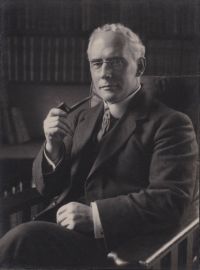 A. F. Pollard,
The History of England - a Study in Political Evolution
A. F. Pollard,
The History of England - a Study in Political Evolution
“ The defects, however, of a political system, which restricts power to a limited class or classes, are that each class tends to exercise it in its own interests and resents its extension to others, even when they are qualified for its use. ”
 Hippolyte Taine,
The Modern Regime, Volume 1
Hippolyte Taine,
The Modern Regime, Volume 1
“ Each of these two classes is relieved of its degradation; no class is burdened by taxation or by the conscription beyond its due; all persons and all property find in the government, in the administration, in the tribunals, in the gendarme, the same reliable protection.—So much for equity and the true spirit of equality.—Let us now turn around and consider envy and the bad spirit of equality. ”
J. Franck Bright, A History of England, Period I. Mediæval Monarchy
“ The points to observe will be, therefore, the growth and advance of the commons, the decay of the aristocracy. But it is as yet quite impossible to speak of the commons as one body. The line which divided the class which sent its representatives to Parliament, and which was already becoming of political importance, from the mass of the labouring part of the nation, was very clearly drawn, and the characteristics, the employments, and the feelings of the one class, as well as the causes of their advance, will be very different from those of the other. ”
 Herbert Spencer,
Popular Science Monthly
(1881)
Herbert Spencer,
Popular Science Monthly
(1881)
“ And then the relations of these three governing elements to the entire community may, and ordinarily do, undergo change by the formation of a passive class, excluded from their deliberations—a class at first composed of the women and afterward containing also the slaves or other dependents. ”
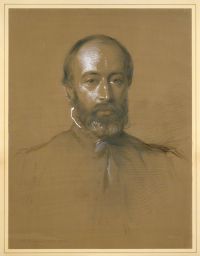 Sir Arthur Helps,
The Claims of Labour: An essay on the duties of the employers to the employed
Sir Arthur Helps,
The Claims of Labour: An essay on the duties of the employers to the employed
“ If we must select any class, do not let us turn to the wealthy, whom, perhaps, we think of first. They have, in no time that I am aware of, been the pre-eminent rulers of the world. The thinkers and writers, they are the governing class. ”
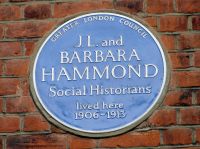 Barbara Bradby Hammond,
The village labourer, 1760-1832
(1912)
Barbara Bradby Hammond,
The village labourer, 1760-1832
(1912)
“ A governing class that cared for its reputation for justice would clearly regard it as of sovereign importance that this delicate network of rights and claims should not be roughly disentangled by the sheer power of the stronger: a governing class that recognised its responsibility for the happiness and order of the State would clearly regard it as of sovereign importance that this ancient community should not be dissolved in such a manner as to plunge great numbers of contented men into permanent poverty and despair. ”
William Graham Sumner,
What Social Classes Owe to Each Other
“ I now propose to try to find out whether there is any class in society which lies under the duty and burden of fighting the battles of life for any other class, or of solving social problems for the satisfaction of any other class; also, whether there is any class which has the right to formulate demands on "society"—that is, on other classes; also, whether there is anything but a fallacy and a superstition in the notion that "the State" owes anything to anybody except peace, order, and the guarantees of rights. ”
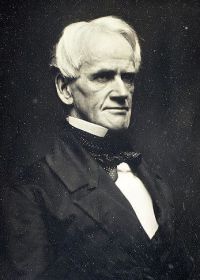 Horace Mann,
Slavery: letters and speeches
(1851)
Horace Mann,
Slavery: letters and speeches
(1851)
“ The second class look eagerly beyond family or caste. They anxiously inquire what views, what dogmas, are in the ascendant [Pg v] among men,—what party predominates or outvotes, what avowals or professions will most readily open avenues to wealth, propitiate power, win patronage, insure advancement. Finding where the preponderance of forces lies, they attach themselves to the stronger. No matter whether the tide ebbs or flows, they drift with the current. ”
Baron Thomas Babington Macaulay Macaulay, Critical, Historical, and Miscellaneous Essays…
“ And therefore, if those whom we are addressing be consistent, they will exert themselves to do the latter; and, by increasing the knowledge, increase also the power of an extensive and important class,—a class which is as deeply interested as the peerage or the hierarchy in the prosperity and tranquillity of the country ”
Adam Ferguson, An Essay on the History of Civil Society…
“ Every class propounds an objection, suggests an addition or an amendment of its own. They proceed to adjust, by statute, every subject of controversy: and while they continue to enjoy their freedom, they continue to multiply laws, and to accumulate volumes, as if they could remove every possible ground of dispute, and were secure of their rights, merely by having put them in writing. ”
Brooks Adams,
The Law of Civilization and Decay…
(1896
| notes)
“ The more society consolidates the more legislation is controlled by the wealthy, and at length the representatives of the monied class acquire that absolute power once wielded by the Roman proconsul, and now exercised by the modern magistrate. ”
Various, The Atlantic Monthly, Volume 07…
“ This intense and all-pervading devotion to one pursuit, and that a pursuit to which the existence of a servile class is declared essential, must, in a republic more than in any other government, produce certain marked politico-philosophical and economical effects on the master-class as a whole. ”
Marcius Willson, Mosaics of Grecian History
“ The class which suffered such oppression, commonly ill satisfied with the principle of the Constitution itself, was inflamed with the most furious animosity by the mode in which it was applied, and it regarded the great mass of its fellow-citizens as its mortal enemies. ”
Alexander Hamilton, The Federalist (1863, Dawson edition)
“ The idea of an actual representation of all classes of the people, by persons of each class, is altogether visionary. Unless it were expressly provided in the Constitution, that each different occupation should send one or more members, the thing would never take place in practice. ”
John Stuart Mill,
Considerations on Representative Government
“ If we consider as a class, politically speaking, any number of persons who have the same sinister interest—that is, whose direct and apparent interest points towards the same description of bad measures—the desirable object would be that no class, and no combination of classes likely to combine, shall be able to exercise a preponderant influence in the government. ”
 Benson John Lossing,
The Pictorial Field-Book of the Revolution…
Benson John Lossing,
The Pictorial Field-Book of the Revolution…
“ Those who composed the most influential class were of the old French aristocracy, and any concessions made in favor of their caste weighed more heavily with them than any that might be made to the whole people, involving the extension of the area of political freedom, an idea which was a mere abstraction to them. ”
 Lysander Spooner,
No Treason, Vol. VI.: The Constitution of No Authority
Lysander Spooner,
No Treason, Vol. VI.: The Constitution of No Authority
“ The ostensible supporters of the Constitution, like the ostensible supporters of most other governments, are made up of three classes, viz.: 1. Knaves, a numerous and active class, who see in the government an instrument which they can use for their own aggrandizement or wealth. ”
 Leslie Stephen,
Social Rights And Duties: Addresses to Ethical Societies…
Leslie Stephen,
Social Rights And Duties: Addresses to Ethical Societies…
“ If a class could be simply an organ for the discharge of certain functions, and each man in the whole body politic able to fit himself for that class, the injustice, and therefore the malignant variety of discontent, would disappear. Of course, I am speaking only of justice. I do not attempt to define the proper ends of society, or regard justice in itself as a sufficient guarantee for all desirable results. ”
 William Montgomery Brown,
Communism and Christianism
William Montgomery Brown,
Communism and Christianism
“ Ans.: "The state is a class instrument, and is the public power of coercion created and maintained in human societies by their division into classes, a power which, being clothed with force, makes laws." ”
Abner E. Woodruff, The Advancing Proletariat: A Study of The Movement of The Working Class From Wage Slavery to Freedom (1917)
“ And in each civilization we find a dominant class imposing its will upon the balance of society and maintaining the basic method of wealth production and distribution of that time. All the laws, the religion, the educational system or lack of educational system were designed to retain that class in its position of power and privilege. ”
Various, The Catholic World, Vol. 20, October 1874‐March 1875
“ But it could not so well dispense with a class such as we refer to, if it was to become a country to which men of character and position would not hesitate to resort. A class was wanted other than the emancipists—the very worst that could have been chosen—to supply persons of standing, acquirements, and, above all, of reputable experience for the magistracy, and for other national, so to speak, as well as local, offices of trust and administration. ”
Friedrich Engels Matthew ArnoldKarl Johann KautskyWilliam Montgomery BrownAbner E. Woodruff
 William English WallingWalter Lyon BleaseJohn SpargoKarl MarxJohn Stuart MillWilliam Graham SumnerBrooks AdamsHerbert SpencerBaron Thomas Babington Macaulay MacaulayVariousWashington GladdenWilliam Mackintire SalterHippolyte TaineFrederick Jackson TurnerGuy Debord