“ In circles highly civilised the great things, the real things, the hard, the cruel and even the tender things, the true elements of any tension and true facts of any crisis, have ever, for the outsider’s, for the critic’s use, to be translated into terms—terms in the distinguished name of which, terms for the right employment of which, more than one situation of the type I glance at had struck me as all irresistibly appealing. ”
Le
Definition and stakes
The theme of “Le” has been addressed by authors such as . It is often associated with terms like French, people, literature, France and history.
Quotes about “Le”
Edmund William Gosse, 1911 Encyclopædia Britannica (1911)
“ But while the philosophy, and above all the graceful stoicism, of the great master were admired and copied in France, the exact shape in which he had put down his thoughts, in the exquisite negligence of a series of essays, was too delicate to tempt an imitator. ”
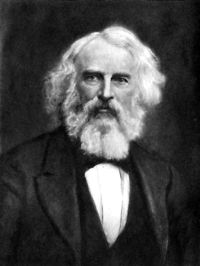 Henry Wadsworth Longfellow,
Courtship of Miles Standish
Henry Wadsworth Longfellow,
Courtship of Miles Standish
“ Whene’er a noble deed is wrought, Whene’er is spoken a noble thought, Our hearts, in glad surprise, To higher levels rise. ”
“ What are ‘we,’ the whole blest lot of us, pray, but the best and most English thing in the country: people walking—and riding!—straight; doing, disinterestedly, most of the difficult and all the thankless jobs; minding their own business, above all, and expecting others to mind theirs? ”
Thomas Carlyle, Past and Present (1843)
“ All work, even cotton-spinning, is noble; work is alone noble: be that here said and asserted once more. ”
 Oscar Wilde,
The Picture of Dorian Gray
(1890)
Oscar Wilde,
The Picture of Dorian Gray
(1890)
“ "I adore simple pleasures," said Lord Henry. "They are the last refuge of the complex. ”
Eileen Power, Medieval English Nunneries c. 1275 to 1535
“ They all, jongleurs, preachers, theologians and men of letters repeat each other, for a tale once told is everyone’s property; the people repeat them; and so the stories circulate from lip to lip through the wide lands of Europe and down the echoing centuries. ”
 John Cassell,
Cassell's Illustrated History of England
(1865)
John Cassell,
Cassell's Illustrated History of England
(1865)
“ Such are the confessions which Death, the great master, forces even from the bosoms of kings, which have been wrapt in the splendour of gold and the softness of ermine, and have looked to the simple spectator so noble and so serene. ”
 Harriet Beecher Stowe,
Flowers and fruit from the writings of Harriet Beecher Stowe
(1888)
Harriet Beecher Stowe,
Flowers and fruit from the writings of Harriet Beecher Stowe
(1888)
“ Conversation of French circles seems to me like gambols of a thistledown, or the rainbow changes in soap-bubbles. One laughs with tears in one’s eyes. One moment confounded with the absolute childhood of the simplicity, in the next one is a little afraid of the keen edge of the shrewdness. ”
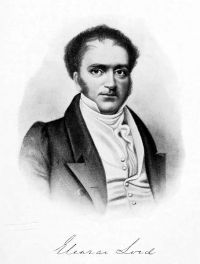 Eleazar Lord,
The Messiah in Moses and the Prophets
Eleazar Lord,
The Messiah in Moses and the Prophets
“ But where a reference is made to any thing in the economy of redemption, or any thing involving official acts or relations, official titles are introduced, or a phraseology is employed, by which the intended meaning is expressed. The Father, the Son, and the Holy Spirit are clearly distinguished, or their personality, relations and agency are indicated by the nature of the things recorded, or by the connections in which they occur. ”
Marie de France, Lays of Marie de France (1911)
“ Then I called to mind those Lays I had so often heard. I doubted nothing—for well I know—that our fathers fashioned them, that men should bear in remembrance the deeds of those who have gone before. Many a one, on many a day, the minstrel has chanted to my ear. ”
Henry James, Notes on Novelists, with Some Other Notes
“ The great thing is that his saturation is with elements that, presented to us in contemporary English fiction, affect us as a product of extraordinary oddity and rarity: he reeks with the savour, he is bowed beneath the fruits, of contact with the lower, with the lowest middle-class, and that is sufficient to make him an authority—the authority in fact—on a region vast and unexplored. ”
Countess of Marguerite Blessington, The Idler in France
“ Like summer lightning, French wit flashes frequently, brightly and innocuously, leaving nothing disagreeable to remind one of its having appeared. Conversation is, with the French, the aim and object of society. ”
 Janet Erskine Stuart,
The Education of Catholic Girls
Janet Erskine Stuart,
The Education of Catholic Girls
“ The logical bent of the French mind, its love of rule, the elaborateness of its conventions in literature, its ceremonial observances dating from by-gone times, the custom of giving account of everything, of letting no nuance pass unchallenged or uncommented, have given it a power of expression and definiteness which holds together as a complete code of written and unwritten laws, and makes a perfect instrument of its kind. ”
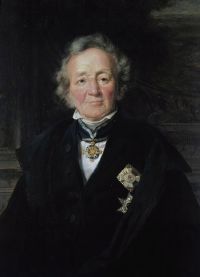 Leopold von Ranke,
A history of England principally in the seventeenth century…
Leopold von Ranke,
A history of England principally in the seventeenth century…
“ There was but one Church, one Science, one Art in Europe: one and the same mental horizon enclosed the different peoples: a romance and a poetry varying in form yet of closely kindred nature was the common possession of all. ”
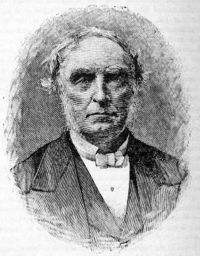 James Legge,
Sacred Books of the East
(1882)
James Legge,
Sacred Books of the East
(1882)
“ We go on to the third Appendix in two sections, being the fifth and sixth 'wings,' and forming what is called 'The Great Treatise.' It will appear singular to the reader, as it has always done to myself, that neither in the Text, nor in the first two Appendixes, does the character called Yî, which gives its name to the classic, once appear. ”
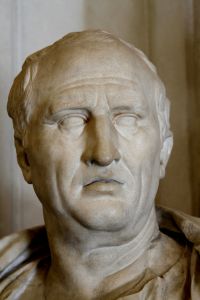 Marcus Tullius Cicero,
On Oratory (Guthrie) — Preface
(1822)
Marcus Tullius Cicero,
On Oratory (Guthrie) — Preface
(1822)
“ It is from them that each species of eloquence has been derived; the rules contained in them are equally applicable to the practice of the senate, the bar, or the pulpit; they are equally fit for the many or the few; they teach how to reason as well as how to move, and to affect the head, as well as to touch the heart. ”
Edmund William Gosse, 1911 Encyclopædia Britannica, Volume 27… (1911)
“ If in England the expression vers de société carries with it more literary dignity, this is mainly due to the genius of one man. Prior’s Poems on Several Occasions, collected in 1709, presents us with some of the earliest entirely characteristic specimens of vers de société, arid with some of the best. ”
Frances Minto Dickinson Elliot, Old Court Life in France, vol. 1…
“ In all I have written I have sought carefully to work into my dialogue each word and sentence recorded of the individual, every available trait or peculiarity of character to be found in contemporary memoirs, every tradition that has come down to us.To be true to life has been my object. ”
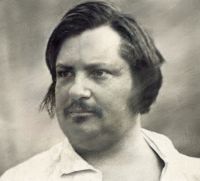 Honoré de Balzac,
The Illustrious Gaudissart
(1833)
Honoré de Balzac,
The Illustrious Gaudissart
(1833)
“ Well, then, if the palingenistic aspects of the successive transformations of the spiritualized globe have struck, stirred, roused you, then, my dear sir, the 'Globe' newspaper,—noble name which proclaims its mission,—the 'Globe' is an organ, a guide, who will explain to you with the coming of each day the conditions under which this vast political and moral change will be effected. ”
C. E. W. Bean, Letters from France
“ For the first time in one's experience one had experienced a genuine, whole-hearted, common feeling running through all the English people—every man, woman and child, without distinction, bound in one common interest which, for the time being, was moving the whole nation. ”
Matthew Henry, An Exposition of the Old and New Testament (1828)
“ We have here the quashing of the project of the Babel-builders, and the turning of the counsel of those froward men headlong, that God's counsel might stand, in spite of them. Here is, I. The cognizance that God took of the design that was on foot, v. 5, The Lord came down to see the city: it is an expression after the manner of men; he knew it as clearly and fully as men know that which they come to the place to view. ”
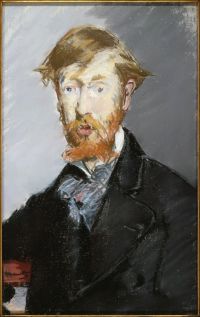 George Moore,
Confessions of a Young Man
George Moore,
Confessions of a Young Man
“ The years the most impressionable, from twenty to thirty, when the senses and the mind are the widest awake, I, the most impressionable of human beings, had spent in France, not among English residents, but among that which is the quintessence of the nation ”
 Cambrensis Giraldus,
The Description of Wales
Cambrensis Giraldus,
The Description of Wales
“ For the unprincipled and covetous attach themselves to the court, the churchmen to their books, and the ambitious to the public offices, but as every man is under the influence of some darling passion, so the love of letters and the study of eloquence have from my infancy had for me peculiar charms of attraction. ”
Oscar Wilde,
The Picture of Dorian Gray
(1890)
“ "But what world says that?" asked Lord Henry, elevating his eyebrows. "It can only be the next world. This world and I are on excellent terms." ”
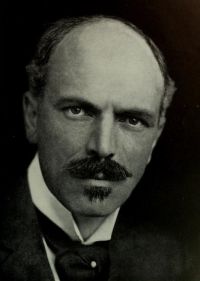 Maurice Hewlett,
Brazenhead in Milan — Chapter IV
(1909)
Maurice Hewlett,
Brazenhead in Milan — Chapter IV
(1909)
“ His whirling oratory, his flights of frenzied research into the history of men and movements of which he knew little or nothing, his élan his endurance, and his mendacity were but one concentrated tribute to the little changeling by the fire. ”
 Johann Wolfgang von Goethe,
The Autobiography of Goethe
Johann Wolfgang von Goethe,
The Autobiography of Goethe
“ The public scenes opened gradually, and went on increasing in importance; the men grew in number, the personages in dignity, their appurtenances, as well as themselves, in splendour; and thus it advanced with every day, till at last even a well-prepared and firm eye became bewildered. ”
Edwin Gordon Lawrence, How to Master the Spoken Word
“ Absorbed in a thousand trifles, how has the Nation all at once come to a stand! Men begin, as in 1779 and 1640, to discuss principles, to weigh characters, to find out where they are. Haply we may awake before we are borne over the precipice. ”
Joe Miller's Jests, with Copious Additions
“ Lord C—by, coming out of the House of Lords one day, called out, Where’s my fellow? Not in England, said a gentleman who stood by.46. A beggar asking alms under the name of a poor scholar, a gentleman to whom he applied himself asked him a question in Latin; the fellow, shaking his head, said, he did not understand him. Why, said the gentleman, did you not say you were a poor scholar? Yes, replied the other, a poor one indeed, sir, for I do not understand one word of Latin. ”
Charles A. McMurry, Special Method in the Reading of Complete English Classics
“ In the deep sense, no vile or vulgar person ever enters there. At the portières of that silent Faubourg St.-Germain, there is but brief question, 'Do you deserve to enter?' 'Pass. Do you ask to be the companions of nobles? Make yourself noble, and you shall be. Do you long for the conversation of the wise? ”
 John Cowper Powys,
Suspended Judgments: Essays on Books and Sensations
John Cowper Powys,
Suspended Judgments: Essays on Books and Sensations
“ What we arrive at once more in Anatole France is that humorous drawing back from the world, back into some high pitched observation-tower of the mind, from the philosophic seclusion of which the world scene can be easily imagined as different from what it is. Nothing is more salutary in the midst of the mad confusion of the world than these retirements. ”
Thomas Carlyle, Sartor Resartus, and On Heroes… (1901)
“ Great Men are the inspired (speaking and acting) Texts of that divine Book of Revelations, whereof a Chapter is completed from epoch to epoch, and by some named History; ”
John Cowper Powys,
Suspended Judgments: Essays on Books and Sensations
“ After perusing many volumes of Anatole France, one after another, we come to feel as though nothing in the world were important except the reading of unusual books, the conversation of unusual people, and the enjoyment of such philosophical pleasures as may be permitted by the gods and encouraged by the approbation of a friendly and tolerant conscience. ”
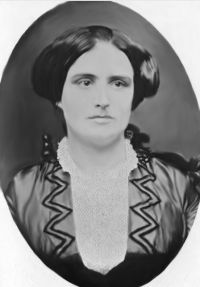 Harriet Jane Hanson Robinson,
Loom and spindle
(1898)
Harriet Jane Hanson Robinson,
Loom and spindle
(1898)
“ The contributions to The Offering were on a great variety of subjects. There were allegories, poems, conversations on physiology, astronomy, and other scientific subjects, dissertations on poetry, and on the beauties of nature, didactic [115] pieces on highly moral and religious subjects, translations from French and Latin, stories of factory and other life, sketches of local New England history, and sometimes the chapters of a novel. ”
 Jonathan Swift,
The Works of the Rev. Jonathan Swift
(1801)
Jonathan Swift,
The Works of the Rev. Jonathan Swift
(1801)
“ Some gentlemen, abounding in their university erudition, are apt to fill their sermons with philosophical terms, and notions of the metaphysical or abstracted kind; which generally have one advantage, to be equally understood by the wise, the vulgar, and the preacher himself. I have been better entertained, and more informed by a few pages in the Pilgrim's Progress, than by a long discourse upon the will and the intellect, and simple or complex ideas. ”
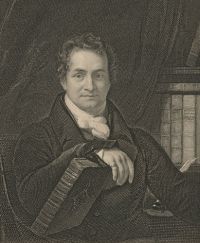 Thomas Frognall Dibdin,
A Bibliographical, Antiquarian and Picturesque Tour in France and Germany…
Thomas Frognall Dibdin,
A Bibliographical, Antiquarian and Picturesque Tour in France and Germany…
“ With all their quickness, enthusiasm, and activity, the mass of French people want that admirable quality which I unfeignedly think is the particular characteristic of ourselves:--I mean, common sense. ”
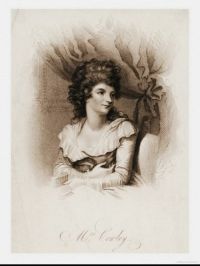 Hannah Cowley,
The Belle's Stratagem
Hannah Cowley,
The Belle's Stratagem
“ On my honour, experience will convince you of its truth. A Frenchman neither hears, sees, nor breathes, but as his master directs; and his whole system of conduct is compris'd in one short word, Obedience! ”
Anonymous, Tea, a poem — The Frenchmen
“ After much investigation and difficulty, I, at length, traced them to their respective owners, whom I found to be all Frenchmen to a man. Art may have meddled somewhat in these affairs, but nature certainly did more. ”
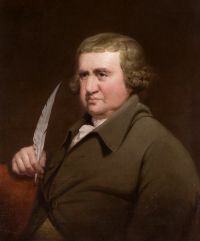 Erasmus Darwin,
Zoonomia, or, the Laws of Organic Life…
(1796)
Erasmus Darwin,
Zoonomia, or, the Laws of Organic Life…
(1796)
“ But when any class of complex objects becomes the subject of conversation, of which I have seen many individuals, as a castle or an army, some property or circumstance belonging to it is peculiarly alluded to ”
Svatopluk Čech, The International (1899)
“ Written orders, rumors, tales such as travel from one estate to the other, and their fancies, combined to produce vivid pictures of the noble individuals who like gods with unseen hands, from the distance ruled their humble fates. ”
 Henry David Thoreau,
Walden
(1854)
Henry David Thoreau,
Walden
(1854)
“ What is called eloquence in the forum is commonly found to be rhetoric in the study. ”
 Georg Wilhelm Friedrich Hegel,
The Philosophy of Fine Art, volume 2…
Georg Wilhelm Friedrich Hegel,
The Philosophy of Fine Art, volume 2…
“ From a review of particular demands, actions, circumstances, modes of appearance, and traits of demeanour, we are led to infer from these poems that this content is in great measure borrowed from actual events, that is from the exploits of ancient kings who exercised a powerful influence in creating new conditions of law and order; we find ourselves surrounded by a thoroughly human atmosphere and on the firm ground of reality. ”
 A. A. Milne,
Punch, Volume 147, Issue 3830…
(19th and 20th century)
A. A. Milne,
Punch, Volume 147, Issue 3830…
(19th and 20th century)
“ I had already grasped the fact that the title of my discourse was the important thing. In the list of the Society's lectures sent to me there was hardly one whose title did not impress the imagination in advance. I must be equally impressive... ”
Baron John Emerich Edward Dalberg Acton Acton, Lectures on the French Revolution
“ Everywhere, whether the lecturer be sketching the salient features of the sixteenth century or of the eighteenth, whether he be dealing with Italy or America, we feel the sureness of touch of one who is familiar with every detail. ”
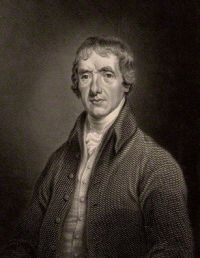 John Aikin,
Miscellaneous Pieces, in Prose
John Aikin,
Miscellaneous Pieces, in Prose
“ In like manner, that sect, one of whose most striking characteristics is a beautiful simplicity of dialect, served to check that strain of servile flattery and Gothic compliment so prevalent in the same period, and to keep up some idea of that manly plainness with which one human being ought to address another. ”
Edwin Gordon Lawrence, How to Master the Spoken Word
“ Sir, he who sees these states now revolving in harmony around a common center, and expects to see them quit their places and fly off without convulsion, may look the next hour to see the heavenly bodies rush from their spheres, and jostle against each other in the realms of space, without causing the crush of the universe. ”
Edwin Gordon Lawrence, How to Master the Spoken Word
“ He employs [p. 2] the series, the contrasts (single, double, and triple) , the conditional, the negative, the positive, and, in fact, all the known forms of arranging words so as to make them best express the orator’s meaning. Here is an effective concluding series he uses: “A city is adorned by good citizenship, the body by beauty, the soul by wisdom, acts by virtue, and speech by truthfulness,” and he follows this sentence with the following one: “But the opposites of these virtues are a disgrace.” ”
J. Arthur Gibbs, A Cotswold Village; Or, Country Life and Pursuits in Gloucestershire
“ In writing or speaking about the country and its inhabitants, if we would express ourselves as concisely as we possibly can, we are bound to quote the "Elegy"; it is invariably the shortest road to a terse expression of our meaning. ”
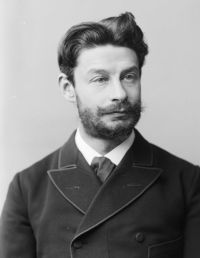 Georg Brandes,
Main Currents in Nineteenth Century Literature - 1…
Georg Brandes,
Main Currents in Nineteenth Century Literature - 1…
“ The French are, namely, accustomed to regard knowledge of human nature founded upon observation as the substance, the essence of poetry—such knowledge as is displayed in Molière's Tartuffe and Misanthrope. ”
Baron Edward Bulwer Lytton Lytton, "My Novel" — Complete
“ I returned to England on the receipt of a letter from my Lord L’Estrange, and with a view, it is true, of claiming at his hands the satisfaction which men of our birth accord to each other, where affront, from what cause soever, has been given or received. ”
