Phrygian mode

Definition and stakes

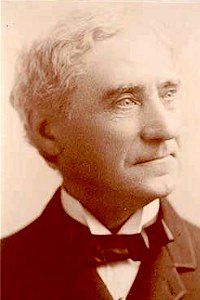
Portrait of Donald Francis Tovey Donald Francis Tovey,  1911 Encyclopædia Britannica (1911)

“ In the Phrygian mode the difficulty in forming the final close is such that classical Phrygian compositions actually end in what we feel to be a half-close, an impression which is by the great masters rendered perfectly artistic by the strong feeling that all such parts of the composition as do not owe their expression to the variety and inconstancy of their harmonic drift are on the dominant of A minor. ”
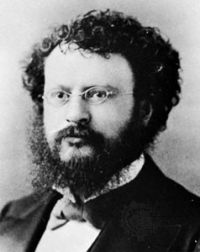
Source: Wikisource

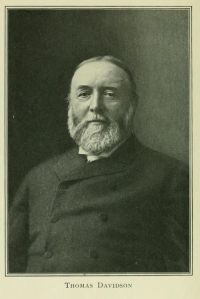
A Dictionary of Music and Musicians (1900)

“ The Final of the Phrygian Mode is E. Its range extends upwards, in the Authentic form, from that note to the Octave above; and Semitones occur between its first and second and fifth and sixth Degrees. Its Dominant is (B, the fifth Degree of the Scale, being inadmissible, on account of its false relation with F) . ”
Source: Wikisource

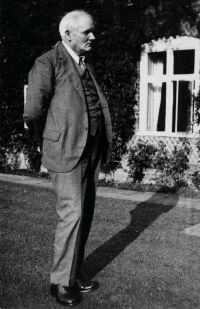
D. B. Monro,  The Modes of Ancient Greek Music

“ In modern music we have these two modes, and each of them may be in any one of twelve keys. It is evidently possible, also, that a name such as Dorian or Lydian might denote a particular mode taken in a particular key—that the scale so called should possess a definite pitch as well as a definite series of intervals.
According to the theory which appears now to prevail among students of Greek music, these famous names had a double application. There was a Dorian mode as well as a Dorian key, a Phrygian mode and a Phrygian key, and so on.
”
Source: Gutenberg

Get perspective with Kwize: daily news enlightened by great literature