Legal incapacity

Definition and stakes

Sir John W. Salmond,  Jurisprudence (1913)

“ There is no generic term which is the correlative of right in the wide sense, and includes all the burdens imposed by the law, as a right includes all the benefits conferred by it. These legal burdens are of three kinds, being either Duties, Disabilities, or Liabilities. A duty is the absence of liberty; a disability is the absence of power; a liability is the presence either of liberty or of power vested in some one else as against the person liable. ”

Source: Gutenberg

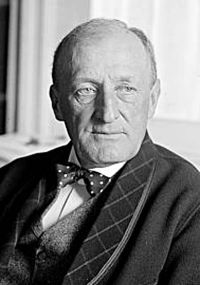
Portrait of Roscoe Pound Roscoe Pound,  An Introduction to the Philosophy of Law

“ If there is no act, there is no liability. To these nominate torts, each with its own special rules, coming down from the strict law, we added a new ground of liability, namely, negligence, going on a principle, not of duty to answer for aggression, but of duty to answer for injuries resulting from falling short of a legal standard of conduct governing affirmative courses of action. ”
Source: Gutenberg

A Selection of Cases on the Law of Torts (1893)

“ If, notwithstanding the difficulties of the situation, efforts to avoid injury duly made would have been successful, but for some self-created incapacity which rendered such efforts inefficacious, the negligence that produced such a state of disability is not merely part of the inducing causes—a remote cause or a cause merely sine qua non—it is, in very truth, the efficient, the proximate, the decisive cause of the incapacity, and therefore of the mischief.... ”
Source: Gutenberg

Get perspective with Kwize: daily news enlightened by great literature