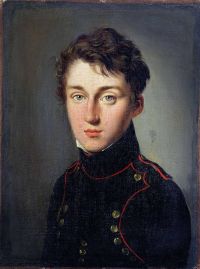
Perpetual motion refers to the hypothetical continuous movement of a system without an external energy source, which contravenes thermodynamic laws. Although unachievable in conventional machines due to the principles of energy conservation and entropy, the concept has fueled inquiry for centuries. Authors such as Henry Dircks recognized its theoretical impossibility, while Sadi Carnot emphasized the failures in attempts to exploit it.
Contemporary examples, like time crystals, demonstrate motion that continues indefinitely at the quantum level without breaching thermodynamics, as they reside in ground states from which no energy can be extracted. Thus, while classical perpetual motion devices remain unattainable, the notion continues to drive scientific investigation into the fundamental nature of energy and movement.
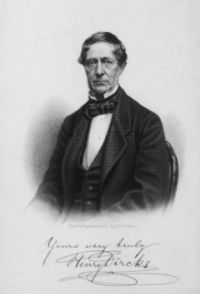 Henry Dircks,
Perpetual Motion
Henry Dircks,
Perpetual Motion