Plasticity (philosophy)

Definition and stakes

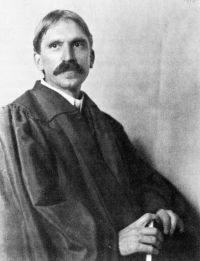
Portrait of John Dewey John Dewey,  Democracy and Education: An Introduction to the Philosophy of Education

“ As we have seen, the acquiring of habits is due to an original plasticity of our natures: to our ability to vary responses till we find an appropriate and efficient way of acting. Routine habits, and habits that possess us instead of our possessing them, are habits which put an end to plasticity. They mark the close of power to vary. There can be no doubt of the tendency of organic plasticity, of the physiological basis, to lessen with growing years. ”
Source: Gutenberg

Portrait of John Dewey John Dewey,  Democracy and Education: An Introduction to the Philosophy of Education

“ Plasticity or the power to learn from experience means the formation of habits. Habits give control over the environment, power to utilize it for human purposes. Habits take the form both of habituation, or a general and persistent balance of organic activities with the surroundings, and of active capacities to readjust activity to meet new conditions. ”
Source: Gutenberg

William James,  Psychology: Briefer Course

“ Each relatively stable phase of equilibrium in such a structure is marked by what we may call a new set of habits. Organic matter, especially nervous tissue, seems endowed with a very extraordinary degree of plasticity of this sort; so that we may without hesitation lay down as our first proposition the following: that the phenomena of habit in living beings are due to the plasticity of the organic materials of which their bodies are composed.
The philosophy of habit is thus, in the first instance, a chapter in physics rather than in physiology or psychology.
”
Source: Gutenberg

Get perspective with Kwize: daily news enlightened by great literature