“ As a rule primitive art is good—and here again my hypothesis is helpful—for, as a rule, it is also free from descriptive qualities. In primitive art you will find no accurate representation; you will find only significant form. Yet no other art moves us so profoundly. ”
Primitive art
Definition and stakes
The theme of “primitive art” has been addressed by authors such as Oscar Wilde, Clive Bell, John Ruskin, Y. Hirn and Wassily Kandinsky. It is often associated with terms like painting, nature, aesthetics, color and culture.
Quotes about “primitive art”
Harold Speed, The Practice and Science of Drawing
“ This is the point at which art reaches its highest mark: when to the primitive strength and simplicity of early art are added the infinite refinements and graces of culture without destroying or weakening the sublimity of the expression.In painting, the refinement and graces of culture take the form of an increasing truth to natural appearances, added bit by bit to the primitive baldness of early work ”
Y. Hirn, The origins of art; a psychological & sociological inquiry
“ From our summary investigation of primitive art it has, we hope, appeared how fully we admit the close connection of these purposes with the historical development of art. And it might be shown, if our investigation were pursued into the later stages of development, that art on its highest plane still bears the same relation to concrete utilities as it does on the lowest. Art never ceases to inform, never ceases to please, never ceases to stimulate, never loses something of a magical efficacy. ”
 A. Clutton-Brock,
Essays on Art
“ The primitive artist survived, no doubt, because he was an artist in his leisure; and all we know of more primitive art goes to prove that it was, and is, practised not by a special class but by the ordinary primitive man in his leisure. ”
 James Sully,
1911 Encyclopædia Britannica
(1911)
“ Yet it is not necessary to give primitive art a considerable place in a general aesthetics. As a normative science, it is to be remembered, this is much more immediately concerned with the higher stages of aesthetic culture. In seeking to establish norms or regulative principles, we must, it is evident, make a special study of objects of art which belong to our own level of culture. ”
Y. Hirn, The origins of art; a psychological & sociological inquiry
“ The more one studies art, especially primitive art, from a comparative and historical point of view, the more one is compelled to admit the impossibility of deciding where the non-æsthetic motives end and the æsthetic motives begin. ”
 Daniel Gregory Mason,
From Grieg to Brahms: Studies of Some Modern Composers and Their Art
“ A portrait shows but one character; a human face is a whole gallery of personalities. The wealth of experience excites even while it [Pg 217] bewilders us, and when we turn to the work of art we unconsciously adopt a narrower standard. Primitive art especially impresses us as bare and denuded, because the primitive artist has neither technical skill nor synthetic power of thought to combine more than a few elements. ”
Viscountess Marianne Margaret Compton Cust Alford, Needlework As Art
“ The first patterned forms with which we are acquainted are the primitive. They are found in all parts of the inhabited world. In our present ignorance as to the beginnings of the scattered tribes of men, we cannot judge if these are the remains of an earlier art or the first germs of a new one. Of one thing there is no doubt: this primitive decoration consists entirely of pattern; that is to say, of the repetition of certain (to us) inexpressive forms, which by reiteration assume importance and in some degree express beauty—the beauty of what Monsieur Blanc calls “cadence.” ”
 Franz von Reber,
History of Ancient Art
“ If, at first sight, this group has a somewhat frightful and repellent character, not felt in the most shocking distortions of primitive art, the cause lies in its prosaic realism, strikingly heightened by color. ”
Y. Hirn, The origins of art; a psychological & sociological inquiry
“ We could not possibly find any connection between modern and primitive art. Nor could we explain why, for instance, poetry and music are so often cultivated by persons who do not otherwise show the slightest eagerness to understand the hidden nature of things, who do not meddle with ideas or “dominating faculties.” ”
De Witt H. Parker, The Principles of Aesthetics
“ Passion, convention, economic fact in the largest sense, practical intelligence, these are the dominant forces swaying men, not beauty, not religion. Indeed, one who would compare the influence of art upon life at the present time with its influence upon primitive societies might infer the early extinction of that influence altogether. For among primitive men the influence of art is all-pervading. ”
 Camille Saint-Saëns,
Musical Memories
(1919)
“ The first manifestation of art occurs through attempts to reproduce objects. Such attempts have been found which date back to prehistoric times. But what is primitive man’s idea in such attempts? He wants to record by a line the contour of the object, the likeness of which he wishes to preserve. ”
Fernand Khnopff, Gerard Brown, Léonce Bénédite, Marion H. Spielmann, Richard Muther and John Van Dyke, 1911 Encyclopædia Britannica (1911)
“ Primitive pictorial art, with its peculiar characteristics, thus appears fully comprehensible to us as an aesthetic exercise of two faculties which the struggle for existence has developed and improved among the primitive peoples. ”
 Georg Wilhelm Friedrich Hegel,
The Philosophy of Fine Art, volume 3…
“ In this respect consequently the primitive and most ancient art-products in all the particular arts are the vehicle of a content that is essentially most abstract, such as simple tales in poetry, theogonies effervescent with abstract thoughts and their incomplete elaboration, single objects of sacred association in stone and wood and so forth, and the representation remains unaccommodating, monotonous or confused, stiff and dry. ”
Viscountess Marianne Margaret Compton Cust Alford, Needlework As Art
“ The primitive are those of which we know not the ancestry, and rarely can guess the motive. To us they are, in general, simply rude decorations. The naturalistic are those which are borrowed from natural forms, and are either only imitative, or else convey some hidden meaning. The conventional are those which, by long descent, have [Pg 86] come to be accepted simply as ornamental art, with or without reference to an original motive, now lost. The geometrical or symmetrical are founded on form only, and in so far resemble our experience of the primitive ”
Henry W. Henshaw, Animal Carvings from Mounds of the Mississippi Valley
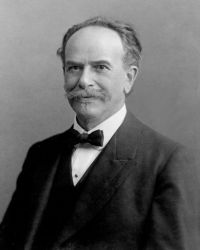
“ To trace the origin of art among primitive peoples, and to note the successive steps by which decorative art grew from its probable origin in the readily recognized adornments of nature and in the mere "accidents of manufacture," as they have been termed, would be not only interesting, but highly instructive. Such a study should afford us a clew to the origin and significance of conventional as contrasted with imitative art. ”
 Franz Boas,
The American Journal of Psychology
(1910)
“ That the same conditions prevail to even a greater extent among primitive people can easily be shown by a number of examples. It has been pointed out before that decorative art among primitive people is almost everywhere symbolic. ”
Franz Boas,
The mind of primitive man
(1911)
“ A number of other examples will demonstrate that the kind of association here referred to is quite common in primitive life. An excellent instance is furnished by certain characteristics of primitive decorative art. With us almost the sole object of decorative art is æsthetic. We wish to beautify the objects that are decorated. We recognize a certain appropriateness of decorative motives in accordance with the uses to which objects are to be put, and the emotional effect of the decorative motive. In primitive life the conditions are quite different. ”
Stanley Shaw, William of Germany
“ How art came into existence it is of course impossible to do more than conjecture. The necessities of primitive man may have stimulated his inventive powers into originating and developing the useful arts for his physical comfort and convenience; and his desire for recreation after labour, or the mere ennui of idleness, may have urged the same powers into originating and developing the fine and plastic arts for the entertainment of his mind. ”
 Walter Crane,
Of the Decorative Illustration of Books Old and New
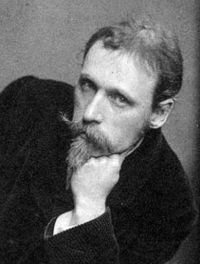
“ Both illustrate, however, a long course of evolution, and contain in themselves, it might be said, a compendium—or condensation—of the history of contemporary art in its various forms of development. The first impulse in art seems to answer to the primitive imitative impulse in children—the desire to embody the familiar forms about them—to characterize them in line and colour. ”
“ Very often, I fear, the misrepresentation of the primitives must be attributed to what the critics call, "wilful distortion." Be that as it may, the point is that, either from want of skill or want of will, primitives neither create illusions, nor make display of extravagant accomplishment, but concentrate their energies on the one thing needful—the creation of form. Thus have they created the finest works of art that we possess. ”
 Oscar Wilde,
Intentions
(1891)
“ By its deliberate rejection of Nature as the ideal of beauty, as well as of the imitative method of the ordinary painter, decorative art not merely prepares the soul for the reception of true imaginative work, but develops in it that sense of form which is the basis of creative no less than of critical achievement. For the real artist is he who proceeds, not from feeling to form, but from form to thought and passion. ”
Thomas Craven, The Dial (1923)
“ Never philosophical, his conception of the beautiful is much too meagre to permit of any penetration into the intimate connexion between pigment and the subjective antecedents of human experience, and to recognize how deeply and inextricably bound to one's whole nature are those impulses which take form in the conventions of poetry, painting, sculpture, and the rest of the arts. To believe that a mechanical evolution in the technique of art is of any great aesthetic importance is an illusion arising from a profound misunderstanding of the history of the subject. ”
Giorgio Vasari, The Lives of the Painters, Sculptors & Architects…
“ Not a trace or a vestige of any good thing remained, so that the generations which followed being rough and material, particularly in painting and sculpture, yet feeling themselves impelled by nature and inspired by the atmosphere of the place, set themselves to produce things, not indeed according to the rules of art, for they had none, but as they were instructed by their own intelligence. ”
 J. Comyns Carr,
Coasting Bohemia
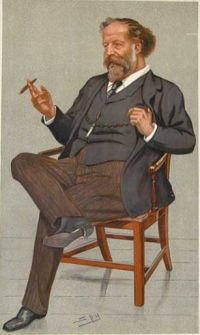
“ To wring from nature its countless harmonies of tone and colour, to seize and interpret the endless subtleties of individual form and character—these are the ideals that have inspired and have satisfied many of the greatest painters the world has produced. Who then shall say that Art has need of any other, any wider ambition? ”
 George William Russell,
Imaginations and Reveries
“ It is feeling out for a new world, and it is trying to use the older tradition as a bridge. The older art held up a mirror to natural forms and brought them nearer to man. In the perfect culmination of this new art one feels how a complete change might take place and natural forms be used to express an internal nature or the soul of the artist. Colors and forms, like words after the lapse of centuries, enlarge their significance. The earliest art was probably simple and literal—there may have been the outline of a figure filled up with some flat color. ”
Mihai Nadin, The Civilization of Illiteracy
“ Think about how, in the post-modern, the condition and function of drawing change. Drawing no longer serves as an underlying element of painting, architecture, or sculpture. Rather, drawing ascertains its own aesthetic condition. In a broader sense, it is as though art continuously generates its definition and redefinition, and allows those involved in artistic practice to constitute themselves as entities of change more than as manufacturers of aesthetically relevant objects. ”
 John W. Beatty,
The Relation of Art to Nature
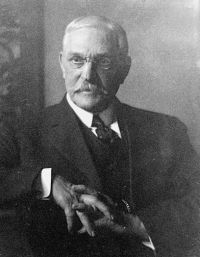
“ Argument My purpose in writing this treatise is to establish, if this be found possible, a foundation for the belief that the art of the painter and sculptor is imitative, not creative; that the great masterpieces of art which have withstood the test of time rest firmly upon the supreme expression of character and beauty as these qualities are revealed in man and nature; that it is the mission of art to reveal and make plain these rare and lovely qualities. ”
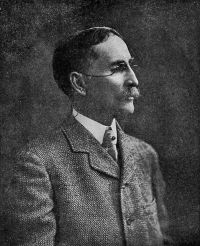 Birge Harrison,
Landscape Painting
(1909)
“ When I try to draw aside the veil, and peer into the mists of the future, I seem to see another art, less material, more akin to the pure spirit of music; an art stripped of all that is gross and material; an art in which abstract beauty alone shall rule. In this new art values may very possibly be unnecessary, and all will be stated in terms of beautiful color. ”
Sir Joshua Reynolds, Seven Discourses on Art
“ I shall now endeavour to show that this principle, which I have proved to be metaphysically just, extends itself to every part of the art; that it gives what is called the grand style to invention, to composition, to expression, and even to colouring and drapery.Invention in painting does not imply the invention of the subject, for that is commonly supplied by the poet or historian. With respect to the choice, no subject can be proper that is not generally interesting. ”
Mary Wollstonecraft Shelley, Rambles in Germany and Italy in 1840… (1844)
“ Thus the study of nature succeeded to the ideal; art fell lower afterwards, and became the copyist of art; and ancient statues grew to be the models from which modern painters strove to gain inspiration, till the uniformity, stiffness, and even deformity thus produced, induced others, who perceived these faults and their cause, to have again recourse to nature. ”
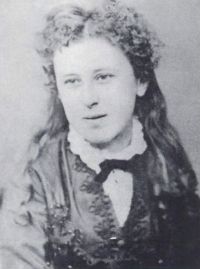 Vernon Lee,
Euphorion - Vol. I
“ First, then, we have the hostility between painting --and sculpture, between the modus operandi of the modern and the modus operandi of the ancient art. Antique art is, in the first place, purely linear art, ¦colourless, tintless, without light and shade; next, it is essentially the art of the isolated figure, without background, grouping, or perspective. As linear art it could directly affect only that branch of painting which was itself linear; and as art of the isolated figure it was ever being contradicted by the constantly developing arts of perspective and landscape. ”
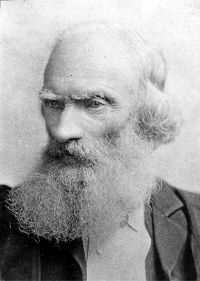 Sir Daniel Wilson,
The lost Atlantis, and other ethnographic studies
“ But the æsthetic faculty was thus stimulated into activity with results which tended to develop art in all its forms of carving, modelling, sculpture, and painting. An appreciation of colour, not merely for personal adornment, but in its artistic application—alike as a decorative art, and as the means whereby natural objects can be presented with vivid truthfulness to the eye,—is widely diffused; though the mastery of form by the modeller or sculptor long precedes that of chiaroscuro, or aerial perspective. ”
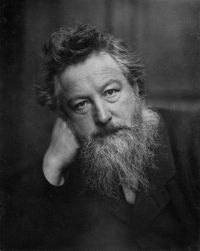 William Morris,
Art Under Plutocracy
“ And yet, I say, how have we of these latter days treated the beauty of the earth, or that which we call art?Perhaps I had best begin by stating what will scarcely be new to you, that art must be broadly divided into two kinds, of which we may call the first Intellectual, and the second Decorative Art, using the words as mere forms of convenience. The first kind addresses itself wholly to our mental needs; the things made by it serve no other purpose but to feed the mind, and, as far as material needs go, might be done without altogether. ”
Richard Muther, The History of Modern Painting…
“ The evolution of modern painting is more complicated and varied than that of the art of an earlier period, just as modern life itself is more complicated and varied than that of any previous age.How quietly, slowly, and surely was the evolution of that older period carried out. One simple proportion was maintained between art and the universal life of culture. Customs, views of life and art, were so intimately bound up together, that the knowledge of the age in general naturally comprises that of art. ”
Viscountess Marianne Margaret Compton Cust Alford, Needlework As Art
“ Now there is a point of view in which we may regard the imitative art of all races, the most civilized as well as the most barbarous—in reference to the power of correctly representing animal and vegetable forms, such as they exist in nature. The perfection of such imitation depends not so much on the manual dexterity of the artist as on his intelligence and comprehension of the type of the essential qualities of the form he desires to represent. ”
 G. P. R. James,
Morley Ernstein; or, the Tenants of the Heart
“ Nothing, perhaps, shewed the grandeur and the grasp of ancient art more strongly than the vigour with which the old painters used the effect produced upon the human mind by the power of contrast, and the infinite skill with which they employed that power, so as never to violate those essential principles of harmony which affect painting and sculpture fully as much as they affect music and poetry. ”
Related terms
Authors who wrote about “primitive art”
Oscar Wilde Clive Bell
 John RuskinY. Hirn
 Wassily KandinskyVernon LeeSir Joshua ReynoldsDe Witt H. ParkerJohn W. BeattyA. Clutton-BrockBirge HarrisonRichard MutherWalter Cranegraf Leo Tolstoy
 Benedetto CroceCamille Saint-SaënsGeorg Wilhelm Friedrich HegelViscountess Marianne Margaret Compton Cust AlfordWilliam Morris
 Victor Hugo
