Ars Poetica

Definition and stakes

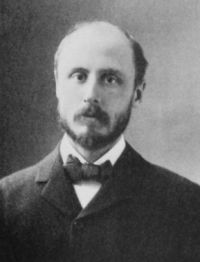
Portrait of Charles Sears Baldwin Charles Sears Baldwin,  Renaissance literary theory and practice (1939)

“ For all its confidence in a new day, Renaissance literary theory repeats some medieval commonplaces. The arts poétiques of the sixteenth century prolong the vogue of the “Ars poetica” of Horace. The old doctrine of poetic inspiration is renamed Platonic. The slighting of composition by medieval manuals is continued. Renaissance manuals are no less generally limited to style; for the old preoccupation is confirmed by the new insistence on style as an accomplishment and as conformity to standard. Thus the Renaissance long accepted tacitly the medieval confusion of poetic with rhetoric. ”
Source: Gutenberg

1911 Encyclopædia Britannica, Volume 11… (1911)

“ FREIRE, FRANCISCO JOSÉ (1719–1773) , Portuguese historian and philologist, was born at Lisbon on the 3rd of January 1719. He belonged to the monastic society of St Philip Neri, and was a zealous member of the literary association known as the Academy of Arcadians, in connexion with which he adopted the pseudonym of Candido Lusitano. He contributed much to the improvement of the style of Portuguese prose literature, but his endeavour to effect a reformation in the national poetry by a translation of Horace’s Ars poëtica was less successful. ”
Source: Wikisource

Auguste Bernard,  Geofroy Tory

“ Horace, a poet of old surnamed Flaccus, hath told us in writing in his 'Ars Poetica' that philosophers and poets are wont, under the outer bark of deceitful words, to convey a moral meaning which may profit us in the knowledge of virtue or give us pleasure in the charm of their style and their pleasing invention. ”
Source: Gutenberg

Get perspective with Kwize: daily news enlightened by great literature