Charged particle

Definition and stakes

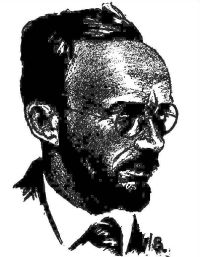
Portrait of Richard Feynman Richard Feynman,  The Character of Physical Law (1965)

“ There is another interesting thing about charge, a very strange thing for which we have no real explanation today. It has nothing to do with the conservation law and is independent of it. Charge always comes in units. When we have a charged particle it has one charge or two charges, or minus one or minus two. Returning to our table, although this has nothing to do with the conservation of charge, I must write down that the thing that is conserved comes in units. ”
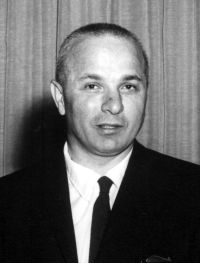
Source: https://www.cornell.edu/video/playlist/richard-feynman-messenger-lectures

Portrait of Albert L. Latter Albert L. Latter,  Our Nuclear Future: Facts, Dangers and Opportunities

“ Although the electrons and the nucleus are charged particles, the atom as a whole is electrically neutral; this means that the positive charge of the nucleus must be equal in magnitude to the total charge of all the negative electrons. All electrons have precisely the same charge, which is the smallest charge that has ever been observed. What is particularly strange and not yet explained is the fact that all other charges are as big as the electron charge, or twice as big, or three times as big, or a million times as big. ”
Source: Gutenberg

Get perspective with Kwize: daily news enlightened by great literature