Course of nature
Definition and stakes
Quotes about “course of nature”
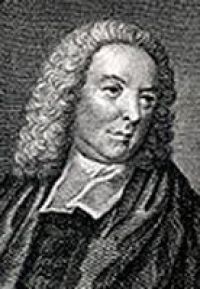 Edward Young,
Young's Night Thoughts
Edward Young,
Young's Night Thoughts
“ Say’st thou, “The course of nature governs all?”The course of Nature is the art of God. 1269The miracles thou call’st for, this attest;For say, could Nature Nature’s course control?But, miracles apart, who sees Him not,Nature’s controller, author, guide, and end? ”
 Thomas Henry Huxley,
Lectures and Essays
Thomas Henry Huxley,
Lectures and Essays
“ It has taken long ages of toilsome and often fruitless labour to enable man to look steadily at the shifting scenes of the phantasmagoria of Nature, to notice what is fixed among her fluctuations, and what is regular among her apparent irregularities; and it is only comparatively lately, within the last few centuries, that the conception of a universal order and of a definite course of things, which we term the course of Nature, has emerged. ”
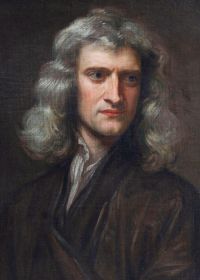
“ The changing of Bodies into Light, and Light into Bodies, is very conformable to the Course of Nature, which seems delighted with Transmutations. ”
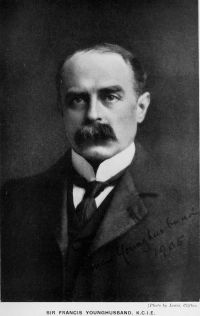 Sir Francis Edward Younghusband,
The Heart of Nature; or, The Quest for Natural Beauty
Sir Francis Edward Younghusband,
The Heart of Nature; or, The Quest for Natural Beauty
“ Nature is not a chance collection of particles, nor is she a mere machine, nor some kind of structure like a Cathedral in course of construction. But she is a Power of some kind, and what we have to determine is the kind of Power she is. Now we have seen that running through the life of the forest, controlling and directing the whole, is an Organising Activity. ”

“ But Nature, that knows best its own laws, and the several properties of bodies, knows also best how to adapt and fit them to her designed ends, and whoso would know those properties, must endeavour to trace Nature in its working, and to see what course she observes. ”
John Stewart, The Apocalypse of Nature (1790)
“ The moment the properties or essence of self is discovered, the study of Nature is directed to well-being or happiness, and then the faculties diverge from the centre, and take an outward course towards letters, the sciences, and mechanic arts, which are prosecuted in proportion to their utility, or produce of happiness ”
Thomas Henry Huxley,
Lay Sermons, Addresses and Reviews
“ He had to familiarize himself with ideas of the course and powers of Nature, to which his attention had never been directed during his school-life, and to learn, for the first time, that a world of facts lies outside and beyond the world of words. ”
 Richard Le Gallienne,
Vanishing Roads and Other Essays
Richard Le Gallienne,
Vanishing Roads and Other Essays
“ We have, of course, long since ceased to think of Nature as the sympathetic mirror of our moods, or to imagine that she has any concern with the temporal affairs of man. ”
Edmund Selous, The romance of insect life (1914)
“ Along what path, indeed, can the beauty and wisdom of Nature—those endless steps from endless seeming halting-places that become, when reached, but so many points of fresh departure—be run to earth, so to speak? ”
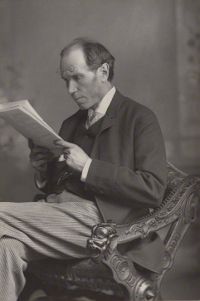 James Payn,
Some Private Views
James Payn,
Some Private Views
“ Nature of course is the best guide in the matter of choosing a pursuit. ”
 Lafcadio Hearn,
Two years in the French West Indies
Lafcadio Hearn,
Two years in the French West Indies
“ In the great centres of civilization we admire and study only the results of mind,—the products of human endeavor: here one views only the work of Nature,—but Nature in all her primeval power, as in the legendary frostless morning of creation. ”
 Scott Nearing,
Civilization and Beyond: Learning from History
(1975)
Scott Nearing,
Civilization and Beyond: Learning from History
(1975)
“ Central to their discussions is the nature of life. Is it continuous, as it appears in vegetation and the animal kingdom, or is it discontinuous like the rocks on the mountainside or the grains of sand on the seashore? ”
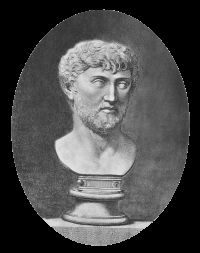 Titus Lucretius Carus,
On the Nature of Things
Titus Lucretius Carus,
On the Nature of Things
“ Wherefore confess we must on grounds the same That earth, sun, moon, and ocean, and all else, Exist not sole and single—rather in number Exceeding number. Since that deeply set Old boundary stone of life remains for them No less, and theirs a body of mortal birth No less, than every kind which here on earth Is so abundant in its members found. Which well perceived if thou hold in mind, Then Nature, delivered from every haughty lord, And forthwith free, is seen to do all things Herself and through herself of own accord, Rid of all gods. ”
Sir Francis Edward Younghusband,
The Heart of Nature; or, The Quest for Natural Beauty
“ And now that we have seen what is the nature of Nature, what is the end she has before her, and how she works to accomplish her end, we feel that we have gone a long way towards knowing and understanding her. ”
 Edward Payson Roe,
Nature's Serial Story
Edward Payson Roe,
Nature's Serial Story
“ Thus it may be seen that Nature, to whom they had gone, was not only busy with the mountain and its life, but that her silent forces were also at work in those whose unperverted hearts were not beyond her power. ”
Sir Francis Edward Younghusband,
The Heart of Nature; or, The Quest for Natural Beauty
“ We see, indeed, what Nature really is. We see the reality behind the appearance—the content within the outward form. We are not for the moment concerned with the cause but with the character of Nature. ”
comte de Georges Louis Leclerc Buffon, Buffon's Natural History, Volume 02…
“ Let us then content ourselves with a more humble and more material philosophy; and by keeping within the sphere Nature has allotted us, let us examine the rash steps and the rapid flight of those who attempt to soar beyond it. ”
Scott Nearing,
The New Education
“ While you watch them, the clouds change in the sky, the sunset wanes, and the forest covers the bared hills. Nature, fickle mistress of our destinies, spreads a never-ending panorama before our eyes that we may recognize the one great law of her being,—the law of progression. ”
 Charles Kingsley,
The Water of Life, and Other Sermons
Charles Kingsley,
The Water of Life, and Other Sermons
“ For this innumerable multitude of things, of which we now-a-days talk as if it were one thing, and had an organic unity of its own, or even as if it were one person, and had a will of its own, and call it Nature—a word which will one day be forgotten by philosophers, with the ‘four elements,’ and the ‘animal spirits;’—this multitude of things, I say, which we miscall Nature, has its dark and ugly, as well as its bright and fair side. ”
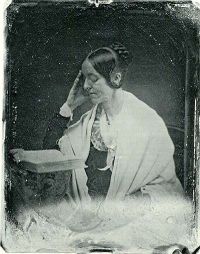 Sarah Margaret Fuller,
Papers on Literature and Art
(1846)
Sarah Margaret Fuller,
Papers on Literature and Art
(1846)
“ Those who observe in this spirit will often experience, from some humble offering to the Muses, the delight felt by the naturalist in the grasses and lichens of some otherwise barren spot. These are the earliest and humblest efforts of nature, but to a discerning eye they indicate the entire range of her energies. ”
 Ralph Waldo Emerson,
Nature
(1836)
Ralph Waldo Emerson,
Nature
(1836)
“ In view of this significance of nature, we arrive at once at a new fact, that nature is a discipline. This use of the world includes the preceding uses, as parts of itself. Space, time, society, labor, climate, food, locomotion, the animals, the mechanical forces, give us sincerest lessons, day by day, whose meaning is unlimited. They educate both the Understanding and the Reason. Every property of matter is a school for the understanding,—its solidity or resistance, its inertia, its extension, its figure, its divisibility. ”
Various, The Germ: Thoughts towards Nature in Poetry…
“ Letting observation sleep, what can you know of nature? and you are a judge of landscape indeed. So it is that the world is taught to think of nature, as seen through other men's eyes, without any reference to its own original powers of perception, and much natural beauty is lost. ”
Thomas Henry Huxley,
Lectures and Essays
“ Experience speedily taught them that the shifting scenes of the world's stage have a permanent background; that there is order amidst the seeming contusion, and that many events take place according to unchanging rules. To this region of familiar steadiness and customary regularity they gave the name of Nature. ”
 David Hume,
Dialogues Concerning Natural Religion…
David Hume,
Dialogues Concerning Natural Religion…
“ It is sufficient, if any steps, so far as we go, are supported by experience and observation." Now, that vegetation and generation, as well as reason, are experienced to be principles of order in nature, is undeniable. ”
Ralph Waldo Emerson,
Letters and social aims
(1875)
“ Nature an enormous system, but in mass and in particle curiously available to the humblest need of the little creature that walks on the earth! The immeasurableness of Nature is not more astounding than his power to gather all her omnipotence into a manageable rod or wedge, bringing it to a hair-point for the eye and hand of the philosopher. Here stretches out of sight, out of conception even, this vast Nature, daunting, bewildering, but all penetrable, all self-similar,—an unbroken unity,—and the mind of man is a key to the whole. ”
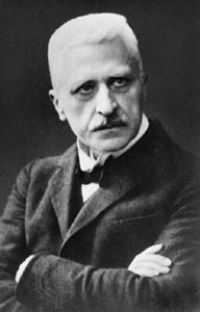 Rudolf Otto,
Naturalism and Religion
Rudolf Otto,
Naturalism and Religion
“ But even the domain of the natural itself, as we know it, is by no means simple and capable of a unified interpretation. Nature, especially in the realm of organic life, the animal and plant world, appears to be filled with marvels of purposefulness, with riddles of development and differentiation, in short with all the mysteries of life. ”
Sir Francis Edward Younghusband,
The Heart of Nature; or, The Quest for Natural Beauty
“ And with his instinctive love of Natural Beauty thus confirmed and strengthened by this testing of his instinct against what cool reasoning on the facts revealed by observation in the forest had to say about it, he can with lightened heart search still further into Nature, and see her in higher, wider, deeper aspects than the forest alone can disclose. ”
 James Hutchins Baker,
Education and life
(1900)
James Hutchins Baker,
Education and life
(1900)
“ The natural world, plants, animals, the human race, institutions, science, art, religion, all animate individual beings, man as an individual, have their history of development, which suggests its lesson.Nature is aspiration. From chaos to the world of this geologic age, from protoplasm to man, from savagery to civilization, from ignorance to culture, from symbolism to developed art, from egoism to altruism, from germ to fruit, from infancy to maturity, from realization to higher realization, has been the process. ”
 Josiah Royce,
The World and the Individual, Second Series
(1901)
Josiah Royce,
The World and the Individual, Second Series
(1901)
“ Whatever the deeper reality behind Nature may turn out to be, — our Nature, the realm of matter and of laws with which our science and our popular opinions have to do, is a realm which we conceive as known or as knowable to various men, in precisely the same general sense in which we regard it as known or as knowable to our private selves. Take away the social factor in our present view of Nature, and you would alter the most essential of the characters possessed, for us, by that physical realm in which we all believe. ”
Josiah Royce,
The World and the Individual, Second Series
(1901)
“ The fact that we men find Nature here, implies for us, then, that we are so constituted as to find the same sort of natural phenomena. The realm of the physical phenomena, whatever inner Being may be behind it, is, for us, primarily this common realm of human experience. Upon this consideration the very definition of what we call Nature depends. ”
 Johann Wolfgang von Goethe,
The Autobiography of Goethe
Johann Wolfgang von Goethe,
The Autobiography of Goethe
“ A system of nature was announced; and therefore we hoped to learn really something of nature—our idol. Physics and chemistry, descriptions of heaven and earth, natural history and anatomy, with much else, had now for years, and up to the last day, constantly directed us to the great adorned world ”
 E. M. Forster,
A Room with a View
E. M. Forster,
A Room with a View
“ I believed in a return to Nature once. But how can we return to Nature when we have never been with her? To-day, I believe that we must discover Nature. After many conquests we shall attain simplicity. ”
Josiah Royce,
The World and the Individual, Second Series
(1901)
“ More to the point, at this stage of our inquiry, than a formally precise definition of Nature, is a consideration of the motives which lead us to acknowledge as real the facts that we all call physical, — viz. to acknowledge the existence of matter, the laws of natural processes, and the dependence of our own mental life upon these processes. To this aspect of the problem of Nature we accordingly at once proceed. ”
Annie H. Ryder, Hold Up Your Heads, Girls! Helps for Girls…
“ I suppose most of the principles of natural philosophy, and of many of the sciences, must have been derived from an acquaintance with Nature in her ordinary aspects. Oh, do not think it necessary to behold Nature in her great stretches of sublimity in order to appreciate her. You will come to know her far more easily, and much more helpfully, in a little woodside walk, or right here underneath these branches, than you will in Niagara Falls, or in looking at her in the great ocean. ”
Ralph Waldo Emerson,
Nature
(1836)
“ Philosophically considered, the universe is composed of Nature and the Soul. Strictly speaking, therefore, all that is separate from us, all which Philosophy distinguishes as the not me, that is, both nature and art, all other men and my own body, must be ranked under this name, Nature. ”
“ But besides the phase of Nature-communion which we call physical science, there is the other, artistic phase. Day by day we find that the mystic influence of Nature on our human personality grows more intense and individual. ”
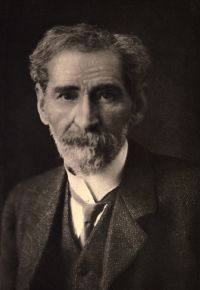 W. H. Hudson,
Afoot in England
W. H. Hudson,
Afoot in England
“ In the distant days of my boyhood and early youth my chief delight was in nature, and when I opened a book it was to find something about nature in it, especially some expression of the feeling produced in us by nature, which was, in my case, inseparable from seeing and hearing, and was, to me, the most important thing in life. ”
Ralph Waldo Emerson,
Nature
(1836)
“ To this one end of Discipline, all parts of nature conspire. A noble doubt perpetually suggests itself, whether this end be not the Final Cause of the Universe; and whether nature outwardly exists. It is a sufficient account of that Appearance we call the World, that God will teach a human mind, and so makes it the receiver of a certain number of congruent sensations, which we call sun and moon, man and woman, house and trade. ”
Sir Francis Edward Younghusband,
The Heart of Nature; or, The Quest for Natural Beauty
“ Which of these two views of Nature, so far as Nature can be judged from what we see of her on this planet, is correct, he has now to determine. The profound mystery which everywhere prevails in the forest and which exerts such a compelling spell upon us he will want to probe to the bottom. ”
 F. Max Müller,
The Silesian Horseherd - Questions of the Hour
F. Max Müller,
The Silesian Horseherd - Questions of the Hour
“ That is [pg 059] the thought, the idea, the logos of dog. Can there be a thought without a thinker? Did the ideas in nature, the millions of objects which make up our knowledge, fall from the clouds? Did they make themselves or did nature make them? Who, then, is nature? Is it a masculine, feminine, or neuter? If nature can choose, then it can also think and produce. But can it? No, nature is a word, very useful for certain purposes; but empty, intangible, and incomprehensible. Nature is an abstraction, as much as dog or tree, but far more inclusive. ”
 Swami Vivekananda,
The Complete Works of Swami Vivekananda…
Swami Vivekananda,
The Complete Works of Swami Vivekananda…
“ What we call nature is a reflecting glass — that is all the use of nature — and all knowledge is this reflection of the within on this glass of nature. What we call powers, secrets of nature, and force, are all within. In the external world are only a series of changes. ”
Sir Francis Edward Younghusband,
The Heart of Nature; or, The Quest for Natural Beauty
“ We have, therefore, ample evidence that Nature is actuated by an intention to enrich perfection and is continually working towards it. So we have confidence that Nature, hard and exacting though she be, is only exacting in order that the Highest may be attained. We know that Nature is aiming at the Highest and nothing short of the Highest. And all the spirit of daring and adventure in us leaps to the call she makes. ”
 Charles Wesley Emerson,
Psycho Vox; or, The Emerson System of Voice Culture
Charles Wesley Emerson,
Psycho Vox; or, The Emerson System of Voice Culture
“ If we follow this doctrine of evolution, step by step, it will lead us to perceive that God is in every fact of nature. Watch an acorn as it develops into the sturdy oak. No scientist will say that a material environment is its only condition of growth. ”
 A. Mary F. Robinson,
The fields of France
(1905)
A. Mary F. Robinson,
The fields of France
(1905)
“ But all this is little enough, unless we have also that inner force which sways a period, a generation, and which sometimes inclines us more and more to Nature, reviving in our hearts the desire of the land. ”
William Hazlitt, Table-Talk — On the Pleasure of Painting (1821)
“ This confirmed me in the resolution I had made before, only to copy Nature for the future. Nature is inexhaustible, and alone forms the greatest masters. Say what you will of rules, they alter the true features and the natural expression. ”
“ To-day the function of these types of phenomena, though metamorphosed by the altered conditions of the earth, is not essentially different. Here, more than in any other sphere of her activities, nature manifests that side of her which we are seeking to penetrate with understanding. ”
“ In a word, nature was not explored then as now, for the purpose of ascertaining and recording cold and scientific realities,—but to be admired, and embellished, and animated;—and to be peopled, everywhere, with exquisitely beautiful, though imaginary and supernatural, life and action. ”
John Phillips, A Treatise on Geology (1852)
“ Now these are a few of the legitimate branches of the study of nature, which the providence of the Almighty Creator of the universe has committed to human reason. Their development is for man a physical revelation, continually enlarging its power and influence on the mind and heart ”
Related terms
Authors who wrote about “course of nature”
Ralph Waldo EmersonSir Francis Edward Younghusband John Campbell ShairpJohn StewartDuchess of Margaret Cavendish NewcastleDonald G. FrenchLouise ManlyAnnie H. Ryder
 Johann Gottlieb FichteVariousThomas Henry Huxley
 Henry David ThoreauJosiah Royce
 Alfred North WhiteheadEdward Young
 John MuirDavid HumeWilliam Hazlitt
 E. F. Benson
 Oscar Wilde