Proportion (mathematics)

Definition and stakes

Various,  Popular Science Monthly (1910)

“ Whether Euclid's ratios are or are not always numbers, it certainly is true that Euclid cuts irrationals out of his theory of proportion. The modern tendency is to teach that ratios and quantities in algebra are numbers. Certainly in elementary mathematics it is highly desirable for pedagogical reasons that the ratio of two quantities be defined specifically as the quotient of the first divided by the second, a proportion as an equality of ratios, and a quantity in algebra as a number. ”
Source: Wikisource

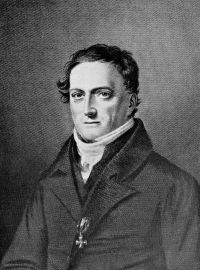
Portrait of Johann Friedrich Herbart Johann Friedrich Herbart,  Outlines of Educational Doctrine

“ Note.—The difficulty encountered in this subject—undoubtedly one of those difficulties most keenly felt in teaching mathematics—is after all only an illustration of the injurious consequences of former sins of omission. If the geometrical imagination were not neglected, there would be ample opportunity, not only for impressing far more deeply the concept of proportion, demanded even by elementary arithmetic, but also for developing early the idea of function. The object lessons mentioned above have already illustrated the dependence of tangents and secants on angles. ”
Source: Gutenberg

Portrait of Edmund Burke Edmund Burke,  On the Sublime and Beautiful — Chapter 2

“ Proportion is the measure of relative quantity. Since all quantity is divisible, it is evident that every distinct part, into which any quantity is divided, must bear some relation to the other parts, or to the whole. These relations give an origin to the idea of proportion. They are discovered by mensuration, and they are the objects of mathematical inquiry. ”
Source: Wikisource

Get perspective with Kwize: daily news enlightened by great literature