Sonata form

Definition and stakes

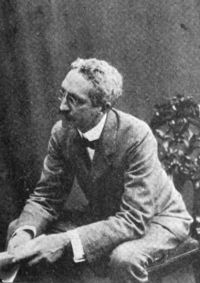
Portrait of W. S. B. Mathews W. S. B. Mathews,  The Masters and Their Music

“ There is one form in modern music which is the type of so large a proportion of extended instrumental movements that the student will do well to master its peculiarities at the earliest possible moment. This is the form sometimes called the sonata form or sonata-piece. The term sonata was originally used in two senses: in its larger sense it indicates an extended musical composition with three or four movements, all which taken together form the sonata. By the term sonata-piece, however, is meant the particular movement of the sonata which gives the name to the whole piece. ”
Source: Gutenberg

Portrait of W. S. B. Mathews W. S. B. Mathews,  A Popular History of the Art of Music

“ That form was the Sonata, which having been begun earlier, was developed further by the sons of Bach, but which received its characteristic touches from the hands of Haydn and Mozart. This was the crowning glory of the eighteenth century—the sonata. A form had been created, into which the greatest of masters was even then beginning to breathe his mighty soul, producing thereby a succession of master works, which stand without parallel in the realm of music. ”
Source: Gutenberg

W. J. Henderson,  How Music Developed

“ We have already noticed his theory that one should play the clavichord and write for it in the singing style. It was his feeling for this style and his keen insight into the capabilities of his instrument which made him, though not a composer of genius, a powerful agent in the establishment of the modern sonata form,—so powerful, indeed, that he has been called the father of the sonata. We owe something, however, to the demands of public taste. Music-lovers have usually, with the exception of the few, preferred the purely sensuous beauty of music to its intellectual qualities. ”
Source: Gutenberg

Get perspective with Kwize: daily news enlightened by great literature